The Only Cooking Accounts You Need To Follow
I am an avid home cook. I always have been, I always will be. Cooking is the thing that I do to unwind, to give back to myself and recenter. That said, I know there are a lot of people out there who aren’t really sure where to start when it comes to cooking.
If I am being honest, so much of my inspiration, recipes, and overall enjoyment of cooking comes from Instagram. I could watch cooking reels all day and call it research. So, for all those who are at a loss for a starting line in the kitchen, here are the accounts I recommend following to start to get an understanding of the ins and outs of cooking.
Here are the accounts I recommend following to start to get an understanding of the ins and outs of cooking.
For recipes
Mob
I couldn’t begin without Mob; it’s the closest thing to a safety net I’ve ever had for cooking. Their whole ethos — “feed 4 for £10” — still underpins what they do, even as the recipes have evolved. Think gochujang butter beans, crispy chilli oil eggs, and one-pan tray bags — it’s all big flavours with minimal stress. What I love is how clearly everything is explained, from nutrition breakdown to step-by-step video; it’s genuinely built for people who might not know where to start, but still want food that feels current and trendy and exciting.
It’s genuinely built for people who might not know where to start, but still want food that feels current and trendy and exciting.
Alfie Cooks
Alfie’s content is entirely plant-based, but it never feels restrictive or “worthy.” If anything, it’s the opposite — big, bold, indulgent food that just happens to be vegan. Think creamy pasta sauces, loaded sandwiches, and comfort dishes. What makes the account especially useful is how he breaks down substitutions and techniques — how to build richness without dairy, how to get depth of flavour into vegetables, how to make plant-based cooking feel satisfying rather than limiting. It’s an account that expands your cooking, even if you’re not fully plant-based.
Big, bold, indulgent food that just happens to be vegan.
Dinner by Ben
Ben’s cooking leans more seasonal and ingredient-led. You’ll find things like roast squash with brown butter and sage, or simple but perfectly executed fish dishes. He’s big on sourcing well and letting ingredients speak, which makes his recipes feel elevated but still doable. It’s the kind of account that slowly shifts how you shop as much as how you cook and encourages you to think a bit harder about what you are buying and what you plan to do with it.
He’s big on sourcing well and letting ingredients speak, which makes his recipes feel elevated but still doable.
Justine Snacks
Justine is where you go when you want to get creative. Her viral green goddess salad is probably what most people know her for, but it’s her more unexpected recipes—like caramelised onion pasta with tahini or miso chocolate chip cookies—that really stand out. She’s great at showing how flavour pairings work, especially across cuisines.
Not only are her recipes fabulous and out of the box, but she was also one of the first creators to encourage me to begin linking food to personal life. Her voiceovers often speak on something grander, with her storytelling skills carrying her account.
Her voiceovers often speak on something grander, with her storytelling skills carrying her account.
Hailee Catalono
Hailey’s recipes feel deeply comforting but still thoughtful. She leans into Italian-American cooking — slow-simmered sauces, baked pastas, properly seasoned proteins — but always with a modern edge. To me, her food is the stuff you cook when you want to impress people with a great home-cooked meal without it feeling performative. Just genuinely good food, and fabulous basics to have up your sleeve. For example, I will never make another egg salad ever again.
To me, her food is the stuff you cook when you want to impress people with a great home-cooked meal without it feeling performative.
Food by Lucy
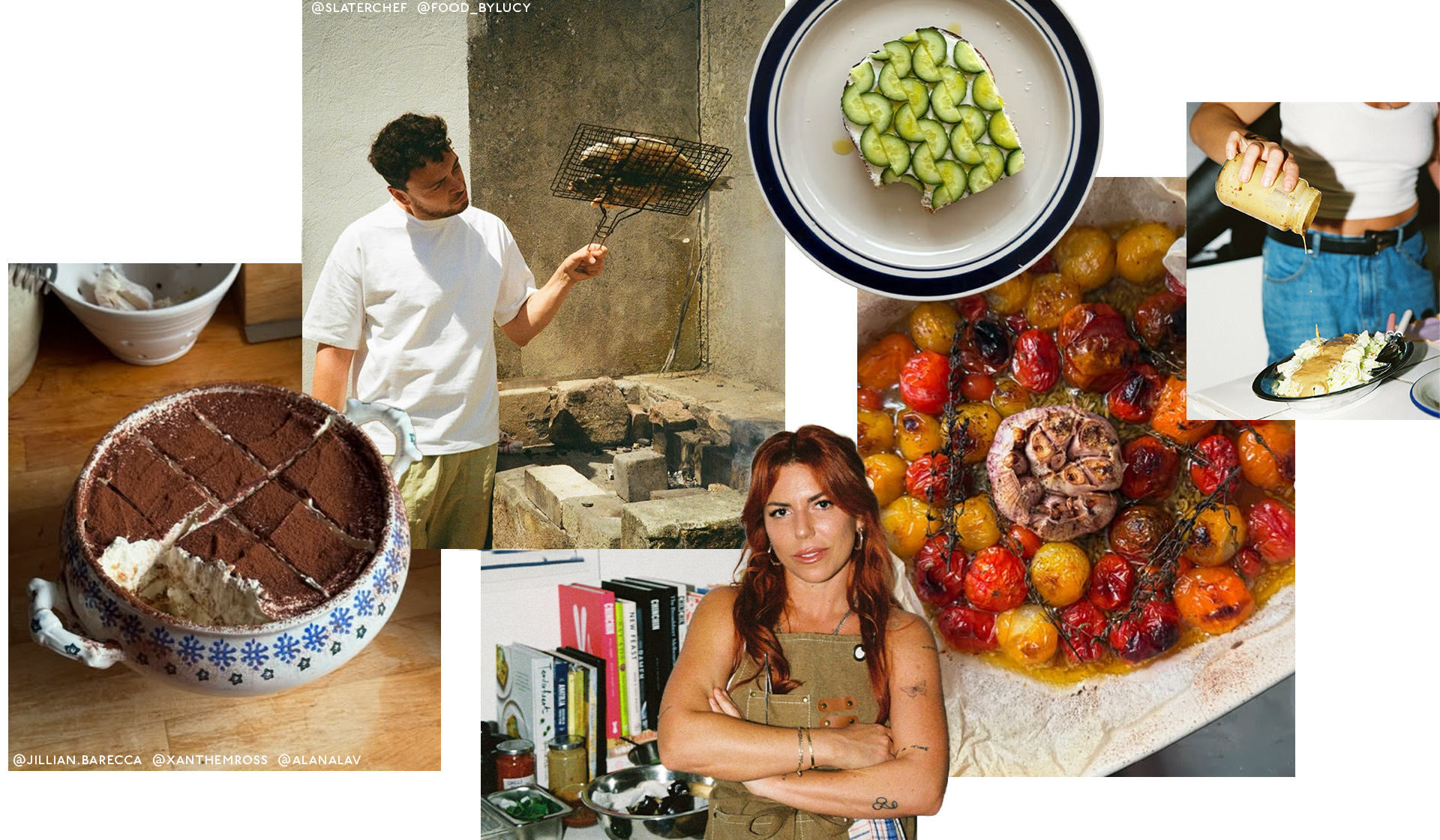
Lucy’s recipes are rooted in balance — lots of vibrant salads, grain bowls, and lighter dishes that still prioritise flavour. She’s great at layering textures (crunchy, creamy, fresh) and building meals that feel complete. Her miso-roasted veg and tahini dressings are staples I keep coming back to. I’m particularly obsessed with her “Boujee on a Budget” series, which is quite self-explanatory but one of the more beautiful, attainable recipe series I’ve found.
I’m particularly obsessed with her “Boujee on a Budget” series, which is quite self-explanatory but one of the more beautiful, attainable recipe series I’ve found.
For an education
Slater Chef
Slater is one of the few creators who really leans into why things work, not just how to do them. He breaks down core techniques — like building a proper pan sauce, balancing acidity, or seasoning in stages — in a way that feels clear and immediately useful. What makes his content so valuable is that it’s transferable; once you understand the principles he’s explaining, you can apply them across almost anything you cook. It’s less about memorising recipes and more about building instinct, which is what actually turns you into a confident cook.
He breaks down core techniques — like building a proper pan sauce, balancing acidity, or seasoning in stages — in a way that feels clear and immediately useful.
Lagom Chef
Lagom Chef is genuinely educational because it teaches you how to think more resourcefully in the kitchen, not just how to follow a recipe. Martyn Odell’s content is built around reducing food waste in ways that actually feel realistic for home cooks: using up odds and ends in the fridge, stretching ingredients further, and turning parts people often throw away into something worth eating. That makes it especially useful for beginners, because it helps you move away from rigid recipe-following and towards confidence and flexibility. His videos don’t just tell you what to cook, they teach you how to use what you already have, which is one of the most valuable cooking skills there is. He’s also very silly.
It helps you move away from rigid recipe-following and towards confidence and flexibility.
Made by Musashi
Musashi’s content, filmed and voiced over by his girlfriend Jasmine, is a masterclass in precision and repetition. He focuses heavily on technique — knife skills, rice preparation, fish handling — and shows each step with a level of detail that’s hard to find outside of Michelin kitchens (which, of course, is Musashi’s actual job). What makes it educational isn’t just the skill level, but the emphasis on consistency and discipline. You start to understand that good cooking isn’t just creativity or having a knack for it; it’s also practice, control, and respect for the process. Even if you’re not replicating his dishes exactly, the fundamentals carry over into everything else you cook.
You start to understand that good cooking isn’t just creativity or having a knack for it; it’s also practice, control, and respect for the process.
Fallow Chefs
Fallow’s content offers a real insight into how professional kitchens think, particularly when it comes to sustainability and maximising ingredients. They break down processes like dry-ageing fish, fermenting scraps, or using by-products in sauces — techniques that go far beyond standard home cooking. What’s particularly educational is how they reframe “waste” as opportunity, showing how much flavour and value are often overlooked. It’s the kind of content that doesn’t just teach you how to cook better, but how to think differently about food altogether.
Fallow’s content offers a real insight into how professional kitchens think
For plating inspiration
Alana Laverty
A founding mother of “Girl Dinner”, Alana is constantly stretching to improve her game. With her now-famous Cookbook Club and what seems like endless daylight, her account has always been a go-to not only for inventive picky bits like negroni olives but also for beautifully considered and warm plating styles. To me, her dinner parties are perfect.
With her now famous Cookbook Club, and what seems like endless daylight, her account has always been a go-to not only for inventive picky bits like negroni olives, but also beautifully considered and warm plating styles.
Xanthe Ross
Xanthe’s style is much more playful and rooted in the seasons, and I think that’s why it’s so useful creatively. She experiments with colour, layering, and texture in a way that feels modern and a bit unexpected — things slightly off-centre, sauces dragged rather than perfectly poured, garnishes that feel spontaneous. It pushes you to loosen up a bit with plating and not aim for perfection every time, to embrace the rustic side of cooking. Watching her has definitely made me more confident in trying things out rather than sticking to what feels “safe” in plating.
It pushes you to loosen up a bit with plating and not aim for perfection every time, to embrace the rustic side of cooking.
Jillian Barreca
Jillian’s approach is much more about simplicity done exceptionally well. She often shoots close-ups, which means every detail matters—nothing can hide. What’s striking is her attention to colour balance and texture, even in the most everyday dishes. Toast, salads, granola — things that could easily feel basic — somehow end up looking incredibly aspirational. She has a way of elevating the mundane without overcomplicating it, which I think is one of the hardest things to get right. It’s made me realise that good plating isn’t about adding more, it’s about noticing the nooks and crannies.
What’s striking is her attention to colour balance and texture, even in the most everyday dishes.
Herrlich Dining
Herrlich Dining sits firmly in that more editorial, almost fine-dining space. The plating is sculptural, highly detailed, and very deliberate—think butter sculptures, glossy reductions, and carefully curated colour palettes. It’s less about recreating exact dishes and more about training your eye: understanding balance, contrast, and how different elements interact visually on a plate. Even if I’m just cooking something simple, I find myself subconsciously applying those ideas — spacing things out more, thinking about height, or how a sauce can land.
The plating is sculptural, highly detailed, and very deliberate—think butter sculptures, glossy reductions, and carefully curated colour palettes.