How To Host The Ultimate Cheese Night At Home
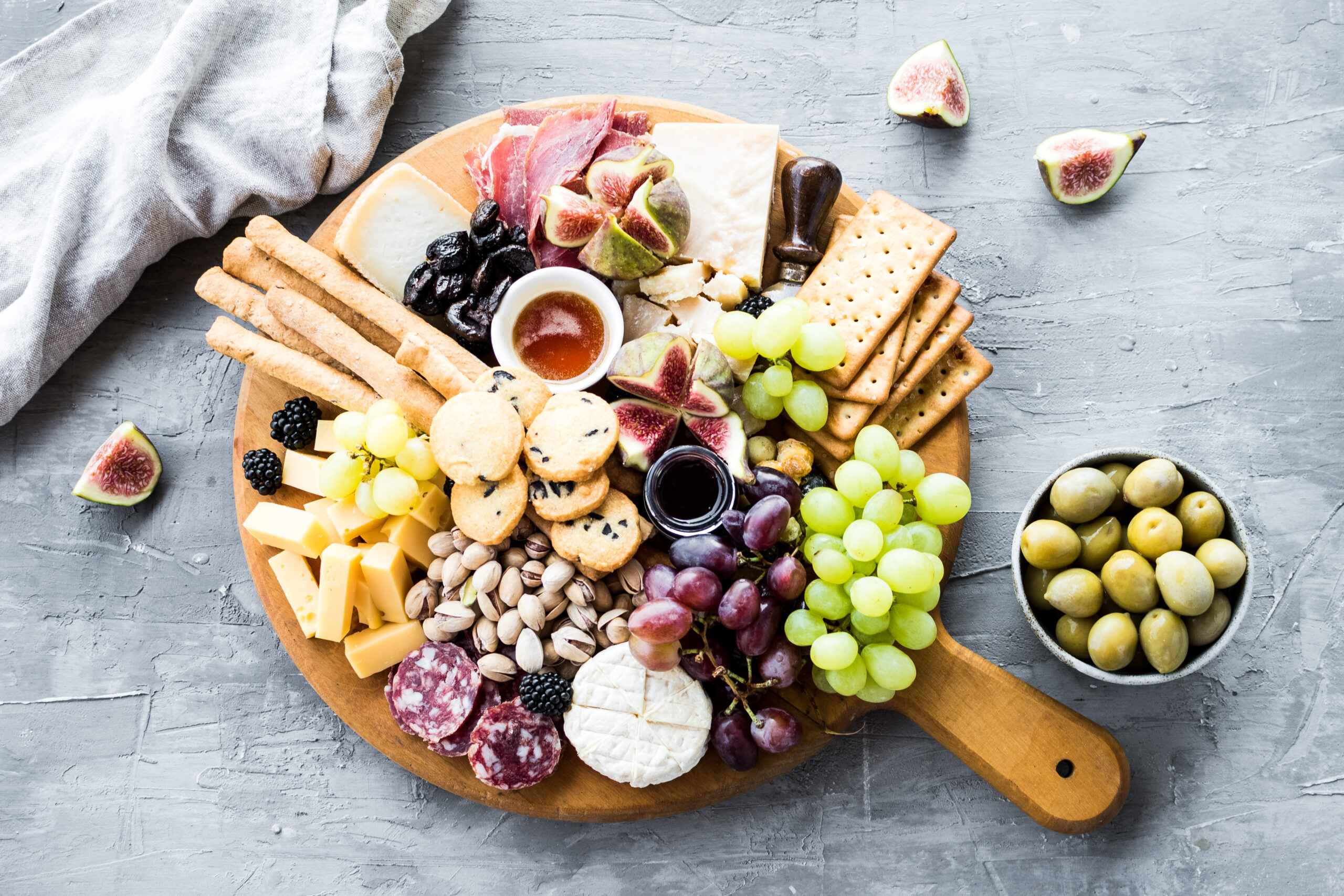
The Christmas cheese board is everyone’s favourite, but knowing the right dairy options to invest in can be a small minefield. Do you opt for a stilton over gorgonzola? Is it best to stick to a classic brie over a more time-consuming camembert? We’ve enlisted the help of two cheese and wine experts to help you craft the perfect cheese board this festive season.
In partnership with
Cheese specialist, lecturer and wholesaler for some of London’s largest hotels and chefs, Tom Badcock has worked with cheese his entire life. A regular guest lecturer at Le Cordon Bleu London, he’s here to pass on his cheese expertise to help you create the perfect board this Christmas. Looking for the perfect bottle to pair alongside? Fear not, as Matthieu Longuère, Wine Development Manager for Le Cordon Bleu London, is a master sommelier and is here to pair Tom’s five top cheeseboard options with wines.
Five cheeses to bring out
Two-year-old Comte
The first of two sister cheeses, the Comte is created above the treeline on the alpages. A popular French cheese, you can expect a subtle sweetness with a rich, indulgent finish.
Tom Badcock: “A complex noble cheese that’s sweet and rich, with a long resonant tail. This Comte is made in the summer months from the milk of the Montbeliardes, up the Jura mountains in the northern Alps.”

Vacherin Mont D’Or
A gooey winter cheese made when the cows are off the mountains and in their barns fed on alpine grass cut earlier in the summer.
Tom Badcock: “Moreish and messy, for the best results pop into the oven at 70°C for 20 minutes.”
Matthieu Longuère: “Contrary to popular belief, red wine is a tricky customer with cheese. The acidity and saltiness of cheeses cancel out tannins and make most full-bodied red wine taste flabby and heavy. For the Vacherin, the best combination would be pinot noir or an old-fashioned Rioja Reserva, but a full-bodied, oaky, complex and mineral Chardonnay would work well with the Comté and the Vacherin. The nuttiness of the oak would play with the saltiness and richness of these cheeses.”
Moody (Rosary) Goat Cheese
This is the most delicate of Chevre Frais by Chris and Clare Moody, who have been masters of consistent, faultless cheese-making for the past 30 years. It’s crisp, fresh and clean which is a testament to the challenges of making goat cheeses.
Tom Badcock: “Making simple goat cheese is easy; making them perfect is surprisingly hard. There is a host of potential problems including the grass being too long, too short, too dry and then there are the goats which cherry-pick weeds, so it’s very possible to have thistle-flavoured cheese one day and nettle flavours the next.”
Shorrock Lancashire Bomb
This early British sock cheese is known thanks to the slowly coagulated curd being filled into a sock, twisted and hung from the ceiling. It’s been made by the Shorrock family for generations and it’s Andy Shorrock’s craftsmanship and limited production which helps make this cheese extra special.
Tom Badcock: “This cheese sounds humble and simple, however from the hands of Andy Shorrock, this is strong, succulent and crumbly. You’ll be glad to hear Andy no longer uses his socks to make it though.”
Matthieu Longuère: “The Rosary goat cheese and the Lancashire Bomb are the tangiest cheeses on the board and therefore go perfectly with Brut Champagne, Brut English sparkling wine or Cava. The acidity of the wine will marry the sharpness of the cheese, while the unctuous texture of the cheese will be supported by the umami flavour of the fizz.”

Roquefort AOC
Strong, succulent and cheese, this cheese hails from the milk of Lacaune sheep, up on the dry hills above the village of Roquefort sur Soulzon. A simple curd is encouraged to rot over six months and descends into this extraordinary product.
Tom Badcock: “A blue of the highest nobility. Armed with crust bread, serve this one to friends with a glass or two of wine. This is the stuff of dreams.”
Matthieu Longuère: “Dessert wines and Port are the darlings of the wine expert but not necessarily to everybody’s taste. They are the perfect fit for blue cheeses like Roquefort, as the sweetness offers a very interesting contrast to the saltiness and umami of blue cheese.”
Love to know more? You can learn more about culinary hosting with Le Cordon Bleu, the culinary arts and hospitality institute that boasts a wealth of classes to choose from. From beginner wine courses to cheese and wine pairings, their classes and short-term courses will quickly see you become an expert in the wine and food industry.
Find more food and wine courses here
Created in partnership with Le Cordon Bleu