Andy Oliver’s Soy Braised Pork Belly & Ribs
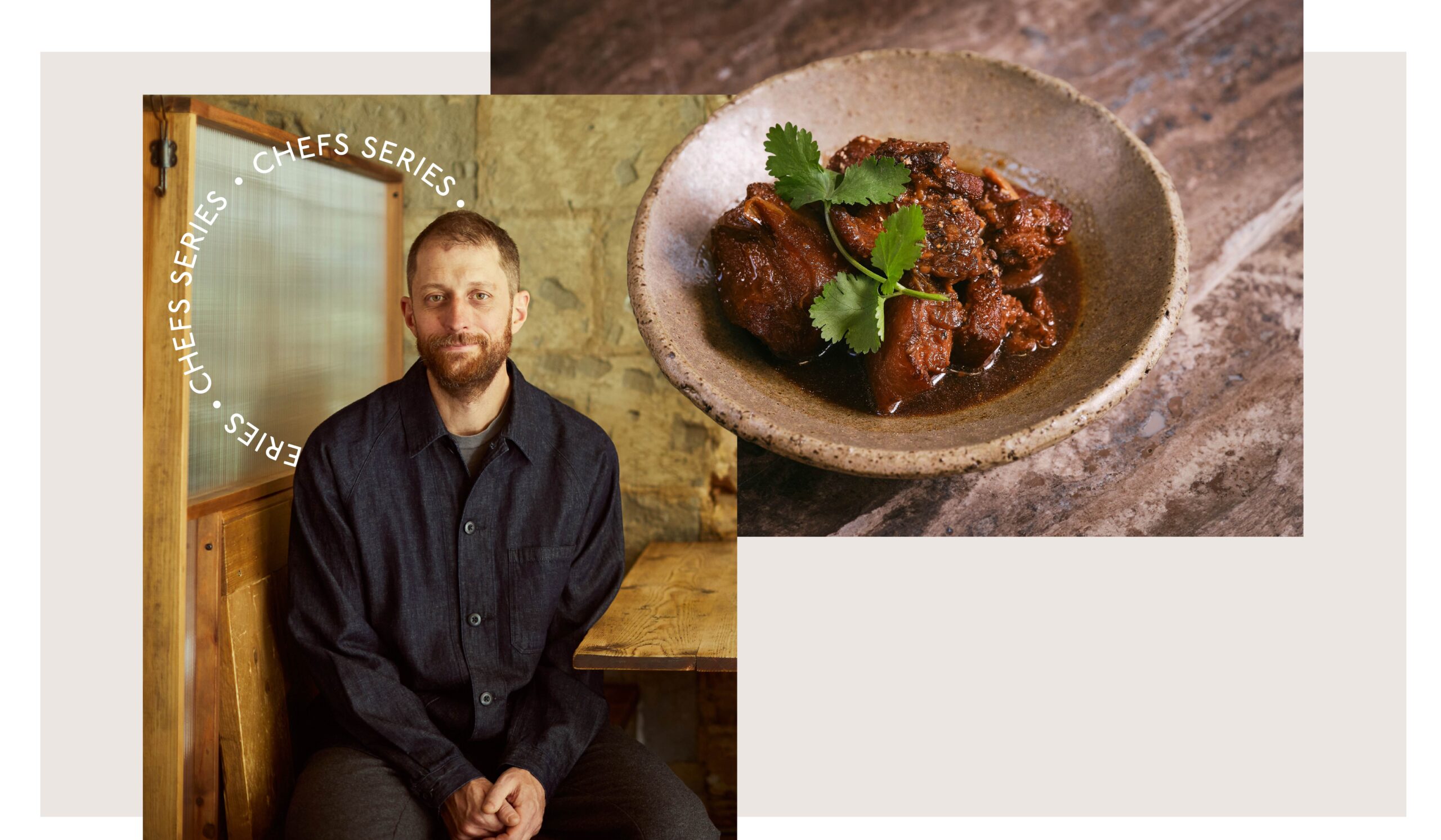
For this entry of Chef Series, we’re thinking flavour first. This Moo Hong dish, or Phuket-style soy braised pork belly and ribs, is packed with as much flavour as you could ever want from a meal and is perfect for a special dinner or to spice up the end of winter.
This recipe comes from Andy Oliver, Head Chef at Kolae, which opened last year in Borough and is run by Oliver and Mark Dobbie, the team behind the acclaimed Som Saa restaurant in east London. The Kolae grill and bar is named after the southern Thai technique of cooking skewers of meat, seafood, or vegetables over an open flame, basted with a coconut curry sauce.
This is a rich dish, which is served well alongside a spicy Thai salad or stir fry.
Soy-Braised Pork Belly & Ribs
PREP TIME: 30 MINTUES
COOK TIME: > 3 HOURs
SERVES: 4
Ingredients
The Pork
- 1kg of pork belly, with skin and ribs
The Paste:
- 25g Coriander roots
- 60g peeled garlic cloves
- 75g peeled and chopped shallots
- 5g sea salt
- 4g white peppercorns
- 7g black peppercorns
The Rest:
• 2 star anise
• 3g piece cassia bark, or cinnamon bark if you can’t find cassia
• Thai or Indian dried bay leaf x 2 – optional (avoid substituting western bay leaves, they don’t taste the same)
• Plain oil (e.g. sunflower) – around 500ml, enough to shallow fry the pork
• 100g good quality palm sugar
• 70g dark soy sauce
• 100g light soy sauce
• Light (white) chicken stock to cover – around 900ml
• 2 pandan leaves – optional, but nice
Method
• Prepare the pork: remove the ribs from the belly, leaving some meat on the ribs. Cut between each rib and then with a heavy cleaver, cut through each rib into two-inch lengths pieces. Or ask your butcher to remove the ribs and cut the rack of ribs into 3 or 4 strips of ribs (you can then easily cut between these with a knife).
• Pound the paste: in a pestle and mortar pound the salt with the peppercorns until all of the peppercorns are well broken down. Now pound the rest of the paste ingredients in one by one, starting with the coriander roots, until a coarse paste is formed. Set aside.
• Toast the cassia bark and star anise in a dry pan on medium heat until darkened a shade and fragrant.
• Add the bay leaves (if using) to the dry pan to briefly toast for a few seconds.
• Fry the pork: Heat the oil in a pan or wok, and test the temperature with a probe – it should be around 180 degrees. Fry the pork in 3 or 4 batches for around 1 to 2 minutes per batch, turning to colour all sides before removing. Be sure to bring the oil back to temperature before frying each batch.
• Allow the oil to cool slightly, then tip out all but around 4 tablespoons of oil to the wok. Next, add the pounded paste and fry on a medium-low heat scraping the pan regularly, until the paste is just starting to colour.
• Once coloured, quickly add the palm sugar, the whole spices, and 1-2 tablespoons of water, allow the sugar to melt and then continue to cook for 3-4 more minutes until the sugar starts to gently caramelize (you will see it darken slightly and you begin to smell caramel).
• Add the pork to the sugar and cook briefly to coat with the sugar and paste.
• Add the dark and light soy sauces and continue to cook and mix for 1 minute, before adding the stock and pandan leaves (if using).
• Cover the top of the port and simmer very gently for around 1.5 – 2 hours, mixing once or twice along the way.
• It is ready when the pork is tender but still holding together. For best results allow to rest for an hour or two before serving, and skim off any excess fat that collects on top of the sauce as it cools.
• Finally, simmer gently for a few minutes to reheat, spoon into a bowl and garnish with fresh coriander, and if you like, an extra pinch of ground black pepper. Serve with jasmine rice.
Tips

• To prepare the pork: remove the ribs from the belly, leaving some meat on the ribs. Cut between each rib and then with a heavy cleaver, cut through each rib into two-inch length pieces. Or ask your butcher to remove the ribs and cut the rack of ribs into 3 or 4 strips of ribs (you can then easily cut between these with a knife).
• Pandan leaves can be found at most Southeast Asian stores, and freeze well.
• Like many braises, this one is even better the next day. So making a day in advance works really well.