Jennifer Lawrence’s Magnificently Feral Performance In Die My Love Saves The Film
Once in a while, there comes along a film that viscerally shakes you. You walk out of the theatre feeling completely ruined. The last time I felt that way was when I watched Paul Mescal and Andrew Scott in All Of Us Strangers. And then this weekend, when I watched Die My Love, there was a part of me that was almost hoping to have that same experience. Whether or not it is okay to walk into a theatre wanting to be devastated is an issue I will deal with later – this is not the place for that. But what I will share here is my thoughts on a film I very much wanted to love.
The fever dream
Die My Love is based on the book of the same name (except there’s a comma after the Die in the novel), written by Ariana Harwicz, and follows Grace (Jennifer Lawrence), a young mother who starts showing signs of postpartum depression. The film poetically illustrates the breakdown of a woman who is struggling with her new identity as a mother, while left to live mostly alone in a remote country house. Her husband Jackson (Robert Pattinson) flits in and out of the scene, proving to be wholly incompetent at taking care of someone with mental struggles.
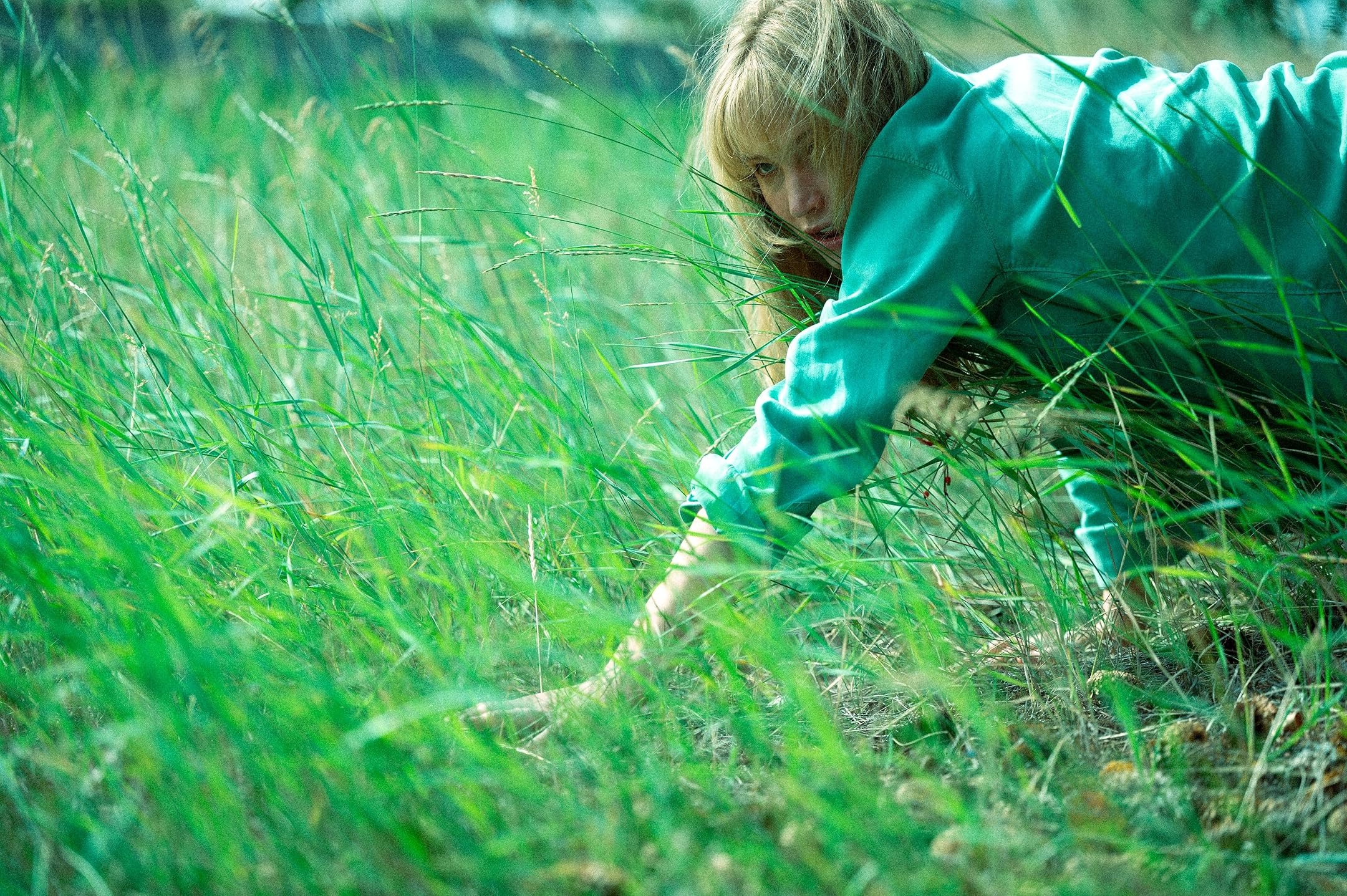
The film opens with Grace and Jackson arriving from New York, moving into an unkept, rather sad-looking house, with the hopes of starting a new life here, and we learn later that this is the home of Jackson’s uncle, who recently died by suicide. It begins gently – no background music, just easy chatter between Grace and Jackson. Until it suddenly cuts to a forest fire blazing. Loud music. Grace and Jackson are having sex on the floor. She’s pregnant. The baby is here. It is hot. It is always hot, she says. The film doesn’t waste time explaining the little moments before the baby arrives. The couple grows distant from each other with the arrival of their son, and it doesn’t help when Jackson brings home possibly the world’s most annoying dog. (We needed a cat, Grace says, when he produces their new pet). The animal’s sole purpose in the film is to bark relentlessly and loudly until you want to almost run out of the theatre to make it stop.
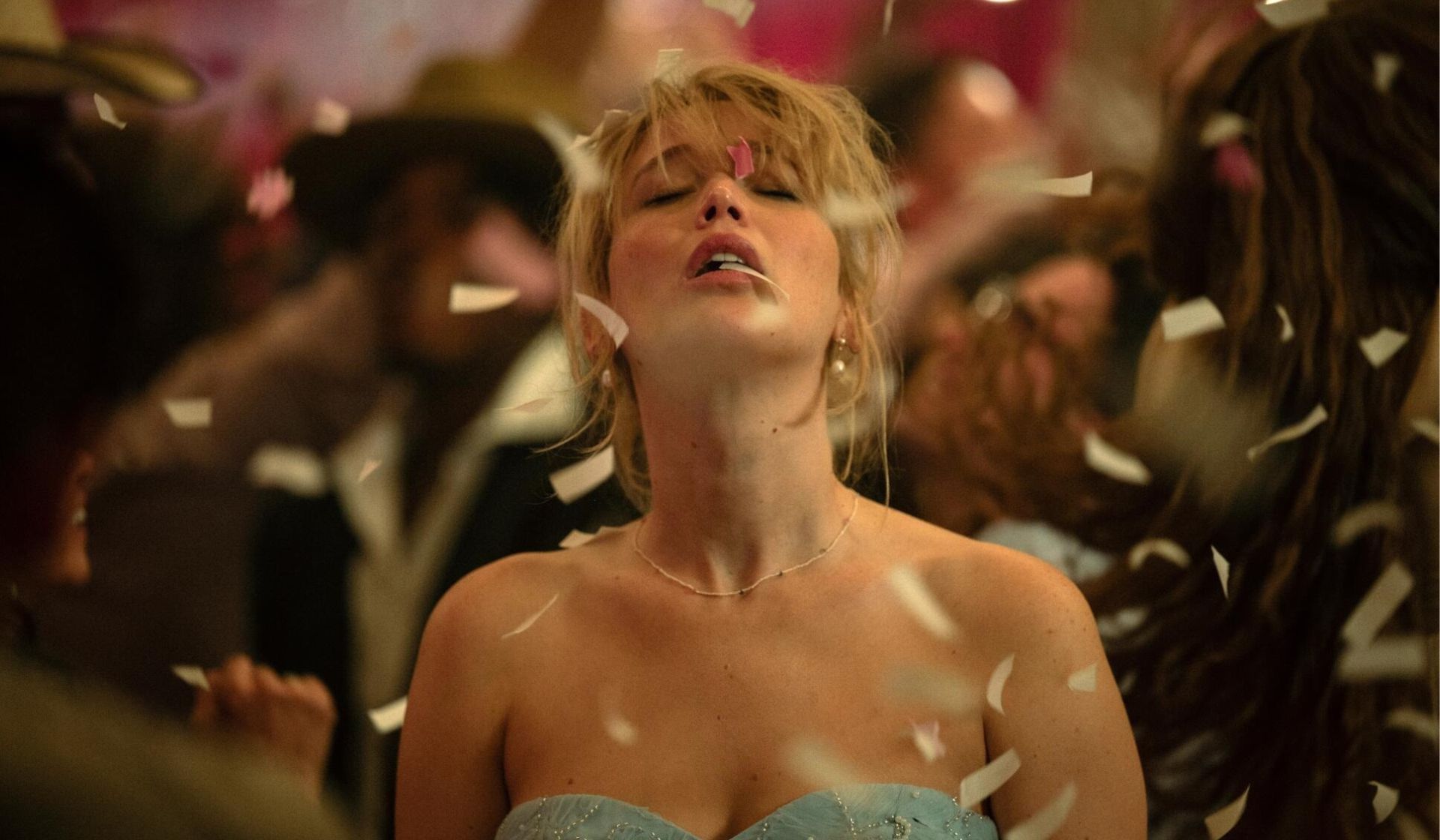
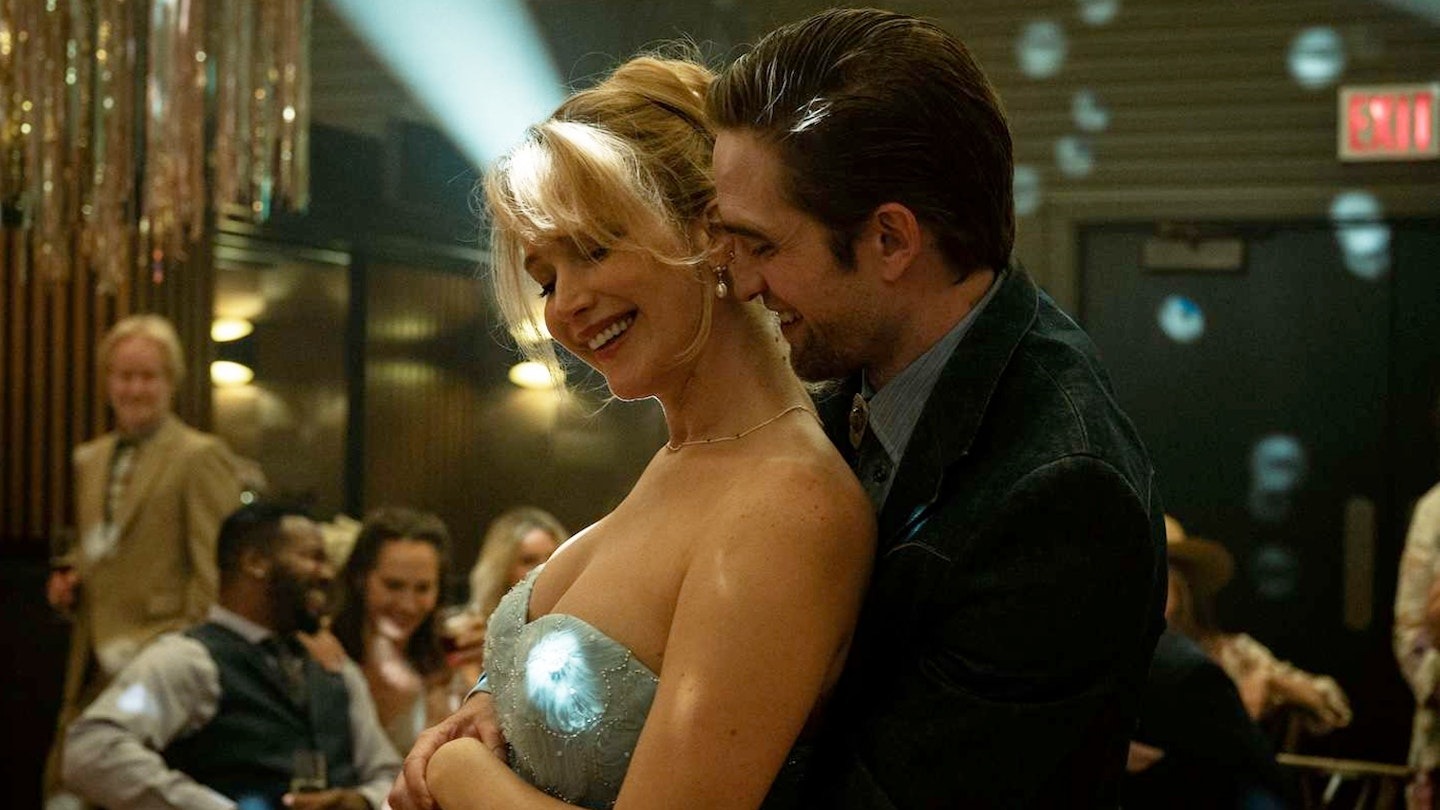
While it’s clear in the film that Grace is spiralling dangerously and Jackson is making it even worse, the chemistry between them is electric. Their relationship is the classic story of two eccentric, creative people (Grace, a writer who has stopped writing, and Jackson, a musician), who know exactly how to rile each other up, and don’t hold back while doing it. Whether they are driving in the car, singing songs or screaming at each other in the kitchen, both Lawrence and Pattinson put on career-defining performances. The physicality of their acting is beautiful to watch – whether she is doing what becomes Grace’s signature move – collapsing with her head between her knees, or dancing at her wedding with reckless abandonment, watching Lawrence move on screen is truly spectacular, and Pattinson matches her energy in every scene. They feed off each other in a series of wild, frenetic scenes that cut suddenly into moments of quiet.
It’s the silent moments that really get to you, though, just because there is so much unease in those minutes, even when there’s not much dialogue. Her fear of boredom, her desperate search for identity, and her deep, dark sense of frustration are palpable and uncomfortable to watch. But the film shows you her pain while only briefly touching on how or why, which, as a viewer, left me feeling frustrated.
In spite of themselves
The music and the deeply depressing house are their own side characters. To me, the house seemed to be a metaphor for everything Grace felt. It stood alone, with enough enforcement to stay standing, but inside, it’s crumbling. The house and Grace are both haunted by ghosts of the past, the loneliness of the present and the darkness of what is inevitable – self-destruction. The music tells us more about what’s going on than the dialogue does at times. Grace and Jackson sing John Prine and Iris DeMent’s In Spite of Ourselves to each other in the car. (She’s my baby, I’m her honey, I’m never gonna let her go.) The lyrics of that song are basically the whole theme of the show – two people who feed off each other’s toxicity in a way that threatens to destroy them completely. But in spite of themselves, they continue to stay together, in a desperate, all-consuming, deeply disturbing way.
In spite of themselves, they continue to stay together, in a desperate, all-consuming, deeply disturbing way.
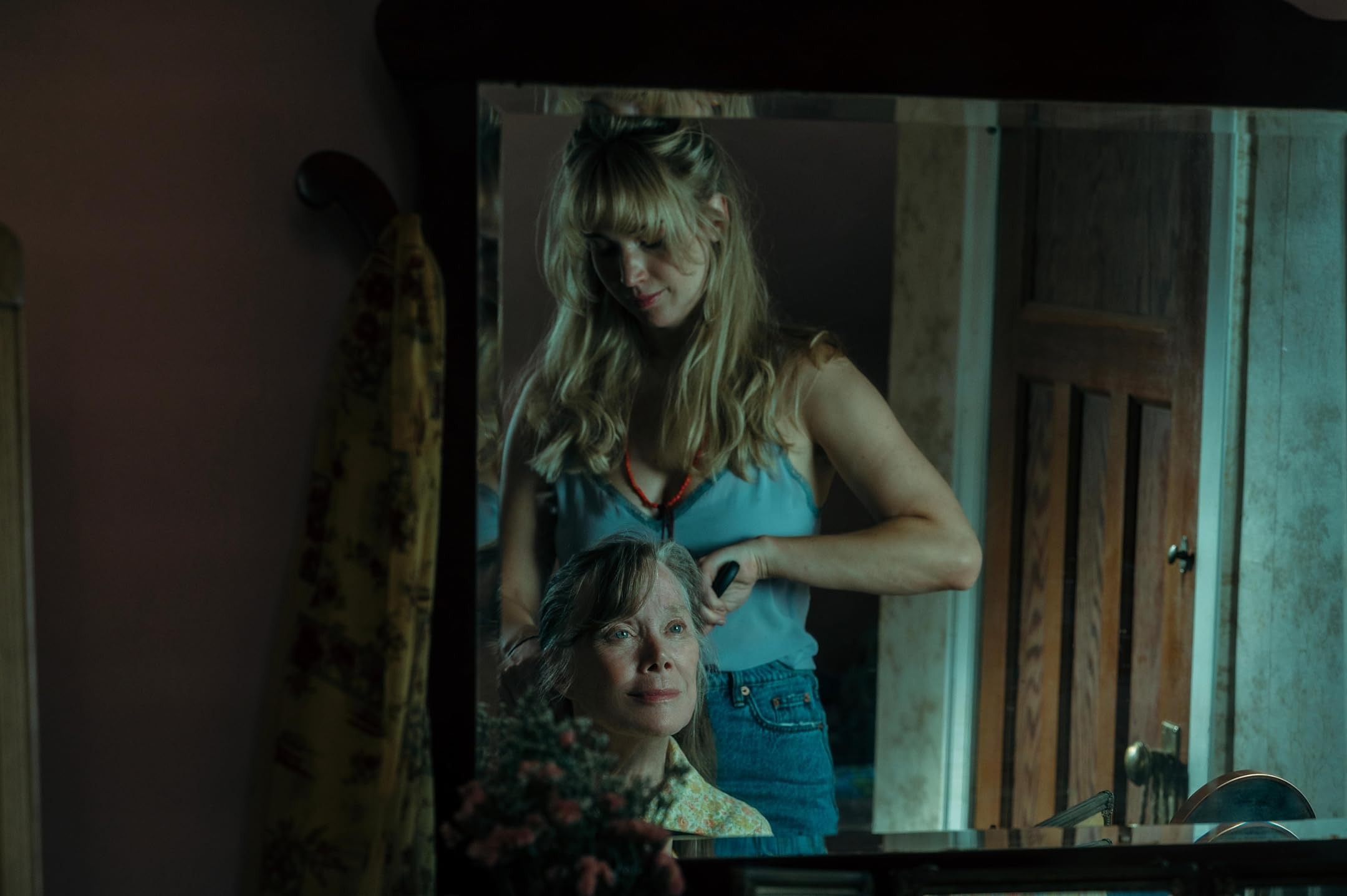
The moments of violence are thrown at you when you least expect them. Grace crashes through glass seemingly unprovoked, she strips at a party and jumps into a pool in front of a group of children, smashes her head against the bathroom mirror, causes a car crash, and eventually, shoots the dog. And somehow, in between all of that, there are moments of humour. In between her descent into madness, Grace is ultimately a funny person, even if the jokes are all deeply dark. Sissy Spacek, who plays Jackson’s mother, Pam, is also incredibly haunting as a grieving widow who first notices Grace’s condition. The scenes between Pam and Grace bring some tenderness to the film in little moments, where Grace is brushing Pam’s hair, or when Pam fruitlessly recommends yoga and running to help Grace. “Everybody gets loopy in the first year,” she says in an attempt to be supportive.
That mysterious ending
Much of the film is left with things unsaid and untold. I am not given enough information about the relationship between Grace and Jackson to root for them. How did they meet? What were they like before the baby? What exactly does Jackson do for work? There are too many moments where I am left with questions that are never answered, the biggest one arriving at the very end. Does Grace ultimately walk into the fire into her death? The last scene seems almost like a dream sequence, so I’m not even sure if it’s just her dreaming of death, or if she’s actually walking into the flames. If there’s one thing I hate, it’s an ambiguous ending. Maybe I’m just not arty enough, but I want to be told if someone is dead or not, so I could have grieved at the end of the film instead of just being confused. I was sadly quite unsatisfied when the credits began to roll.
The complexity of motherhood is a topic that I would love to see more of in cinema, but Die My Love seems to skirt around the trauma without actually putting you in the middle of it.
Andrea, Contributing Food, Culture & Lifestyle Editor

The film is ultimately a poetic and visually arresting depiction of a woman’s breakdown. It is beautifully performed, and the visuals and the soundtrack are perfect – I just needed more in terms of the story, and I didn’t like having so many questions at the end of the film. I would recommend watching it even if it’s just to witness two perfectly paired actors who are absolute masters of their craft. The complexity of motherhood is a topic that I would love to see more of in cinema, but Die My Love seems to skirt around the trauma without actually putting you in the middle of it. I can see why the film would generate Oscar buzz, but I’m still waiting for that next film that has me sobbing in the theatre, offering tissues to the stranger next to me.