How To Contact Influencers And Get A Positive Response
People always ask me, “What does it take to get an influencer raving about my product or business?” My answer is that it takes a lot of determination, perseverance, a plan of action and making use of a really useful platform which provides contacts and data on influencers and celebrities, such as The Handbook’s celebrity and influencer marketing platform.
According to data from The Handbook social media engagement over the last 12 months has increased by 67 percent over normal usage rates. The use of video platforms is also increasing, and we are seeing influencers and celebrities utilising platforms like Instagram Live to entertain and connect with their audiences. Just in March, TikTok saw 6.2 million downloads, a 27 percent increase compared to February.
Four years ago, the average person needed to see an advert six times before they responded to it, that number has now risen to an average of 16 exposures, because of this the world of marketing, advertising and media has undergone an enormous power shift in recent years, driven by consumers’ demand for more authenticity from brands. The rise of digital influencers and celebrity influencers has gone through the roof. One of the main drivers of influencer marketing is the fragmentation of consumer attention, but also, we are no longer just interested in watching television; our attention is spread across various digital channels, with a major focus on social networks. Other huge platforms, such as YouTube and Instagram, are currently seeing a lot of the influencer marketing spend, but platforms like Pinterest and Instagram are also on the rise every day.
Need help growing your business with celebrities and influencers? go here
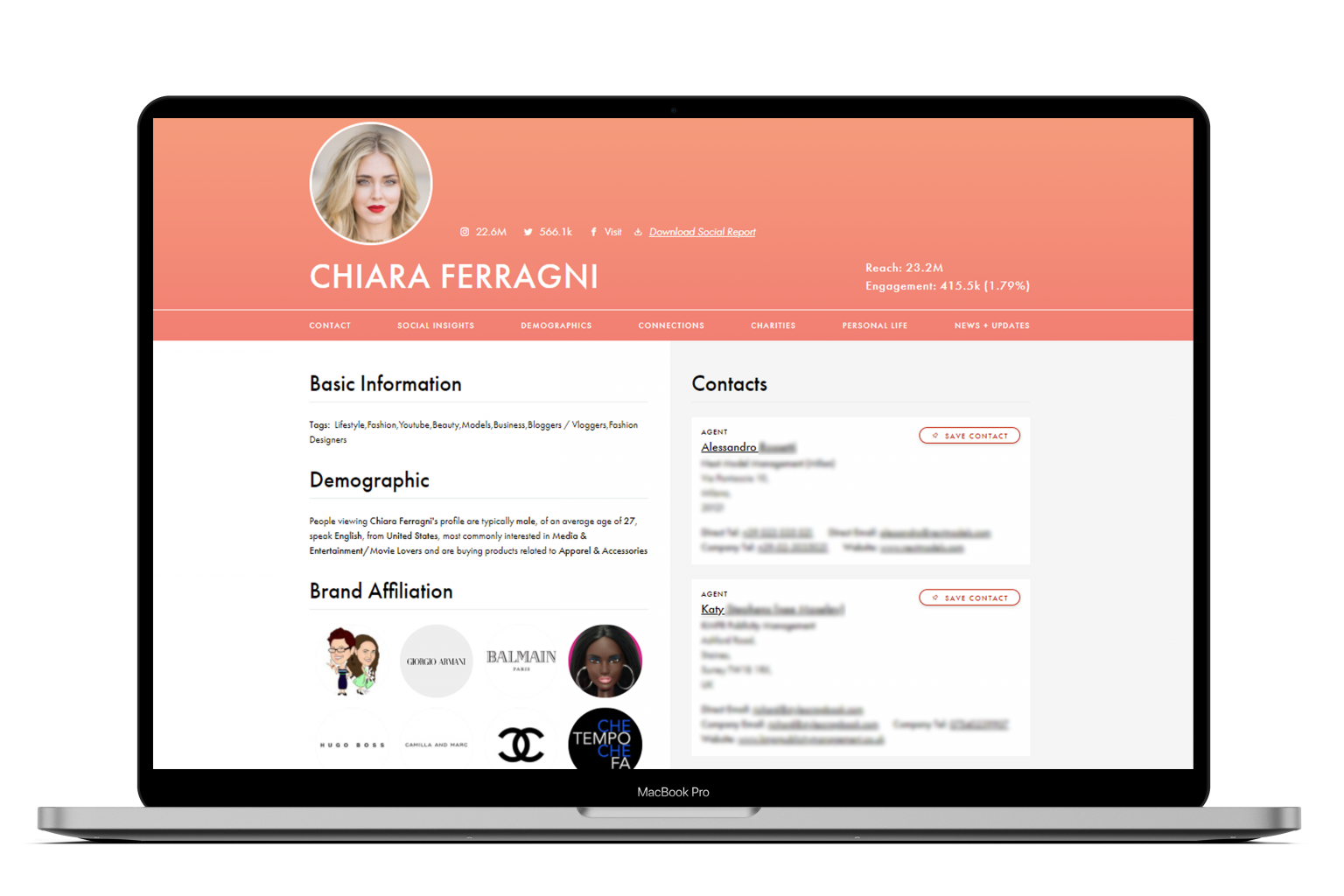
With the emergence of this new type of marketing, technology is being developed to improve the effect and reach of influencers. Existing influencer platforms are becoming more sophisticated in matching brands to influencers. People come to our site for influencers’ insights now almost as much as for celebrities. In addition to providing the influencers’ contact details, users are now equally interested in the demographic data, which allows companies to determine the influencers that are right for their brand. You might think a set influencer is perfectly suited to your business, but actually what is key is how relevant their audience is to you, so, providing the user with clear data on the interests of the audience, their location, their spending habits and social status is of equal importance.
I constantly have to remind my members and subscribers that celebrity and influencer association should not be merely an option; it should be part of every company’s marketing plan. In today’s world, celebrities and influencers dominate social media, news headlines, TV channels and people’s conversations. Celebrities grace the cover of every magazine, and they’re achieving an ever stronger online presence through their massive social media followings. Using social media as an online currency, brands can be made (and broken) through as little as a single tweet or a Facebook post.
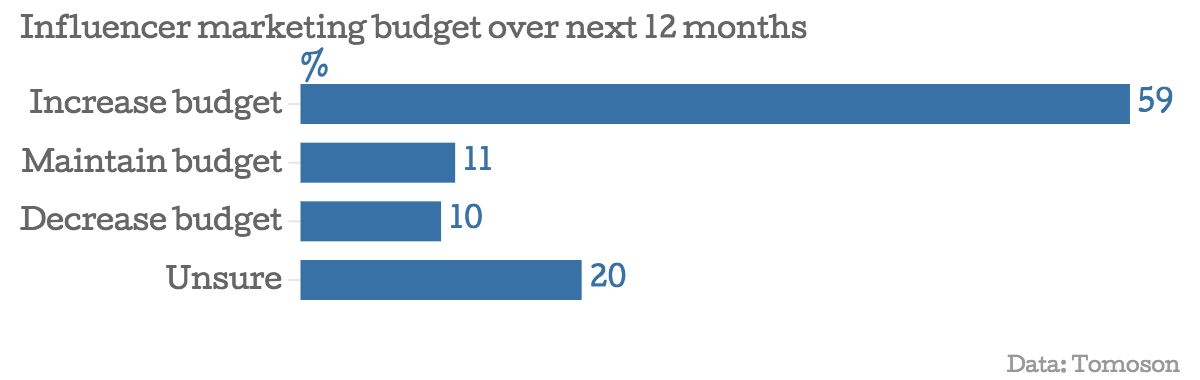
According to a recent poll on the Tomoson blog, 59% of marketers are planning to increase their influencer marketing budgets over the next 12 months. They’ve found that businesses are also making $6.50 for every $1 they spend on influencer marketing and that influencer marketing was also rated as the fastest-growing online customer-acquisition channel, beating organic search, paid search and even email marketing. Interestingly, affiliate marketing performed worst in this category, with just 5% of businesses counting it as their fastest-growing channel, with the top 13% earning $20 or more. A resounding 70% are earning $2 or more, with the rest either breaking even or failing to generate a return on investment.
When banner ads first came out, the click-through rate was 40%; now it’s just 0.001%, and perhaps this, in part, explains the rise in influencer marketing.
So what is an influencer?
An influencer is someone who has an influence over someone else, it’s the essence of selling. You are influencing someone to buy something.
For example, beauty vloggers like Lisa Eldridge will often be seen promoting a new line of beauty products or fashion bloggers like Aimee Song (Song of Style) will promote a new fashion line. Their endorsements are considered trustworthy and relevant because they’re considered experts in their respective niches. Influencers will also often be seen using the products and giving demonstrations with them, as Lisa Eldridge does in her make-up tutorials, but this sort of promotion rarely happens with celebrity endorsement.
Why do we need celebrity associations and digital influencers?
All of these things make it the fastest-growing customer acquisition channel. Like all businesses, brand, recognition and outreach are exceedingly important to success, using a celebrity to create this recognition can be an excellent tool. In short, choosing the correct celebrity will create great media exposure. Not only do people pay attention, but they also talk, and with the power of social media, conversation momentum is more important than ever for campaign support and success. Top celebrities and influencers get approached by hundreds of people and companies weekly, wanting their support to endorse their product, support their charity, or attend a high-profile event. This means that being able to communicate successfully with the celebrity or influencer of your choice is crucial.
Brands and retailers across industries are increasingly turning to influencers and content creators as major marketing channels to reach their target audiences. Here are several examples of brands leveraging influencer marketing to drive growth, visibility, and engagement:
Glossier has cultivated a loyal customer base by collaborating with influencers, beauty bloggers, and even everyday consumers who are passionate about skincare and makeup. The brand focuses on fostering relationships with micro- and nano-influencers, as well as partnering with beauty experts to review and promote their products. Glossier’s influencer partnerships helped the brand achieve cult status. Aliyah Maya, a beauty and lifestyle influencer, has worked with Glossier to showcase the brand’s skincare and makeup products, particularly through Instagram and TikTok. She frequently shares tutorials and product reviews, emphasizing natural, minimal makeup looks, which aligns with Glossier’s “skin first” philosophy. Katie Jane Hughes, a celebrity makeup artist and beauty influencer, has frequently promoted Glossier products through makeup tutorials and Instagram posts. Her signature glowy, dewy makeup looks fit perfectly with Glossier’s aesthetic, and she has used products like Cloud Paint and Boy Brow in her tutorials. Sephora partners with beauty vloggers and makeup influencers to create tutorials, product reviews, and haul videos featuring their products. They often host events like Sephora Squad, where influencers are invited to try new products and share their experiences with their followers.
Need help growing your business with celebrities and influencers? go here
What is a macro influencer vs micro influencer?
In simple terms, a macro influencer has a large global following, whilst a micro influencer holds a smaller, often local following. Normally, a micro-influencer is anyone who has between 10,000 and 500,000 followers on their social media channels, and a macro-influencer is anyone with figures greater than these. However, the key thing to consider is not the numbers but the level of engagement. Micro-influencers can be found in almost any sector. Our platform categorises these influencers into focused groups, such as beauty, fashion, health, etc and helps you contact influencers that are right for your brand.
How can micro-influencers help brands?
Micro influencers spend all of their time building up their following and not necessarily much time monetising on that following, therefore not only do they generally put in a lot of work to ensure they offer the brands as much value as possible but they also have a highly engaged audience who trust them and are not used to being constantly sold to by them. Often, the larger the following is, the lower the engagement rate is; therefore, brands can benefit from hiring a group of micro-influencers or a combination of micro-influencers and celebrities to raise the ROI of a campaign.
However, you don’t have to be a big brand with huge budgets to work with influencers, there are many ways in which you can reach out to them, even if your budget is nominal. I have put together below a checklist of things you need to be considering.
So, How to Contact Influencers? Our secret checklist with things you need to do…
• Identify your influencers /celebrities really early on, and find the right influencers/celebrities for your brand
• Get to know who they are
• If you are a small business, try going super niche. Don’t go after the big names. a) They will get approached loads. b) they won’t necessarily have the same target market as you. Look for micro-influencers who have a smaller audience but one that is more engaged. See who has the most influential voice in your space
• Collect their info. We have all of their info on The Handbook: name, contact info, all their social handles and who their audience is to make sure they are relevant, along with our notes section to make sure you don’t reach out twice with the same celebrity.
• The Handbook Audience Insights gives you a super clear breakdown of who a celebrity’s or influencer’s followers are and what their interests are as well as full demographics. If you’re a travel brand, for example, look for celebrities or influencers whose audience is interested in travel.
• Build a relationship and get to know them first. Even if they are big supporters, share their content, and ask them questions, it gets you on their radar. No one is unreachable. Build relationships with those who are in their circle and around them, as they will help you get in with that influencer
• Consider customising a product for them
• It’s a numbers game; check out The Handbook PRO – reach thousands of celebrities and influencers instantly
• If gifting, make the package stand out
• Hand deliver it to the agent
• Send a handwritten covering note
• Send it via recorded delivery so you know it reaches them
• Ask for something small
• If an event, book a car and velvet rope
• Consider the indirect route if no joy, gift to celebrity assistants
• Create a niche and get noticed, e.g. Vampire breast lift cream at the Oscars
• When doing the outreach, reach out on email and on all the social platforms; email has the best retention rate and conversion rate for getting a response. When I write an email, I always follow the same method.
• Look at who the influencer’s followers are and what their interests are, e.g. if you are in the fashion business, look for influencers whose audiences are interested in fashion. We give you this data on The Handbook, we provide full audience insights and intelligence.
If you are gifting, make sure your package stands out so there is more chance of it getting noticed. Send a hand-written personalised note. Also, follow the celebrity or influencer on social media to make sure what you are sending is something they may like, and you can even mention that in your note. For example, if on social media, the celebrity or influencer says she loves hair masks, then mention that in the note, or if she’s recently had a haircut, say that you think this mask would be great for her new hairstyle. Monitor and evaluate the partnership: Once the partnership is in progress, monitor and evaluate the performance of the influencer’s content and the impact on your brand. This can help you to adjust your strategy for future partnerships.
I actually recently put together a book, Proven Secrets to Celebrity and Influencer Marketing, with everything you need to know for contacting influencers and celebrities.
Another tip is it’s best to use next-day or special-day delivery or Federal Express. FedEx has a delivery option called Express Saver that’s cheaper, but it has a better chance to get into the right hands and past the gatekeepers because it’s in a FedEx envelope, and people will see it as more important.
Juicy Couture is another great example of a brand that grew from noting they set up the company with $200 and grew it into a multi-million pound business with the likes of Madonna and Paris Hilton frequently wearing their products. The owners, Gela and Pamela, turned it into a multi-million pound business, and the growth was largely due to celebrity gifting and sending out personalised gifts. They sent out a personalised hoodie to Madonna and it went all around the world, so they then sent them to Cameron Diaz with ‘Cameron’ on, and one to Drew Barrymore with ‘Mrs Green’ on, as she was married to ‘Tom Green’ at the time. Any time someone got married, the business women sent them personalised tracksuits.
Make sure you include all of your contact details and some info on the product. Try to also include a photo of you using the product or other celebrities using it. If you don’t hear back, then follow up to check they received your gift and see if they liked it. The world of marketing, advertising and media has undergone an enormous power shift in recent years, driven by consumers’ demand for more authenticity from brands.
The most important thing is to build long-term relationships with your celebrities and influencers; this will always be better for you, your brand, and also the celebrity and influencer. The ultimate focus is on relationships, after all, not one-off campaigns. Actually get to know what the celebrity likes and the sort of things they are likely to promote. As well as what they like, look at what their problems are and how your brand can solve them. When Estée Lauder first started out, she gifted celebrities – the company is now worth $5 billion, with Kendall Jenner as its current face. Other smaller brands, such as Rodial, gifted to Kylie Jenner. She Instagrammed the product to her millions of followers, and sales went through the roof from just the cost of one product.
Another great example of a brand that successfully grew through influencer gifting is the watch brand Daniel Wellington, They took what resources they did have (around $30k) and focused on micro-influencers. They understood way back in 2010, when Instagram was in its infancy as a social media platform, that they were far better off utilising their financial means to reach out to smaller micro-influencers rather than big celebrities. The rationale was simple: the total reach of using multiple micro-influencers was similar to that of one A-list celebrity, and the asking price was a fraction of their more famous counterparts. Daniel Wellington offered influencers a free watch in exchange for a post on their Instagram accounts. They asked the influencers that they worked with to include their own unique code to offer their followers 15% off, this enabled influencers to offer not only additional value to potential consumers but also allowed them to make money through tracked sales. A win-win on both fronts.
Throughout your targeting, consider how you can work with your influencers as part of a long-term strategy. Look for innovative ways to encourage influencers to work with you and how to grab their attention, make sure you know what the latest influencer trends are, and the tools that are most likely to work for you as a brand. Check out this useful guide on the trends to watch out for throughout 2023.
Need help growing your business with celebrities and influencers? go here
If you are sending gifts to influencers or celebrities, make sure you do it with their interest in mind. think, ‘What is in it for them, and why would they want to try your product?’ It’s about relationship building, and when you do give a gift to them, ensure that you grab their attention; this is usually the first thing the celebrity and agent will read. It’s important to get them interested and get them out of their current environment or activity. For example:
Hi Sarah,
I am Elly Stancliffe, founder of The Handbook, and I want to welcome you officially to my world. About 10 years ago, I started my first online business, and this hobby became my obsession and business.
Relate it to them early on.
Who/position: Who are you? Introduce yourself very briefly. Show/tell why they should listen to you.
What: What do you have? Introduce your product or offer briefly. It’s important not to just go on about the opportunity; show how you deliver value.
Why: Why do you need it? Explain the benefits of your offer and ideally relate it to them.
I read your interview in xxx magazine, where you said you have dry skin, or you don’t wear make-up f you’re struggling with ‘dry skin’ then I would love you to try this because it will help …
I read your great interview in xxx on xxx and I’ve got a question for you. I’ve got this great face cream that’s going to radiate your skin
Call to action: Ask for something small. If you like it, let me know, and I would love to keep sending you more.
The process is about sending a great product that’s going to add great value to someone. So, instead of screaming for attention, you attract attention by giving value before there is a hint of asking for anything in return. Life gives to the givers and takes from the takers. Giving something as a whole is a lot easier than trying to pay for promotion; throughout this entire sequence, you’re layering in all the mental triggers. Since you’re sending a free gift, you will hit the reciprocity trigger, and by showing your knowledge of the topic and your position, therefore, you hit the authority trigger. The more you reach out to them, the trust will become stronger between you and that person, resulting in more feedback, and hopefully, their thank you’s will help build a community and endorsement. The more celebrities and influencers you reach out to, the better your chance of a productive outcome. If you have not heard back, make sure you always follow up – I know it is tempting to just fire another email, however if you take the time to pick up the phone or even write a handwritten letter, this will make you stand out from the crowd, and most likely yield a more positive response. Remember that celebrities and their agents are constantly bombarded with product samples and emails, so do not despair if you do not immediately get a response.
Just because you admire a celebrity or influencer does not mean they are right for your brand. Celebrity and influencer endorsements can often be incredibly expensive and very useful for enhancing a company’s awareness and credibility. Endorsements can be particularly useful for brands that want to reposition themselves or those which are just starting out. In all of these scenarios, celebrities and influencers can create a surge of consumer interest that can be even more impactful with the addition of PR coverage.
Therefore, it’s key that you do your thorough research. This is certainly a tip which seems really obvious, but you would be surprised how many people don’t follow it. ‘Do Your Research’ means thinking very carefully about the influencer you wish to get involved and whether they are actually likely to support your cause. For example, if you have a charity that supports malaria, look out for any celebrities travelling to Africa that you could approach about issues that they may encounter. One of the most effective ways to get in touch with influencers is to either ring their agent, publicist or manager or to email them directly. When doing this, you need to have a clear idea of the goals of your charity; why should this specific celebrity support your charity, and why are they a suitable ambassador? If you get a negative response from their representative, then you could always ask them if they have another specific influencer on their books that may be interested in supporting your charity. In the same way, if you are sending a product, research the influencer and make sure they are likely to appreciate your product and that it is something that will benefit them, thus increasing the chances they may mention it to their followers.
The rise of digital influencers and celebrity influencers has gone through the roof. As well as providing the influencers’ contact details, users are now equally interested in the demographic data, which allows companies to determine the digital influencers that are right for their brand. You might think a set influencer is perfectly suited to your business, but actually what is key is how relevant their audience is to you, so, providing the user with clear data on the interests of the audience, their location, their spending habits and social status is of equal importance.
Digital Influencers now represent new opportunities for brands to reach consumers through channels that they trust. Consumers’ attitudes have changed. However, the celebrity pull is also still strong and represents some of the most memorable campaigns and adverts. I believe both areas need to be explored, there is no set rule as to which is more effective, as they both do different things and will create different results amongst different businesses. The key is in identifying the correct ambassadors and endorsers for your business.
For celebrity and influencer contact information and to contact influencers that resonate with your brand, check out The Handbook’s Celebrity and Influencer marketing Platform.