The Interiors Insider With Lucy Barlow, Co-Founder Of Barlow & Barlow
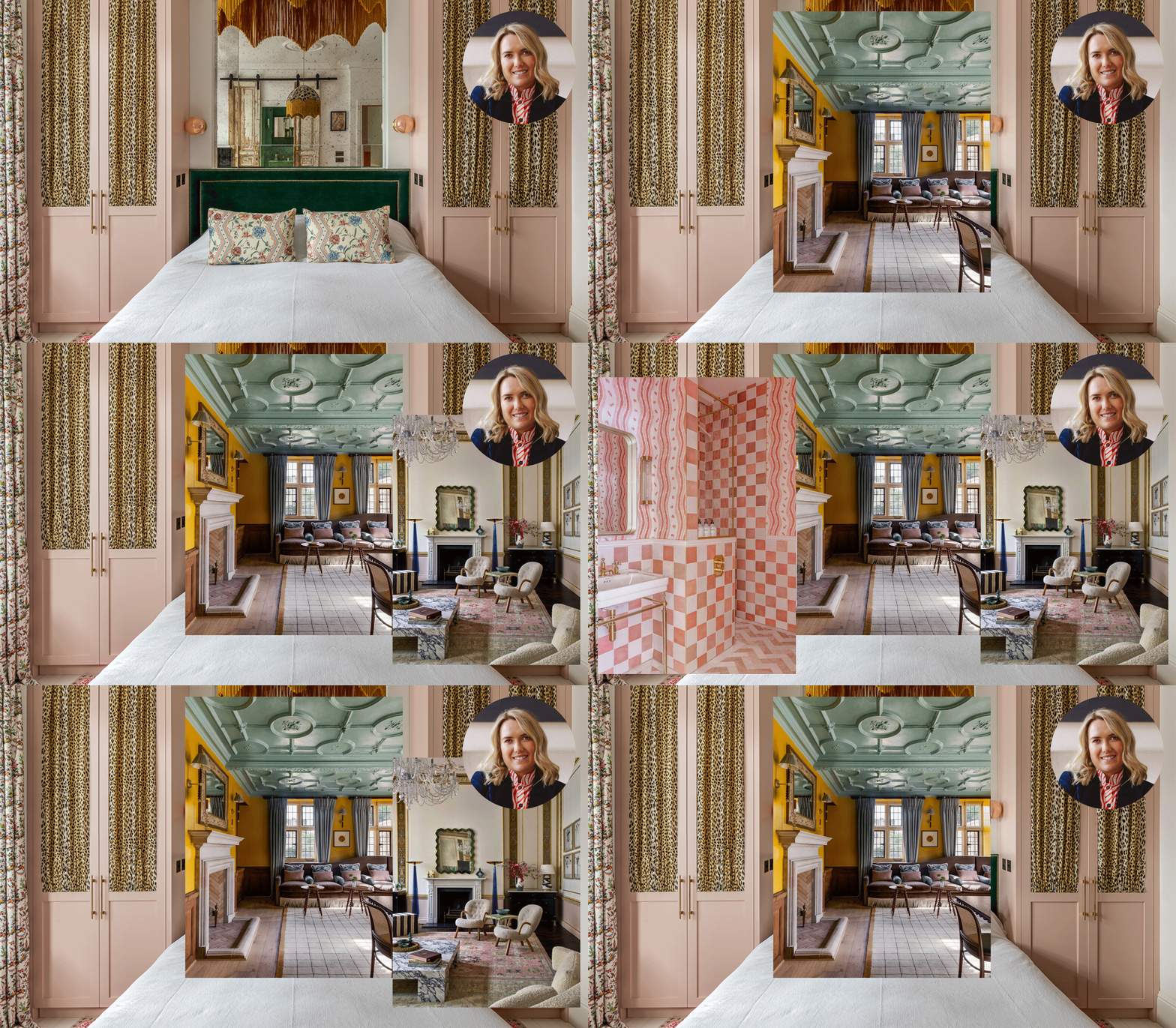
We sat down with one of Britain’s best-loved interior designers, Lucy Barlow – one half of the design studio Barlow & Barlow –to take a look inside her interiors little black book. Known for her eclectic and innovative style that marries beautiful craftsmanship with personal flair, interesting texture with vibrant colour and print, her projects create something unique: spaces that are fun, functional, and feel timeless.
Here, she shares her industry secrets, from how to nail perfect lighting to the brand she returns to time and time again…
1. The standout brand in interiors right now is…
Colours of Arley… They feel particularly relevant, and have an instinctive use of colour and pattern that feels joyful but still grounded. There’s a confidence to it that avoids nostalgia and feels very much of now.
2. The brand I’d happily buy for the rest of my life is…
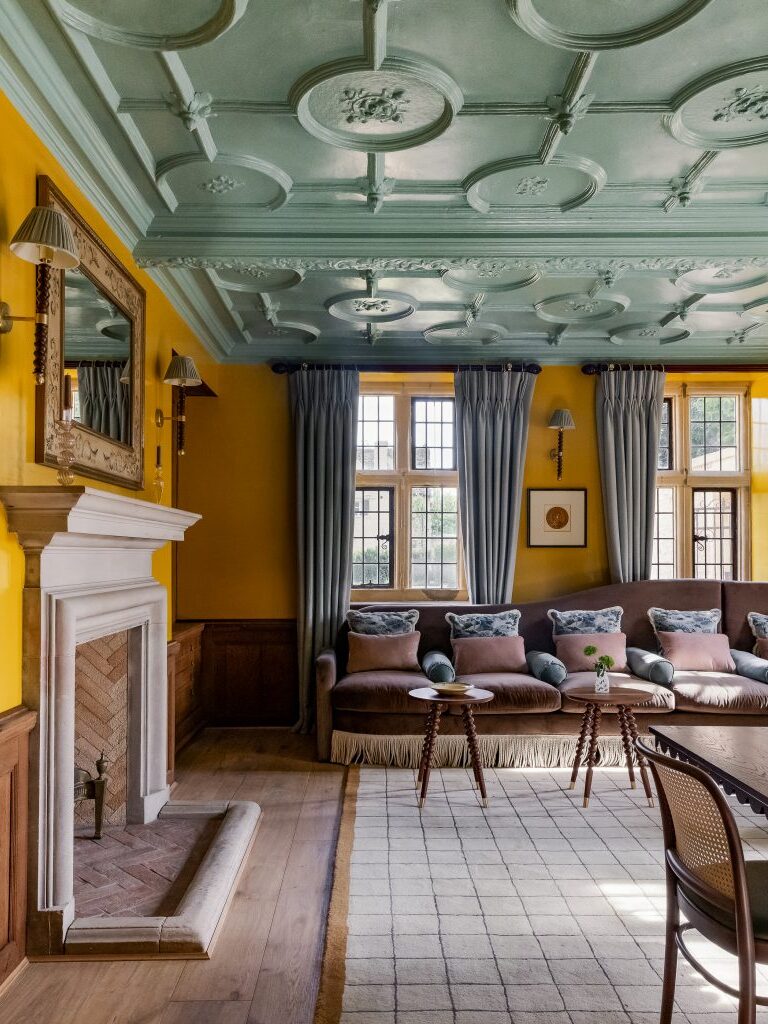
Soane Britain. Their pieces work beautifully because of their quiet permanence – rooted in British craft, natural materials and a palette that feels calm rather than overtly childlike. The pieces sit comfortably alongside antiques and evolve as a child grows, giving a room longevity, architectural balance and a sense of inherited design rather than something overly themed.
3. For beautiful home accessories, look to…
Bettina Ceramica for pieces that introduce craft and irregularity, objects that feel quietly personal. Feldspar for its quiet clarity and sense of considered restraint. The ceramics feel deeply English without slipping into nostalgia, pared back, tactile and grounded in everyday ritual.
4. For sustainable options…
I’m drawn to brands where sustainability feels embedded in the making rather than used as a headline. In Casa by Paboy has a beautiful sensitivity to natural materials and craft-led production.
5. For great lighting, I use…
Rose Uniacke for restraint and proportion, and antique dealers for pieces that bring warmth and irregularity. A slightly imperfect vintage lamp can give more character than something newly designed.
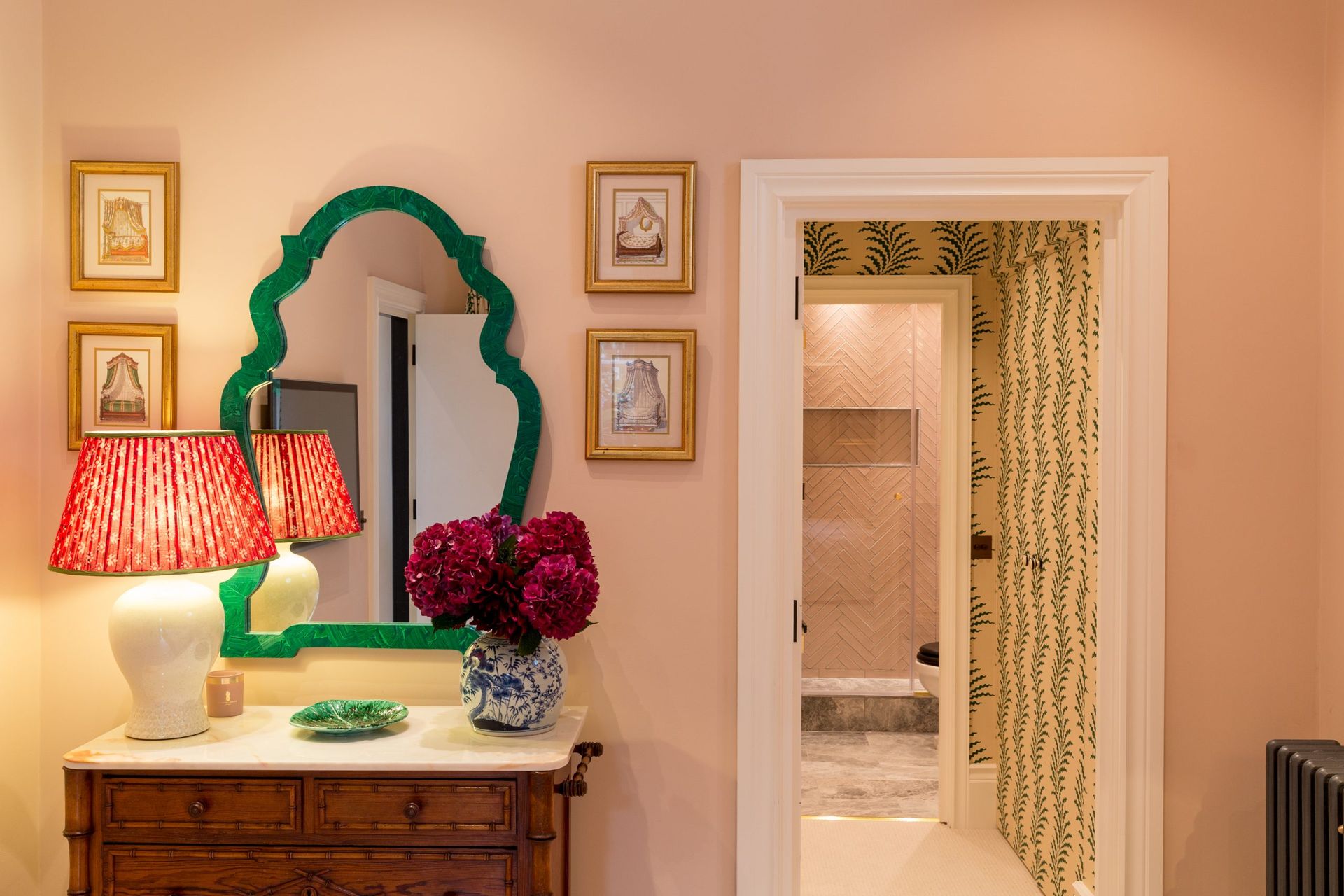
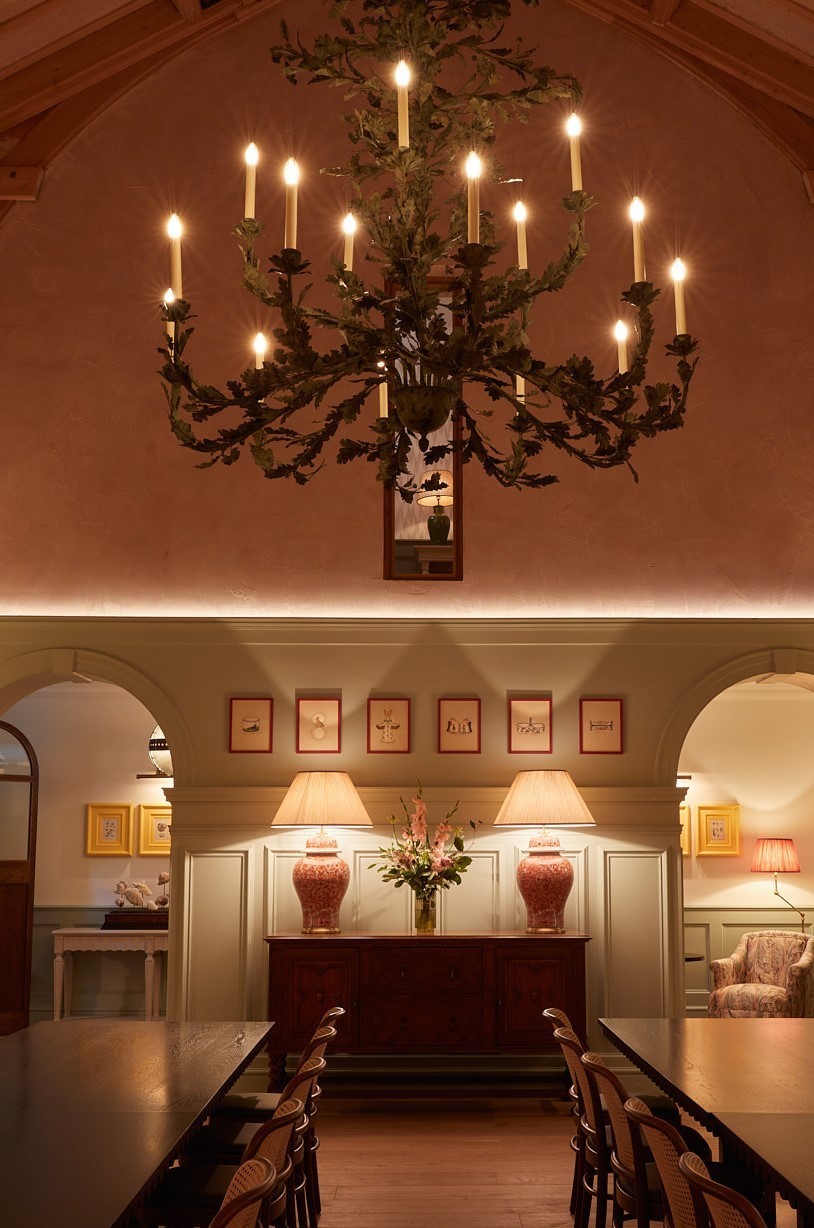
An imperfect vintage lamp can give more character than something new.
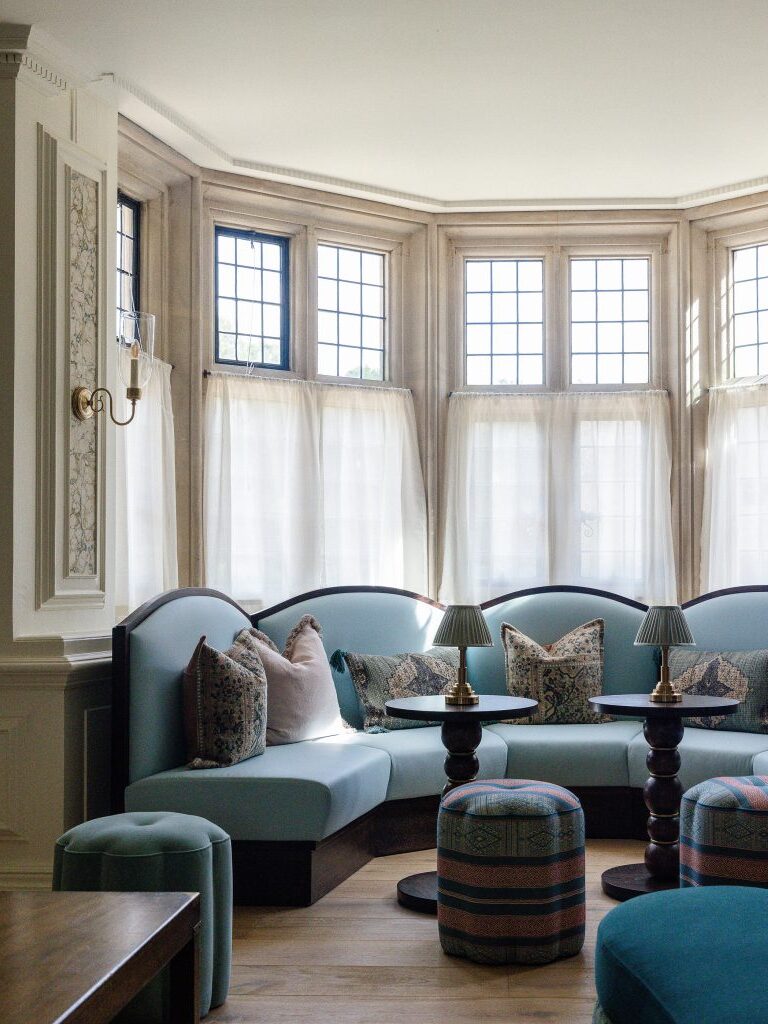
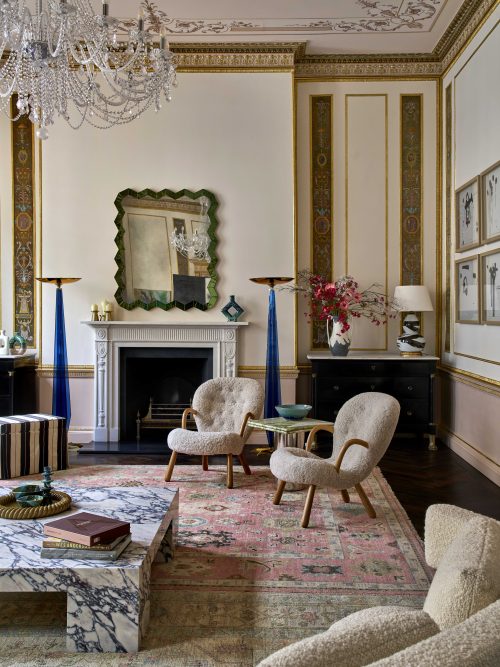
6. For gorgeous sofas and seating…
Dudgeon sofas and George Smith remain a constant for me, the comfort, proportion and longevity are hard to rival, and they only improve with age. I also often look to Soane Britain for pieces that feel quietly architectural and beautifully made, and Pinch when a softer, more sculptural silhouette is needed.
Ultimately, I’m drawn to seating that feels generous and lived-in rather than overly styled, pieces that anchor a room and invite you to stay a while, not just admire them from across the space.
7. For wallpaper, I’m really drawn to…
Iksel Decorative Art and their scenic wallpapers, which have an incredible sense of depth and narrative. Although printed, the quality is so refined that they read almost like hand-painted panels, bringing atmosphere without feeling overly precious.
I also love working with Grasscloth from Thibaut Design, for its texture and subtle irregularity, which adds warmth and tactility in a way that feels architectural rather than purely decorative. Ultimately, I look for wallcoverings that create a backdrop with presence – something that anchors the room while allowing everything else to layer naturally around it.
8. For vintage interiors and antique pieces…
I always come back to Lorfords Antiques; there’s real depth to what they source, and I love the sustainability of giving older pieces another chapter. Howe London is another constant reference for beautifully judged antiques, and I often find smaller, unexpected treasures at Sunbury Antiques Market.
Online, platforms like 1stDibs and Vinterior are invaluable when researching specific forms or eras, while Battersea Decorative Fair is always worth a visit for its mix of dealers and decorative pieces.
My main tip is to focus on proportion first; upholstery and finish can evolve, but the scale and silhouette of a piece are what allow it to sit naturally within a room.
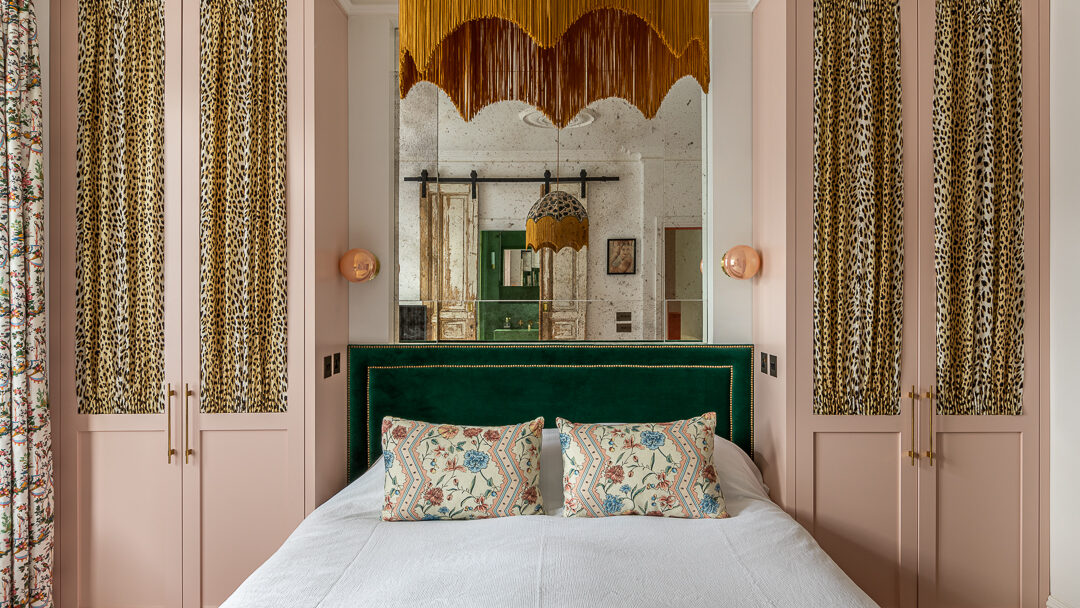
9. For soft furnishings and fabric brands…
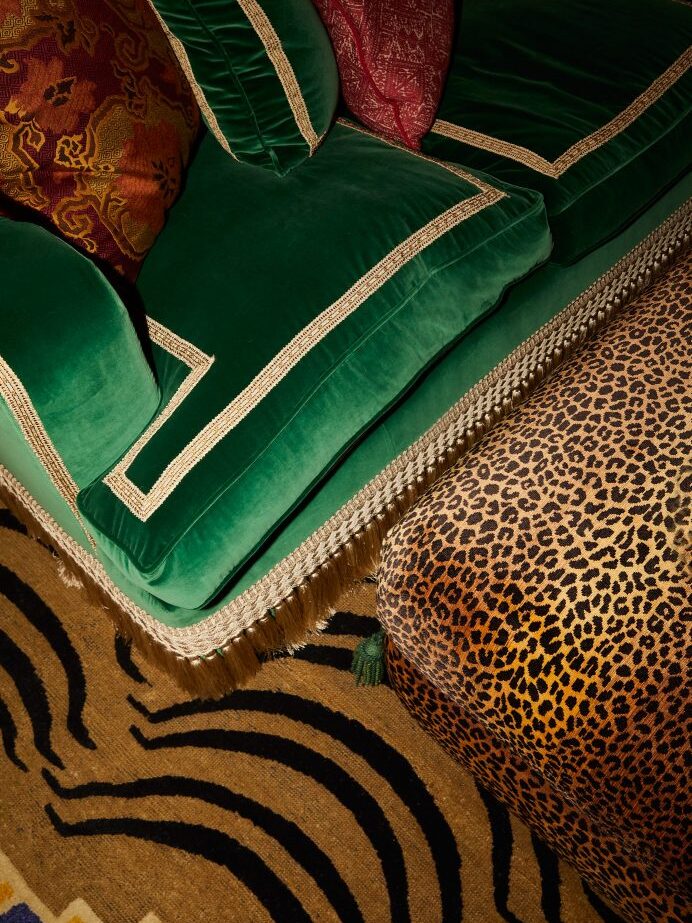
I’m always drawn to the depth of archive and confidence with pattern you’ll find at Pierre Frey and the Guy Goodfellow Collection, both feel painterly, layered and quietly assured. Christopher Farr Cloth and Vanderhurd bring a graphic clarity that works beautifully within more architectural schemes, while Soane Britain offers a timelessness that anchors a room.
I also return to Schumacher for its breadth, and look to Pelican House and Shame Studios when I want something that feels collected and slightly unexpected. Ultimately, I gravitate towards fabrics with texture and nuance, materials that layer naturally and become part of the architecture of a space rather than simply sitting on top of it.
10. If you’re after great kitchens and cabinetry, check out…
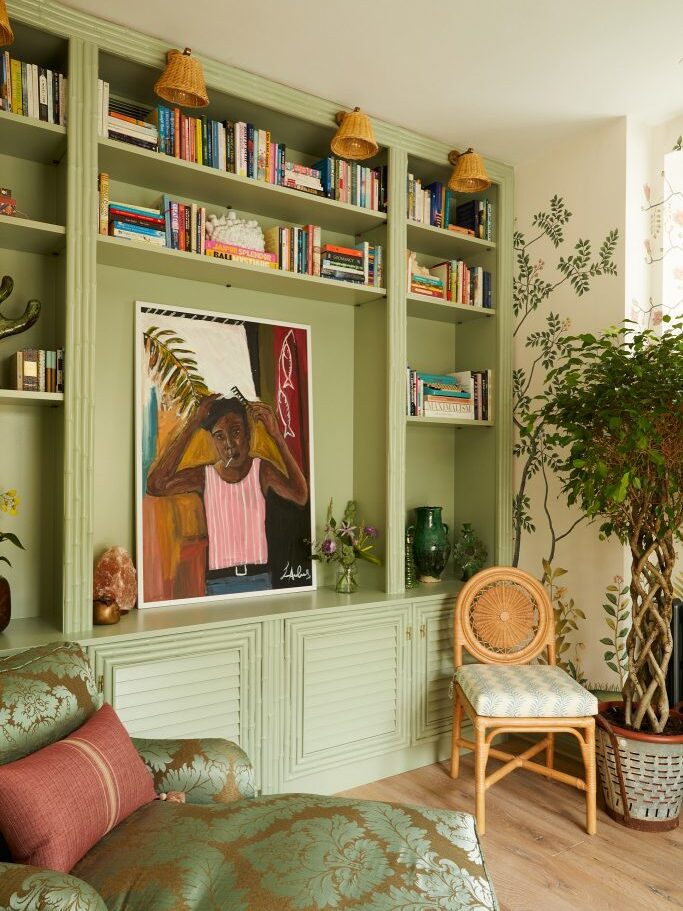
Ed Keyzer and Alistair Fleming for their architectural mindset and the way joinery is approached as part of the wider spatial language. Rupert Bevan Ltd remains a reference point when craftsmanship and finish must be exacting, particularly where surface, patina and historical sensitivity are concerned. Artichoke is another studio I refer to, which feels rooted in heritage while remaining quietly contemporary in proportion and detail.
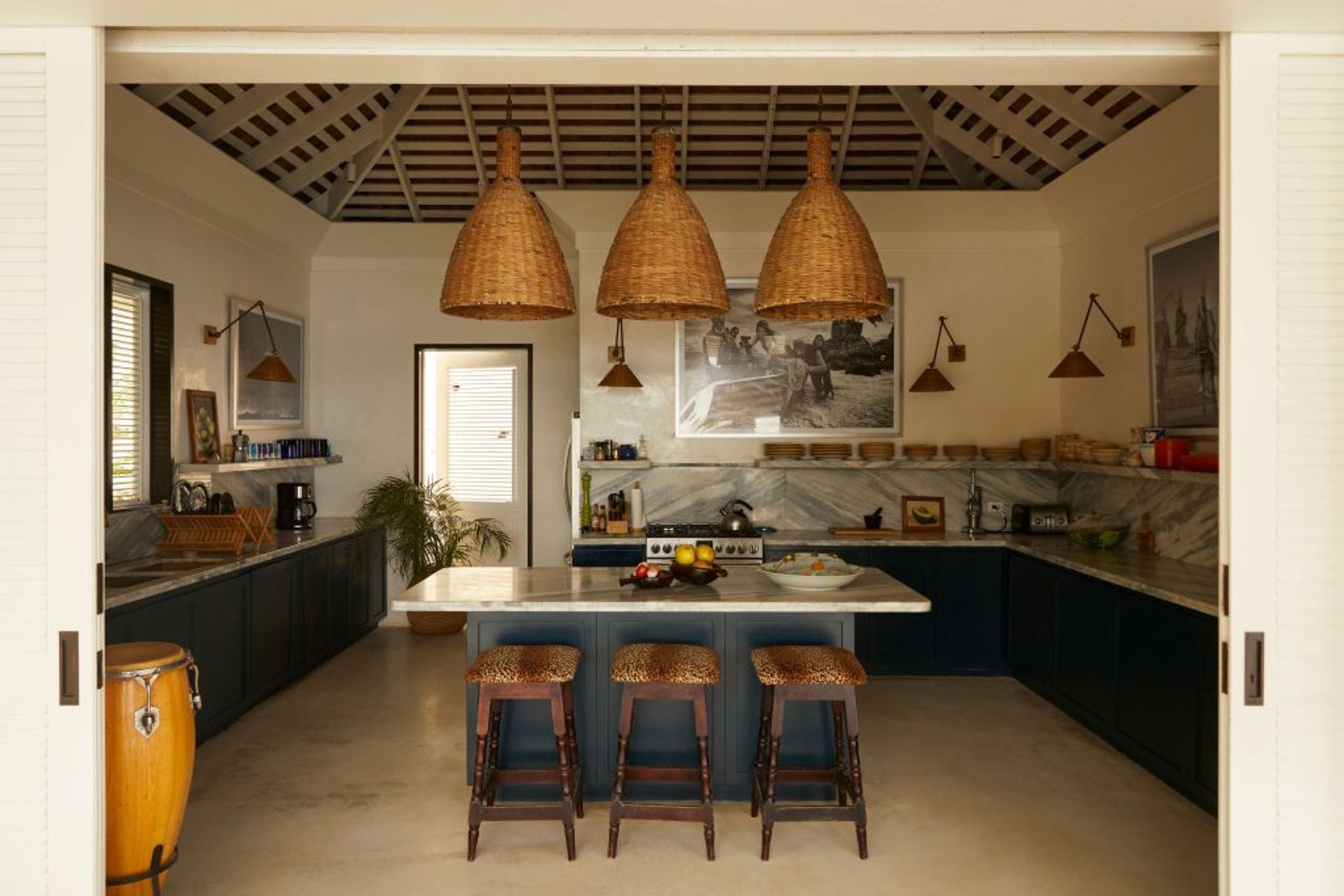
I gravitate towards cabinetry that feels integrated, enduring, and that evolves with the house.
Ultimately, I gravitate towards cabinetry that feels integrated and enduring pieces that evolve with the house, ageing gracefully and becoming part of its lived narrative rather than simply serving a functional brief.
11. On the high street, I rate…
The Conran Shop, which remains a strong reference point for its edited, design-led and timeless appeal.
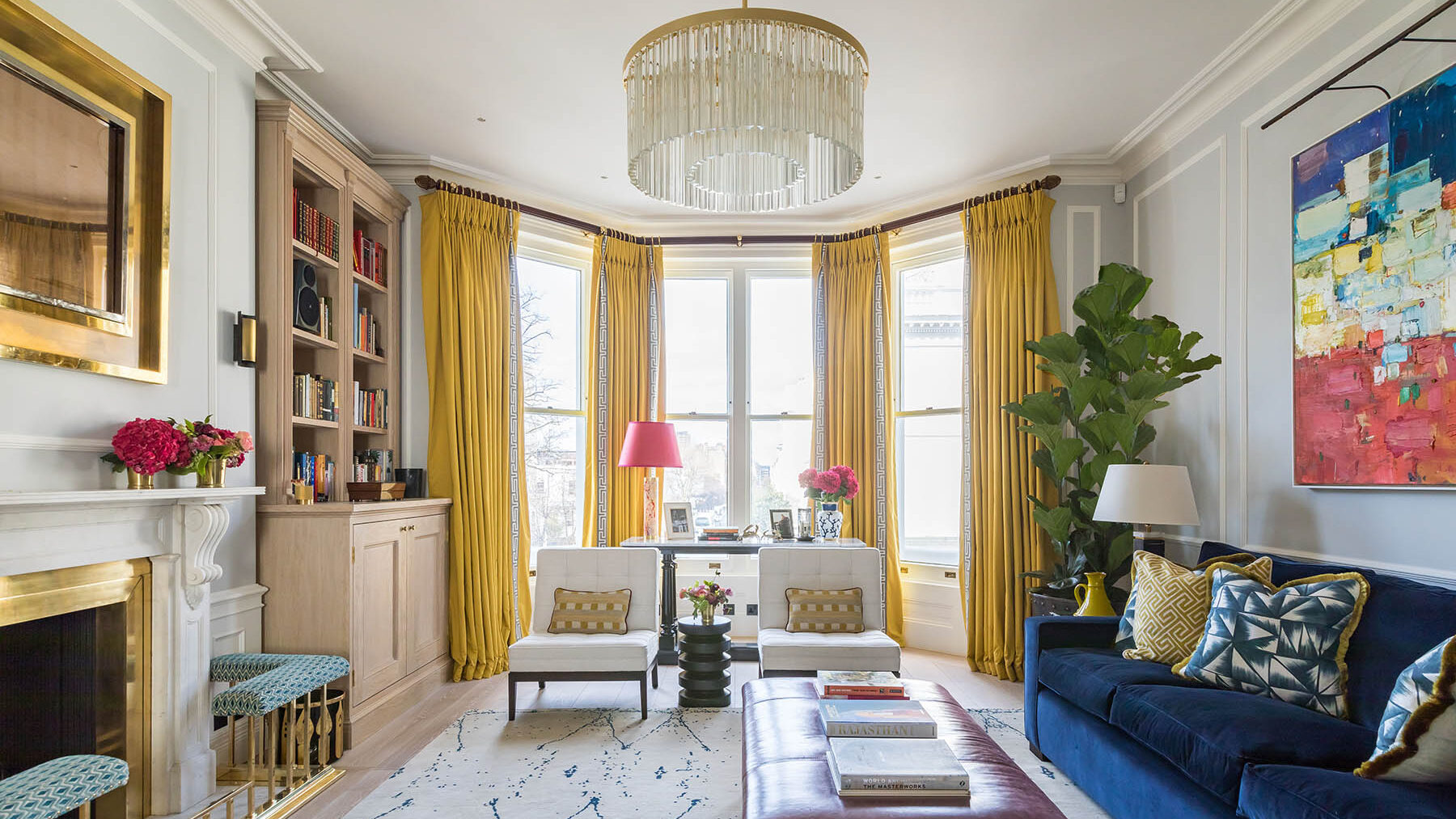
12. When it comes to beautiful furniture, I’m currently really drawn to…
PINCH for its quiet elegance, pieces that are refined without ever feeling overstated, and which sit beautifully within a layered interior. I also love working with Byron Pritchard; his approach to cabinetry feels deeply collaborative, and there’s a sensitivity to proportion and material that makes each piece feel truly considered.
More broadly, I’m always interested in makers who are willing to develop something together, furniture that responds to the architecture of a room and evolves through dialogue rather than coming straight from a catalogue.
13. For one-of-a-kind bespoke pieces…
I often look to the Pimlico Road community when sourcing bespoke work. Robert Kime offers pieces that feel quietly storied, and Jamb brings a sculptural clarity that anchors a room. I also love discovering independent makers through Invisible Collection, PAD and similar fairs, that direct connection with the craftspeople always leads to pieces that feel far more personal and enduring than anything off-the-shelf.
14. I always approach children’s rooms with…
Longevity in mind, pieces that can evolve rather than feel too themed, and I often layer in antiques or vintage pieces, which feels both sustainable and more personal. For a pattern and colour that doesn’t feel overly precious, Colours of Arley works wonderfully. I also look at brands like Oeuf NYC and Kalon Studios, which have a thoughtful, eco-conscious approach to materials and production.
I often layer in antiques or vintage pieces, which feels both sustainable and more personal.
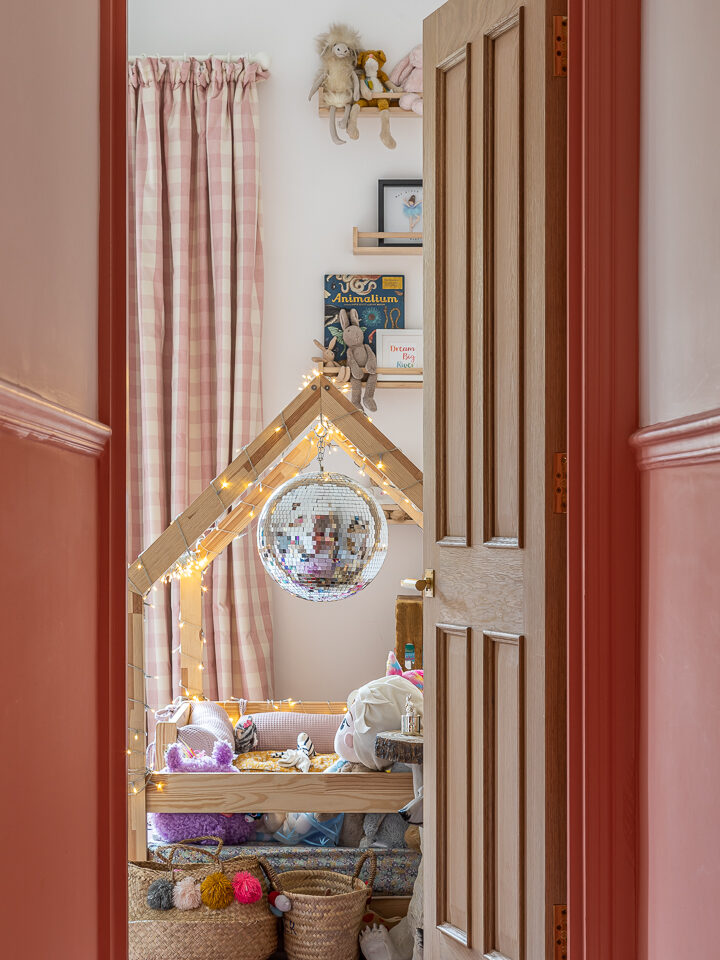
On the more accessible end, Zara Home does surprisingly good children’s pieces, simple, well-considered designs that mix easily with older furniture. Ultimately, I think children’s rooms should feel collected and relaxed, with a balance between practicality and imagination.
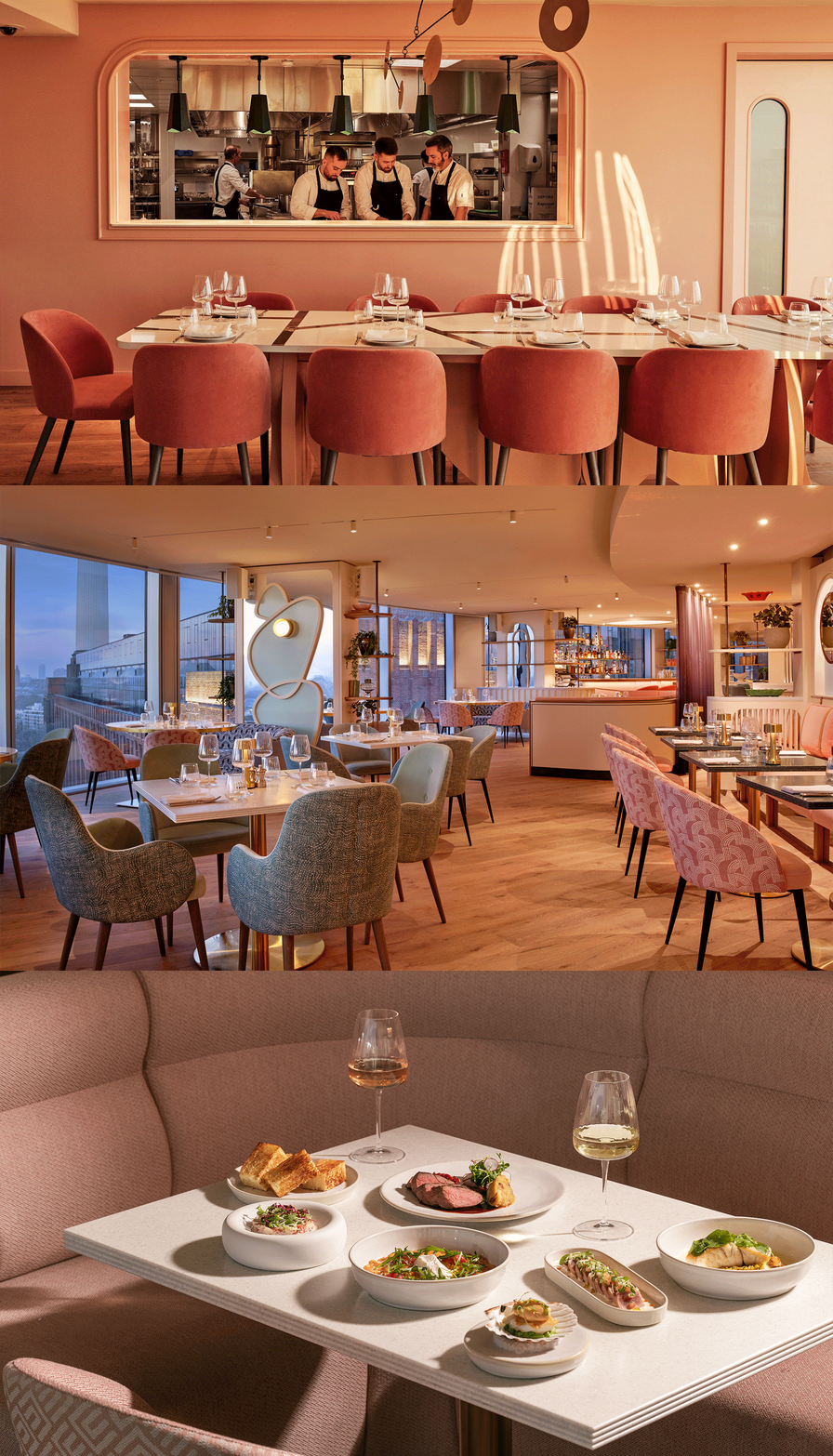
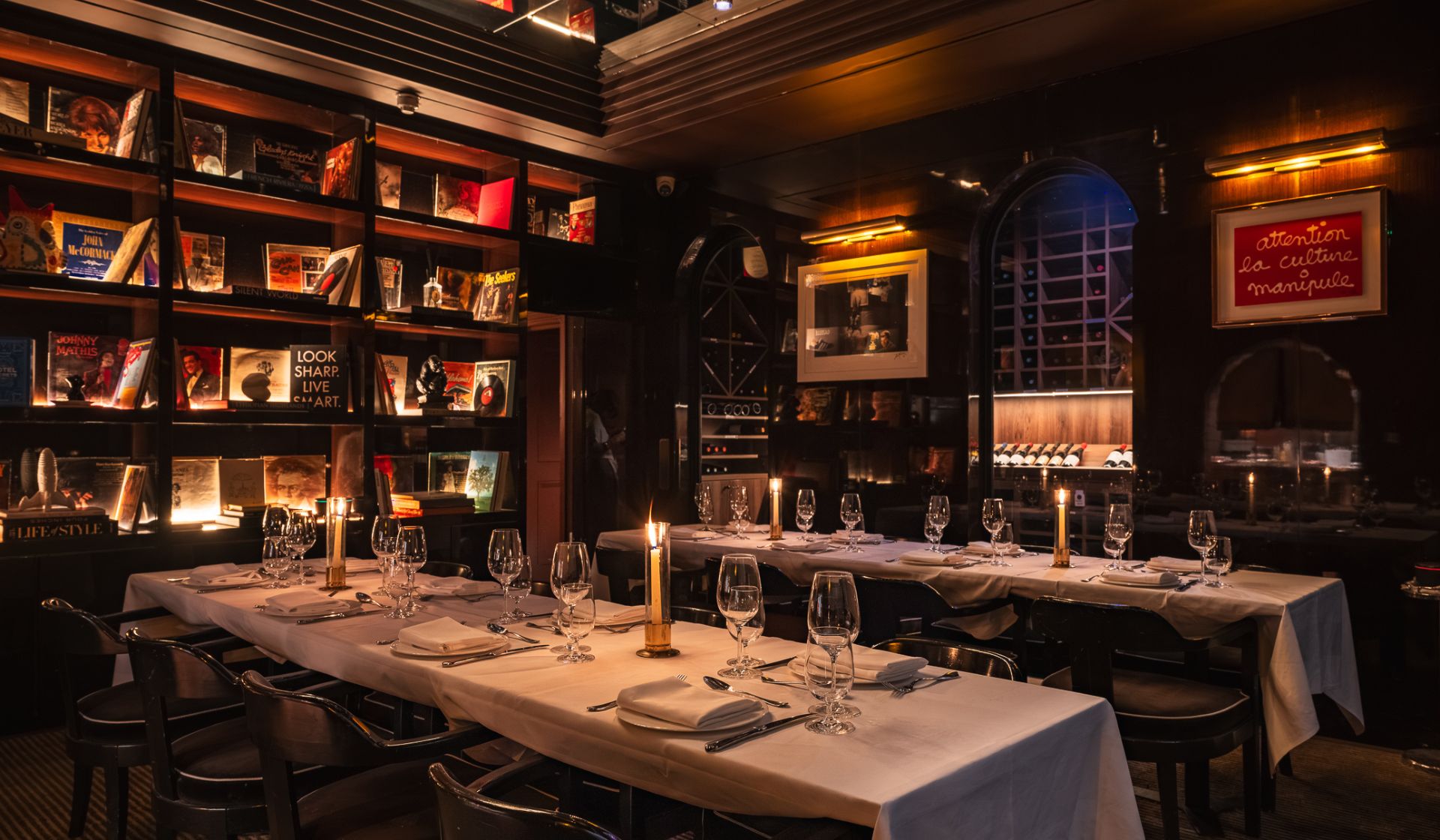
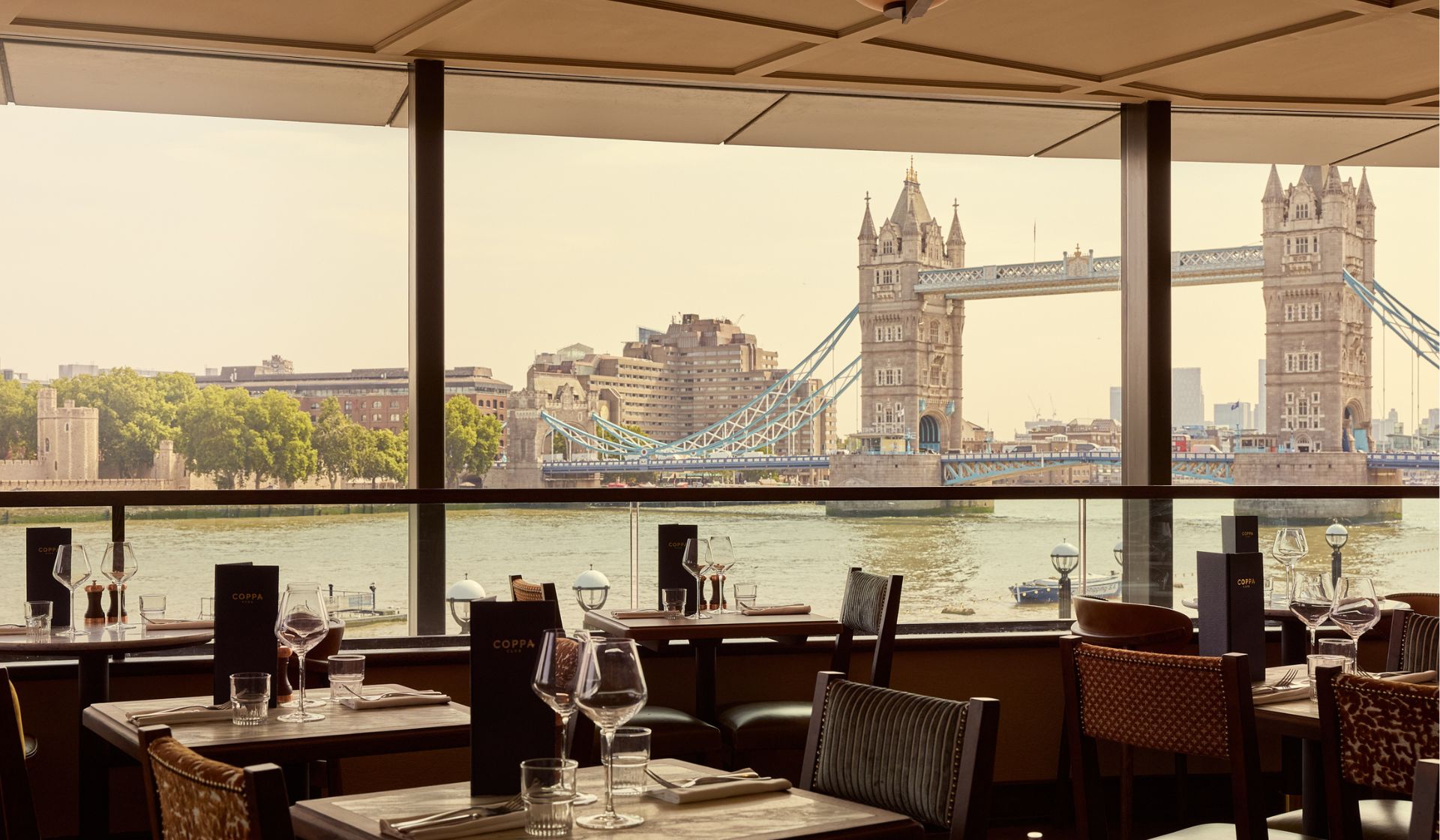
15. Outside of the home, I love the restaurant interiors of…
Sessions Arts Club, which I use as a great source of inspiration. It has this beautiful, almost poetic atmosphere that feels slightly raw yet deeply considered, where patina and imperfection are part of the charm.
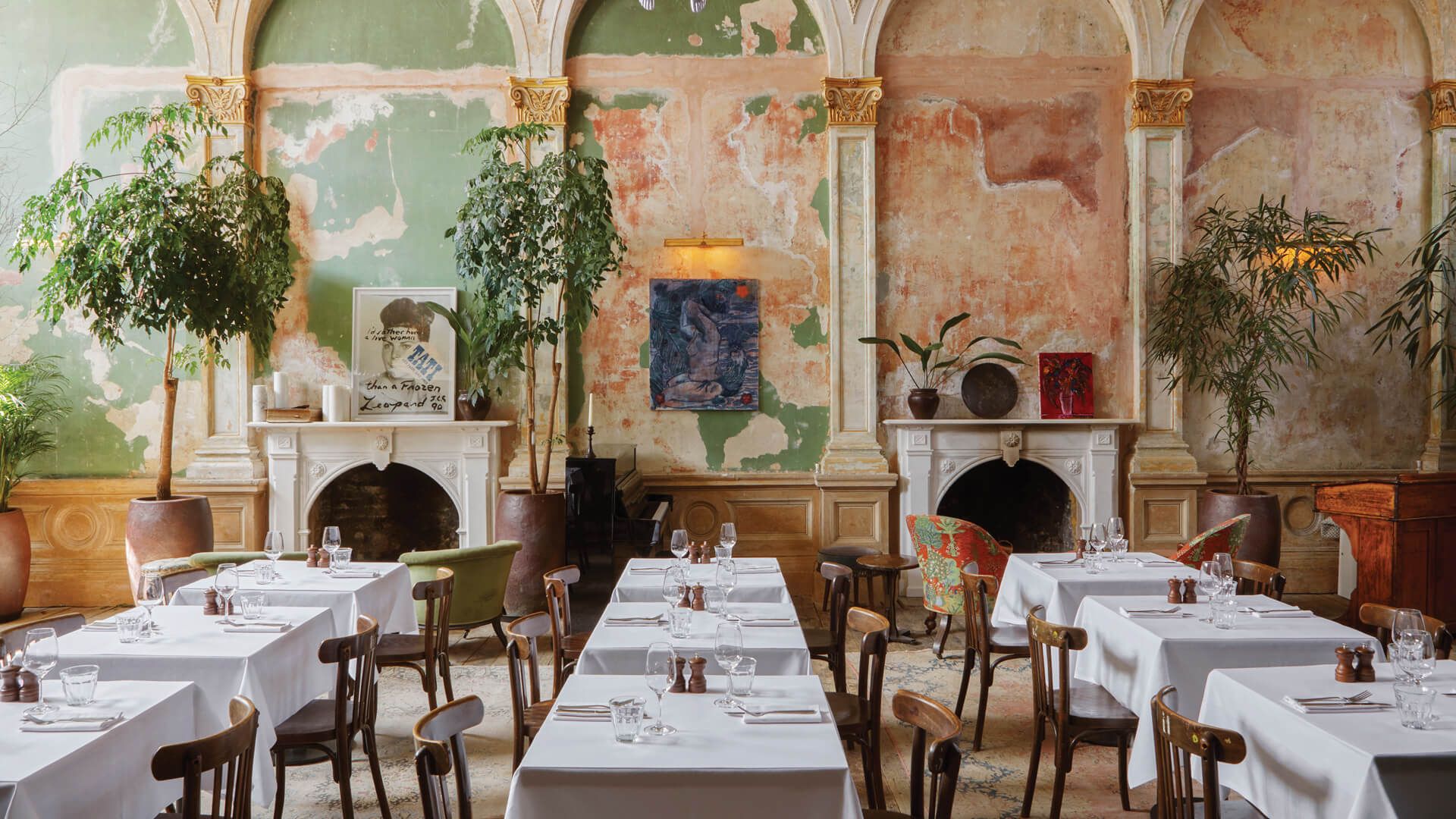
One Club Row in East London captures a different mood: intimate, confident and quietly nostalgic without feeling contrived. And then there’s Carlotta, which leans into a brilliant 1970s-tinged kitsch, bold, playful and unapologetic, reminding me that interiors can be expressive and transportive while still feeling coherent. All three approach space with a strong point of view, which is ultimately what makes them resonate beyond hospitality and into the language of the home.
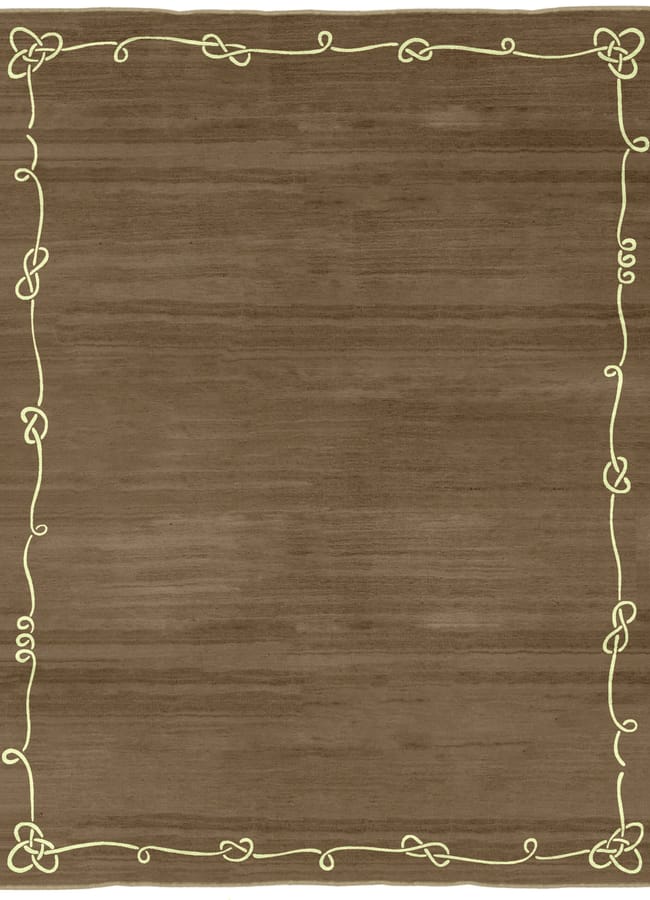
SHOP LUCY’S EDIT BELOW…
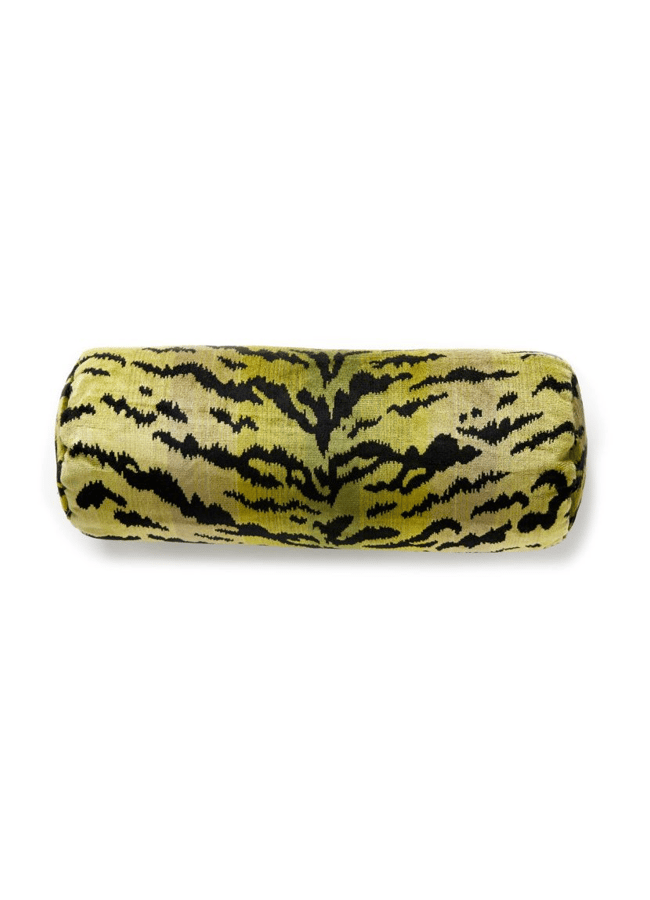
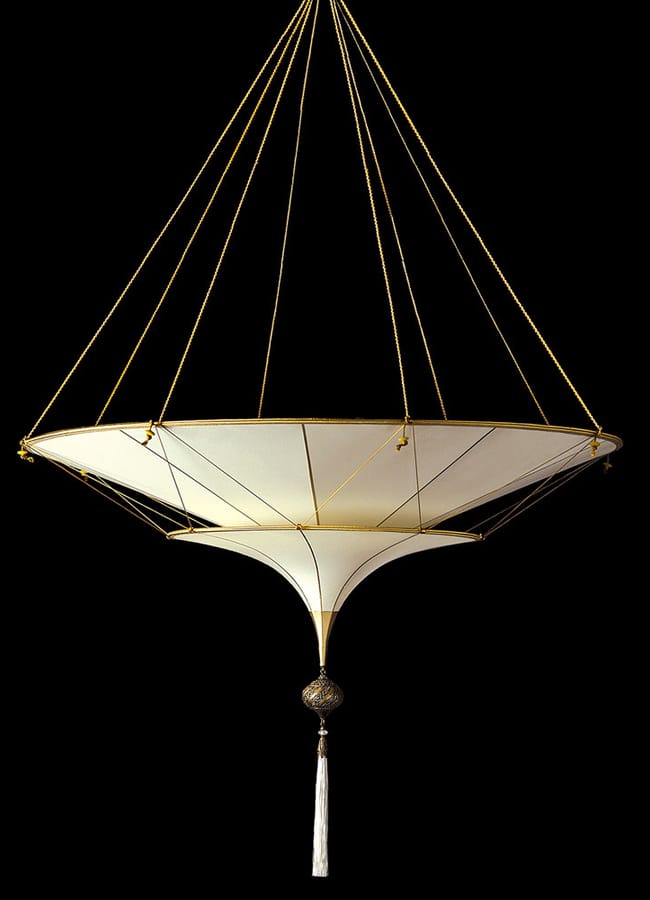
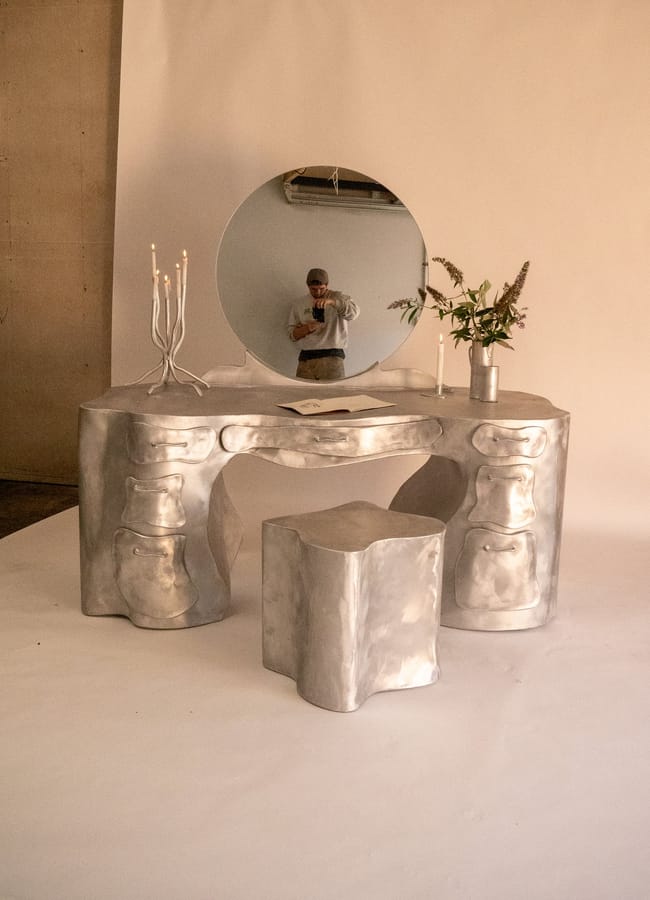
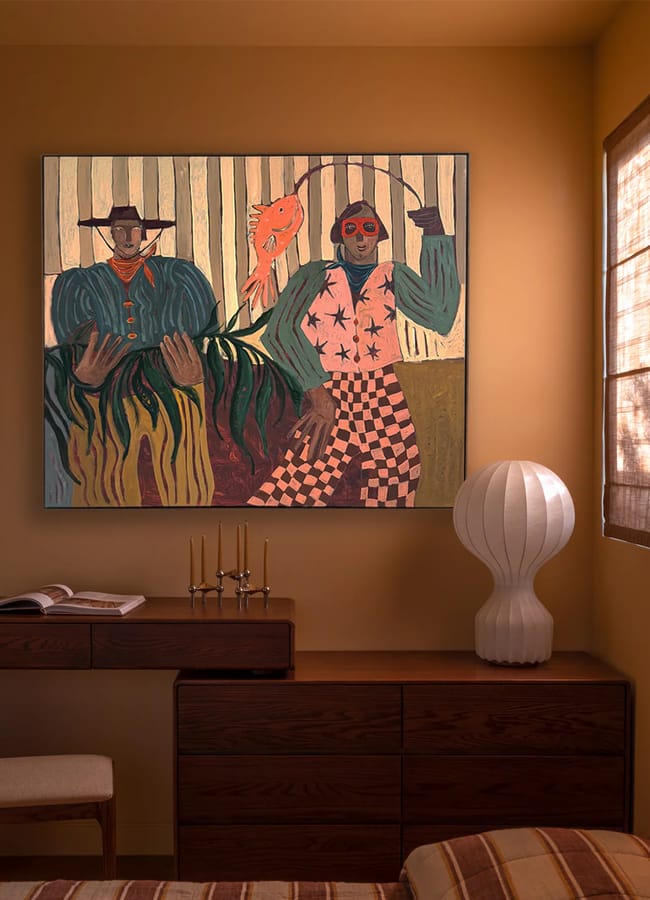

The products on this page have been selected by our editorial team, however, The Handbook may make a small commission on some products purchased through affiliate links.