Inside Cafe Kowloon’s Bunker Of Bold Cantonese Cooking
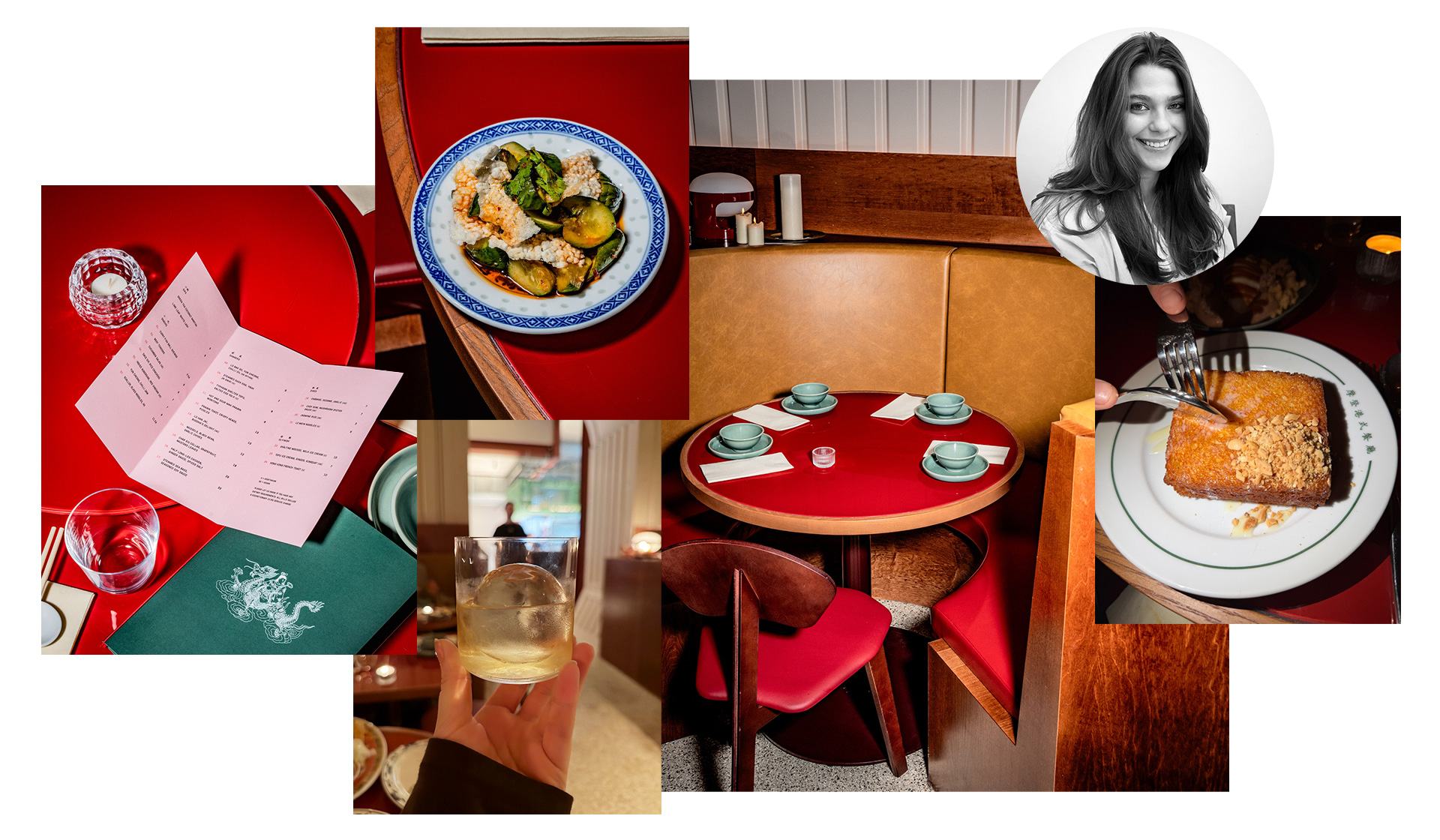
For a restaurant marketed as hidden and secret, Cafe Kowloon is anything but. Struck as soon as you round the corner from the station by a neon light, you’ll know you’ve arrived for your reservation. Entering does feel like a bit of a mishap, though, as the whole front section of the restaurant will be empty (home to daytime joint Wonton Charlie’s), or maybe not completely empty, as one of the owners might be running around, making a drink, wiping the counter. But growing louder, bouncing off the bright red walls, you might hear the sound of a party out back. Am I in the right place? You might ask. Follow the noise, instinct will tell you.
In all of its efforts, in all its vigorous applications of the five senses, Cafe Kowloon is, more than anything, alive.
What sets it apart
The one major piece of advice I would give to anyone visiting Cafe Kowloon for dinner is to do your research.
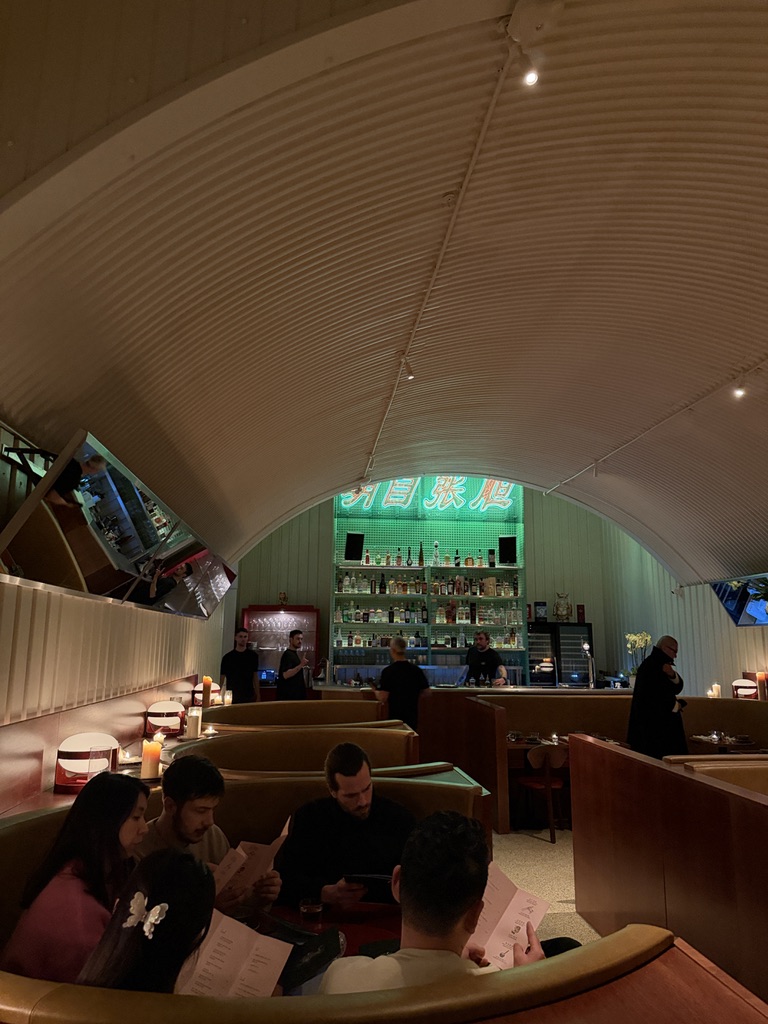
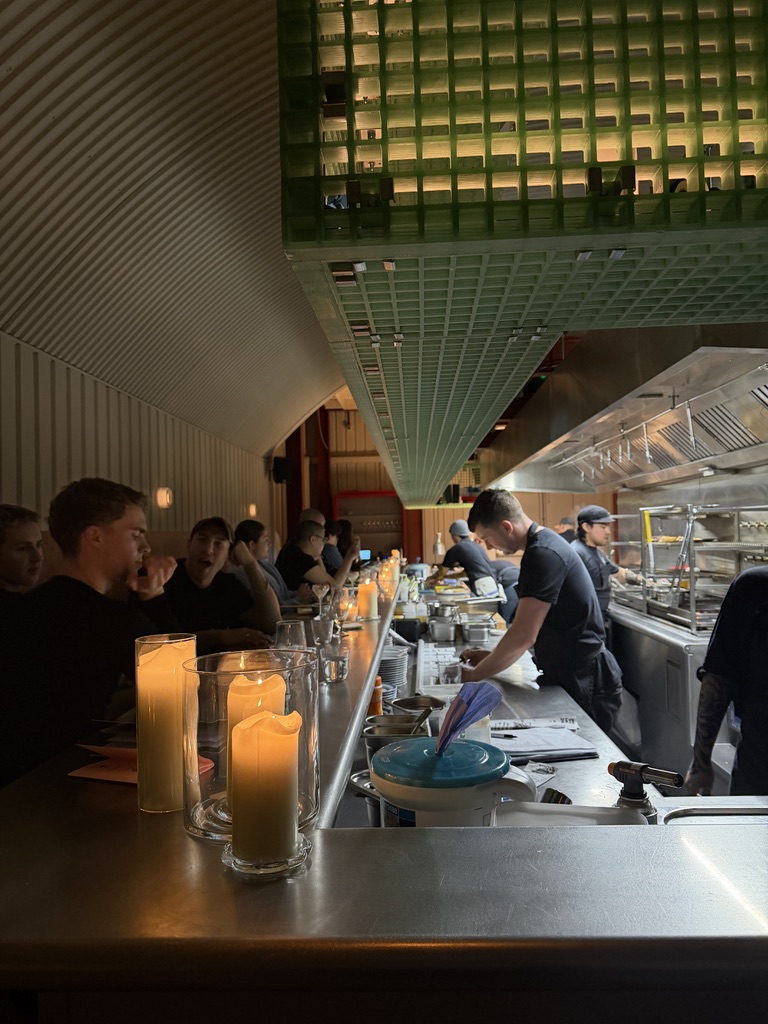
In you walk to a (very) modern Cantonese cave, refurbed into a counter dining kitchen with high, railway curved ceilings. The trains passing overhead are unsettling at first, a sound and body experience similar to those anxiety dreams of the world ending, but not soon after, you’ll feel comforted, as if in a bulletproof bunker — no windows, no light, no signs of the outside world, and yet, safe.
The one major piece of advice I would give to anyone visiting Cafe Kowloon for dinner is to do your research. It’s bunker-like appeal also dons a no-cellphone-service quality, which is welcomed by those like me who find phones at the table to be the greatest evil of our generation, but disarming when you realise you have no idea what Yun Cheong, Yauh Ja Gwai, or Lo Bak Go is, and the service may not be all too familiar with it either.
What we ordered
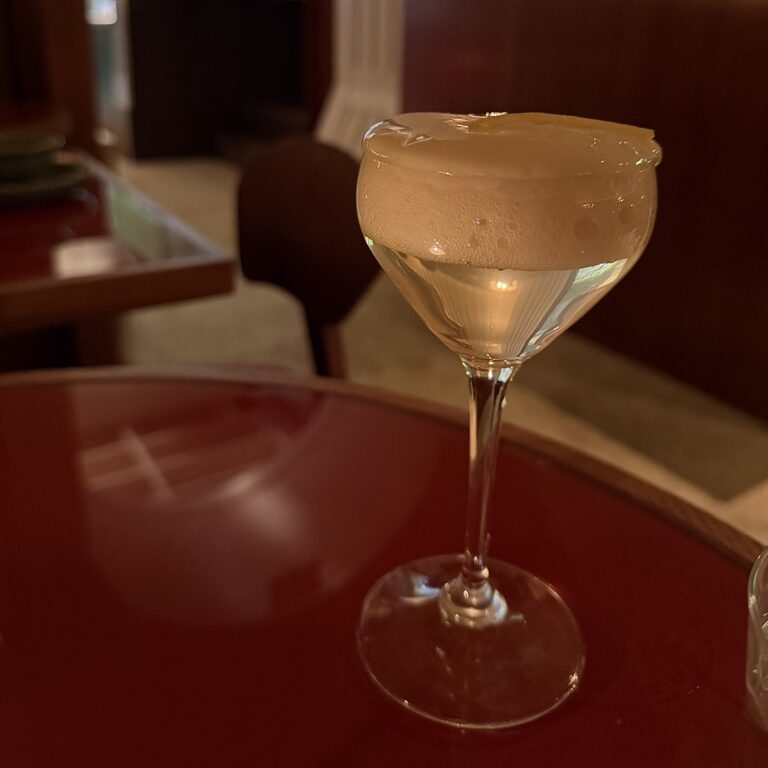
That said, we’re all warming up to the menu, and a shot in the dark often leads to resplendent surprises. What you must begin with is not food, but a drink. The Pocari Sweat, to be specific, is one of the better items on the menu, a lemony tipple of tequila, Pocari, yuzu and lemon that has inspired a bit of a phase within me, as I have continued ordering citrus drinks ever since, which is quite out of character.
What you must begin with is not food, but a drink.
A warning, though, Cafe Kowloon has taken to the short pour trend, with most cocktails lasting just a few sips. Not to worry, if you err on the side of thirsty, their skin contact wine options are — mwah — chef’s kiss.
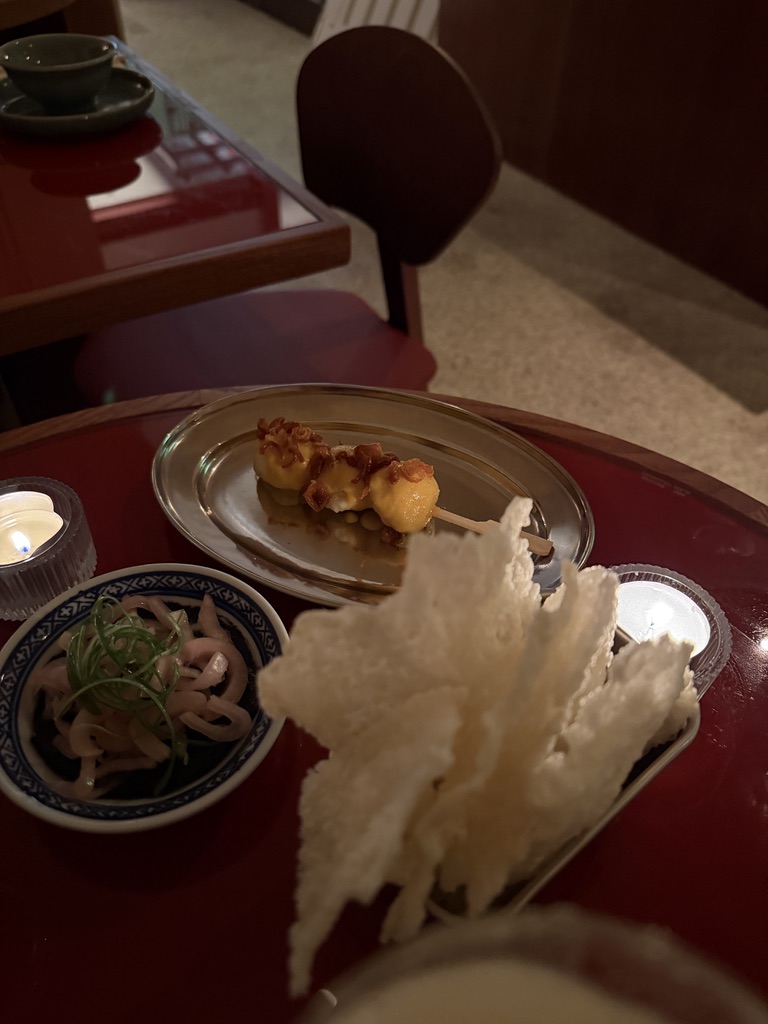
To begin, we ordered the dace dip with rice crackers and curry fish ball skewers, an interesting combination, with the fish balls being an experience in themselves, a unique addition to an already unfamiliar menu. Welcomed and fun, it was an exciting way to start a meal. And a dip on the table is never a bad idea. The dace felt wildly familiar, and yet ever so obscure, and while I wasn’t entirely sure of just what it was, I continued to go back for more, leaving a clean bowl and an appetite for whatever was next.
Mak prawn wontons with hot and sour sauce. Not so little pockets of juicy, well-seasoned, thinly wrapped meat. No complaints, a dumpling is a dumpling, and I am an absolute sucker for dumplings. The sauce it was drenched in was a dream for garlic lovers and a necessary contribution to the texture game.
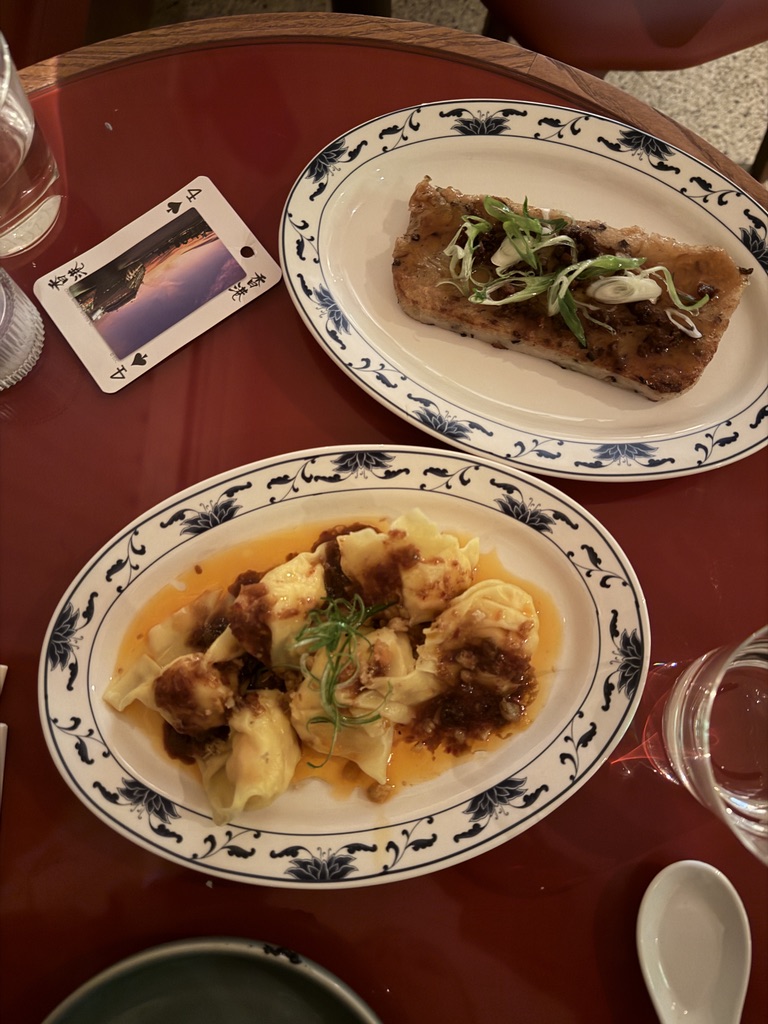
Lo bak go, yun cheong, and chilli oil, which we later found out was a turnip cake topped with traditional Cantonese sausage, was a sure favourite. Soft and mushy in a nourishing sense, this was comfort, inspiring of ums and aws, plus the addition of a competitive test in chopstick skills.
If you’re the kind of person who goes to Morocco and eats the snails off the street stands, you’ll probably have the ounce of adventurousness you’ll need to eat a shrimp head from a gentrified Cantonese venue in London Fields, and you’ll have fun doing it.
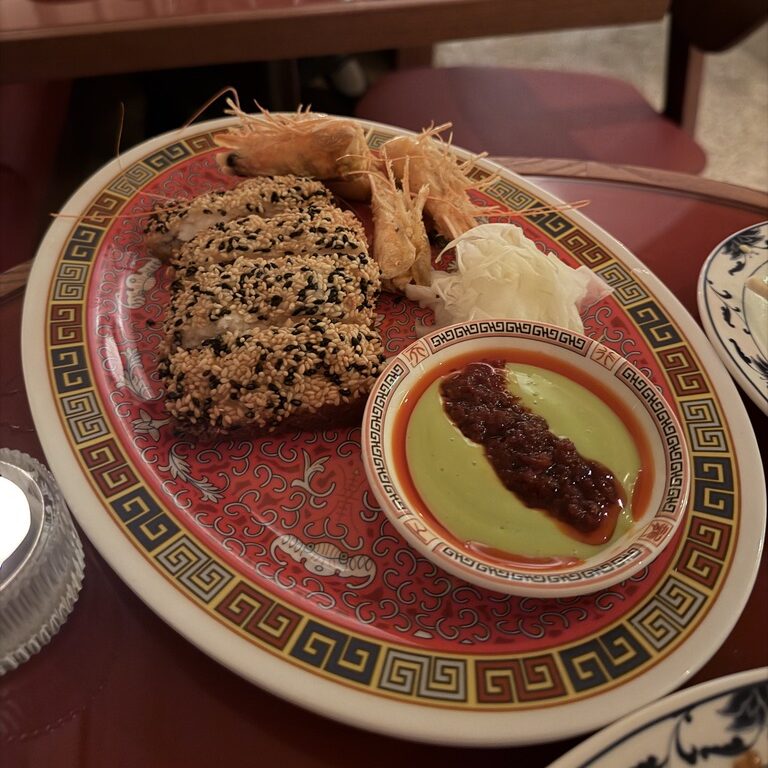
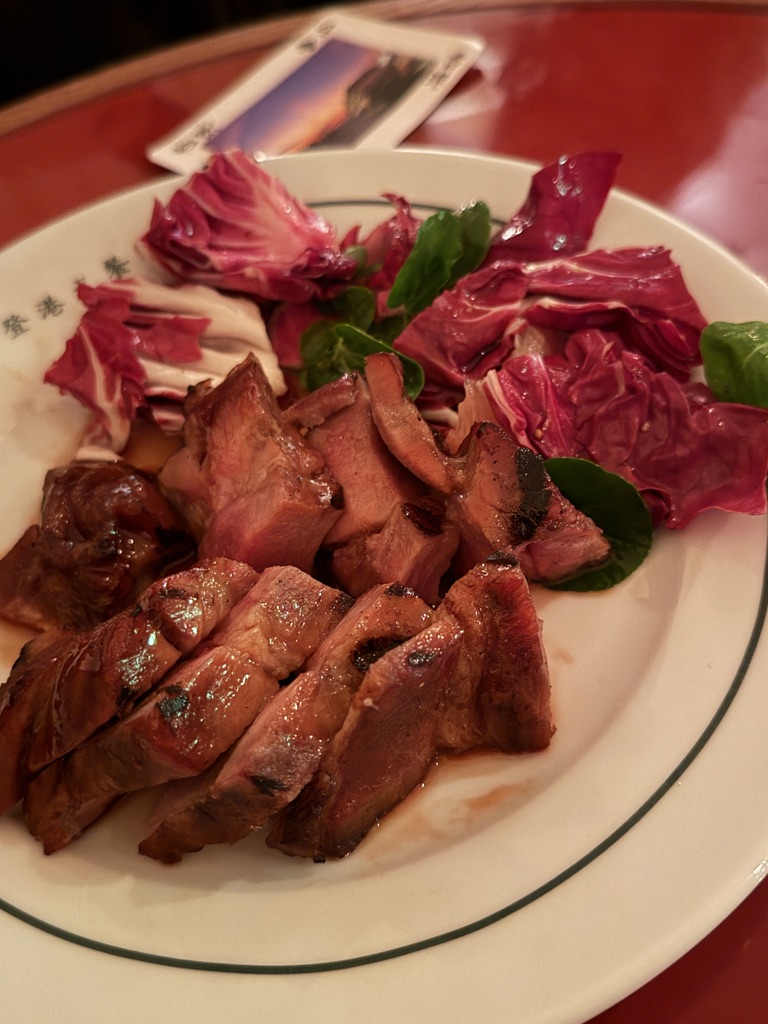
Rounding out the table with two large dishes of prawn toast with crispy heads and pickles alongside cha siu collar (barbecue pork), with grapefruit and mustard leaves. The former was delicious and exciting, a blatant display of using all that comes with an ingredient. The prawn toast was indulgent, oily, and hot in temperature, making for a juicy, lick-the-pads-of-your-finger, fight-for-the-last-piece experience. The heads of the shrimp may not be for everyone, but if you’re the kind of person who goes to Morocco and eats the snails off the street stands, you’ll probably have the ounce of adventurousness you’ll need to eat a shrimp head from a gentrified Cantonese venue in London Fields, and you’ll have fun doing it. The barbecue pork was delicious, its flavour and texture a needed supplement to a ticket order that was quite similar in fishiness and squishiness (not always a bad thing). Plus, fatty barbecue pork is no bad dinner party guest.
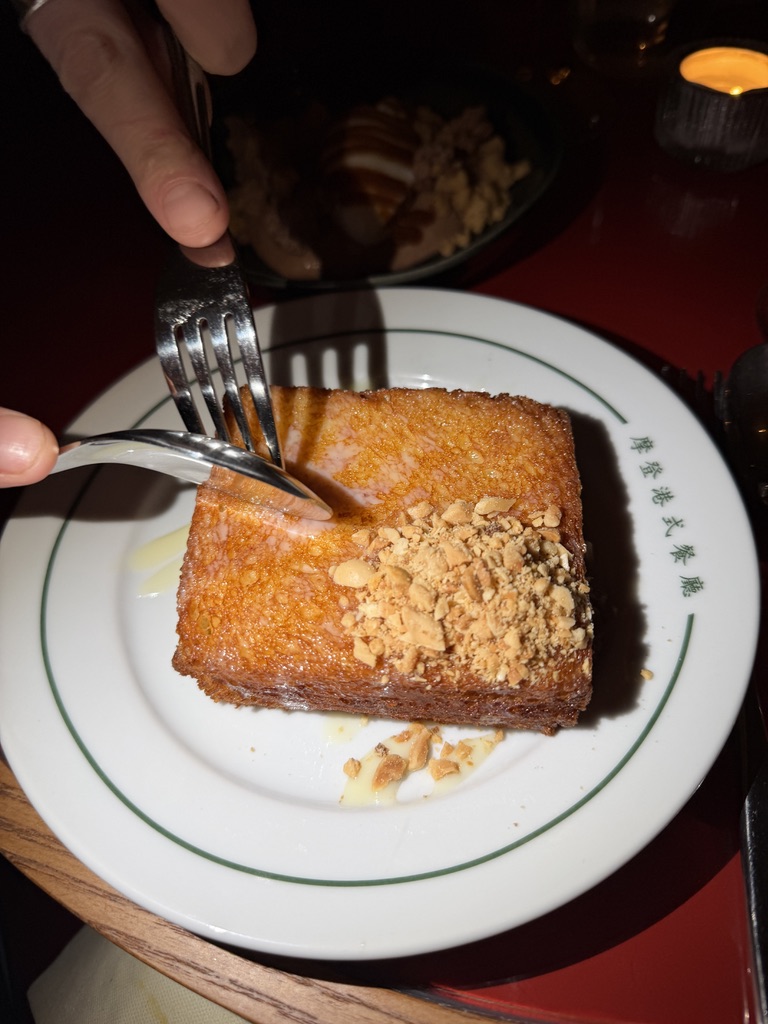
The kicker, the reason, the climax of all of this, though, lies in one dessert: Hong Kong French toast. How do I love thee? Let me count the ways. Toasted to a golden crisp, on bread, perhaps the fluffiest of all of it’s kind. What’s more? Stuffed with a rich, caramelly peanut butter that oozes out of itself, counteracted by a nutty crunch of a heavy handed garnash. Even to the not-so-sweet-toothed, this is, again, the reason. It is the gentle return back down and out, onto the train once more, headed home for a fuzzy-brained sleep, dreaming of pan-fried toast in the morning.
The verdict
I love the whole small restaurant trend, but I also love being around people. At Cafe Kowloon, you’re surrounded, flooded by just a bit more. The train roars, the kitchen sings, the people laugh and howl as sound carries and bounces off the curved ceiling back down onto your lap.
How do I love thee? Let me count the ways.
These things are true: the dining room will be packed, your water cup will be full, and your order will be exciting, despite maybe not knowing what exactly it is that you got. It is modern and charmingly unpolished, does not hold your hand, and leaves you to your own creative devices. It is generous in spirit, joyful, playful. In all of its efforts, in all its vigorous applications of the five senses, Cafe Kowloon is, more than anything, alive.