“My Honest Review Of I Want You To Be Happy”
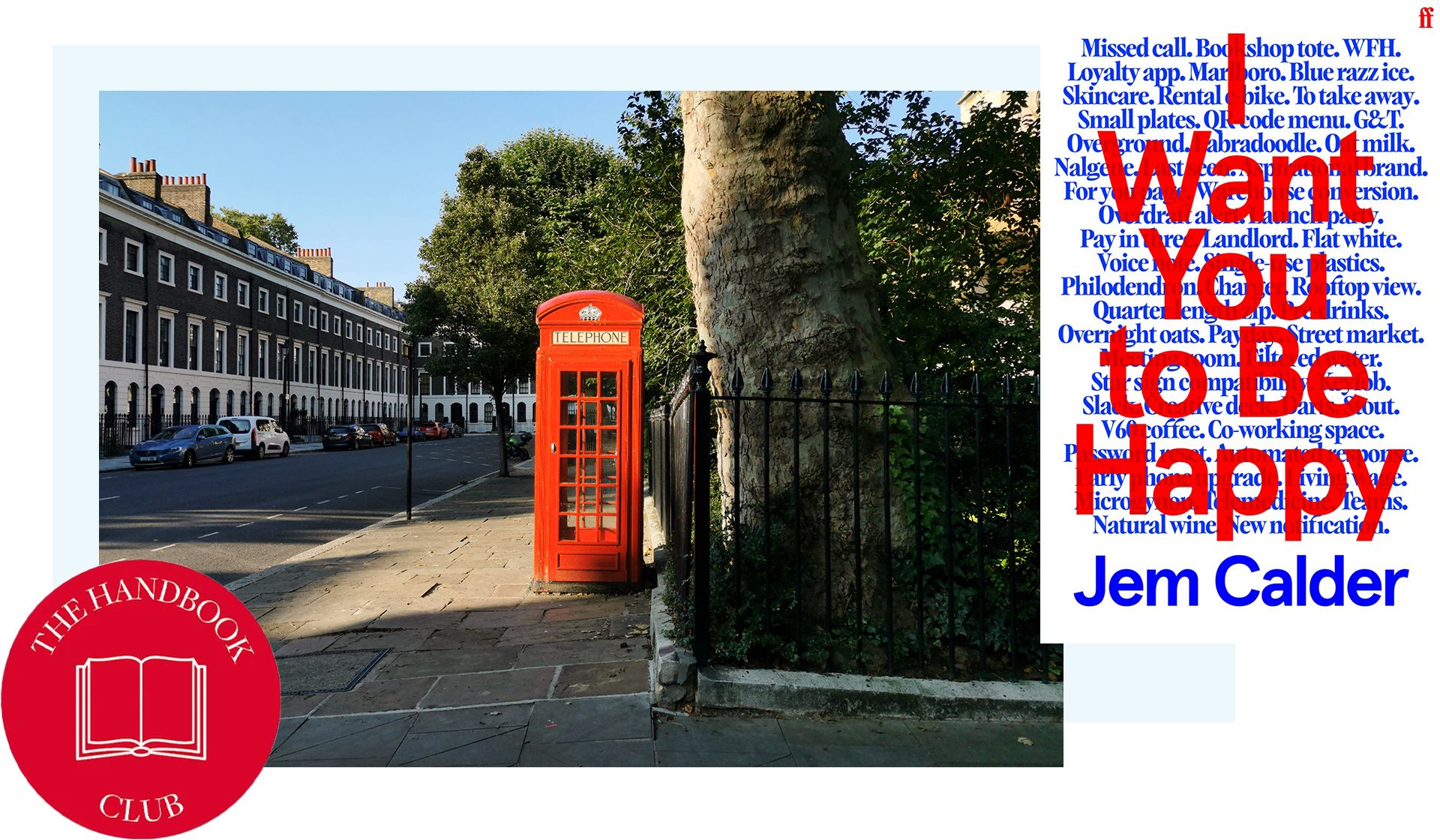
Jem Calder’s debut novel, I Want You To Be Happy, has quickly gained the internet’s undivided attention. Between its grabby cover and undeniable parallels to Sally Rooney’s Normal People, it has quickly raced to the top of BookTok summer reading lists. But does it really live up to the hype? Bitterly depressing, at times hilarious, and, occasionally, tender enough to make you a little wistful for your own situationship, here is my honest review.
The premise
I Want You To Be Happy follows Chuck and Joey, two people who meet in a bar and spend the rest of the novel figuring out exactly what they are to each other. The catch? Chuck is in his mid-thirties and four months out of a twelve-year relationship, which ended after he abruptly called off the engagement. Joey, meanwhile, is twelve years his junior, living paycheck to paycheck on barista wages, and quietly hoping to make it as a poet.
Their first meeting, in a crowded London club, carries all the awkwardness and clunkiness of most drunken meet-cutes. As Chuck and Joey bond over a shared passion for writing, Calder meticulously tracks their inner monologues as they linger over word choices, attempt to be funny, and try to impress one another. This inner commentary runs seamlessly alongside their spoken dialogue, resulting in a read that feels all too familiar and true to life.
There’s no dramatic inciting incident here, no twist you’re waiting to be blindsided by. Instead, Calder tracks the slow, granular accumulation of a modern almost-romance.
Amelia, Culture & Lifestyle Editor

All this takes place in the novel’s opening pages, and results in Joey going back to Chuck’s flat that same night, a world away from her cramped house-share. From there, the pair drift into something that’s never quite a relationship and never quite not one.
There’s no dramatic inciting incident here, no twist you’re waiting to be blindsided by. Instead, Calder tracks the slow, granular accumulation of a modern almost-romance: the WhatsApp back-and-forth, the whose-turn-is-it-to-text anxiety, a dog-sitting trip to the countryside that becomes the emotional high point of the whole book.
As a reader, I found myself desperately waiting for the moment they’d declare their undying love for one another, or failing that, a dramatic parting of ways. Neither ever really comes. It’s less a plot than a transcript of a modern-day situationship, and that’s precisely the point.
As a reader, I found myself desperately waiting for the moment they’d declare their undying love for one another, or failing that, a dramatic parting of ways. Neither ever really comes. It’s less a plot than a transcript of a modern-day situationship, and that’s precisely the point.

The Normal People parallels
It is impossible to read this without thinking back to Connell and Marianne from Sally Rooney’s beloved Normal People. Like Normal People, this novel is obsessed with the things two people don’t say to each other, told through characters who are self-aware to the point of paralysis. Chuck and Joey overanalyse every exclamation mark, every delayed reply, every ambiguous invite, in exactly the way Connell and Marianne once did, except here, the class anxiety of Normal People has been swapped out for a generational one.
Where it splits from Rooney is its tone. There’s less quiet devastation here and more bitter comedy. Calder seems less interested in whether Chuck and Joey are actually good for each other, and more interested in the fact that neither of them can fully answer that question, even to themselves. If you came to this book hoping for a straightforward Normal People clone, you’ll get something close, but noticeably drier and considerably less romantic.
Calder’s portrait of modern day
While the centre of the novel is Calder’s bleakly funny, occasionally excruciating portrait of dating in your twenties and thirties, the book truly comes into its own in how far it pushes into the modern-day landscape. The pages are soaked with specific details of living permanently online in 2026. Think: Slack messages, push notifications, choosing a bar from a Google review, following a blue dot to someone’s front door. It’s rare to read a novel that name-checks the exact texture of modern life without it feeling like a gimmick or a box being ticked.
While at the centre of the novel is Calder’s bleakly funny, occasionally excruciating portrait of dating in your twenties and thirties, where the book truly comes into its own is in how far it pushes into the modern-day landscape.
What struck me most, though, was how freakishly accurate it all felt. There were entire passages that felt less like fiction and more like Calder had simply transcribed a conversation I’d had, or a spiral I’d personally been on. Think retellings of the performative deliberation over how quickly to reply to a text or the low hum of dread that comes with a Slack DM from your manager. It’s uncomfortable in the best way; in fact, I would go as far as to say you will likely finish some chapters feeling faintly caught out.
An ending that asks more questions than it answers
Without giving too much away, this isn’t a book that hands you a bow-tied resolution.
By the final pages, I was left with far more questions than answers, the novel deliberately, almost stubbornly, refusing to resolve itself. As it drew to a close, I found myself waiting for Calder to land the plane, for some dramatic conclusion to reveal itself – but in keeping with the book and its characters, that moment never comes. Instead, it’s left entirely up to the reader to decide Joey and Chuck’s fate.
If you need your endings tidy, this might frustrate you. If you’re happy to sit with the ambiguity, it’s arguably the most honest choice Calder could have made.
Final thoughts
I finished Jem Calder’s debut novel, in all honesty, slightly unsure of what to make of it. I found the writing style extremely digestible, entertaining, and genuinely funny, soaking up every last nuanced reference to the TikTok For You Page, Microsoft Teams, and natural wine bars. However, the hopeless romantic in me can’t help but wish it had read differently. I didn’t need Joey and Chuck to run off arm-in-arm into the sunset, but I did long for more from them, and from their individual characters – something Calder, deliberately, and perhaps ingeniously, simply refuses to offer.
I finished Jem Calder’s debut novel, in all honesty, slightly unsure of what to make of it. I didn’t need Joey and Chuck to run off arm-in-arm into the sunset, but I did long for more from them, and from their individual characters – something Calder, deliberately, and perhaps ingeniously, simply refuses to offer.
Having said this, I’d wholeheartedly recommend this read, and believe it’s worthy of all its hype. While it’s far from the glossy, romantic summer read you may be looking for, it offers a painstakingly accurate, humorous, and uncensored mirror up to contemporary life, which makes for a highly entertaining, if moderately depressing, read.
Looking for something similar? Read these next
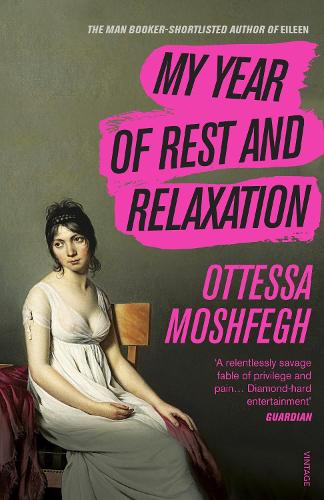
Less about romance and more about the particular numbness of modern life, but the deadpan, detached voice and the sense of characters watching their own lives unfold will feel instantly familiar to anyone who liked Calder’s flatness of tone.
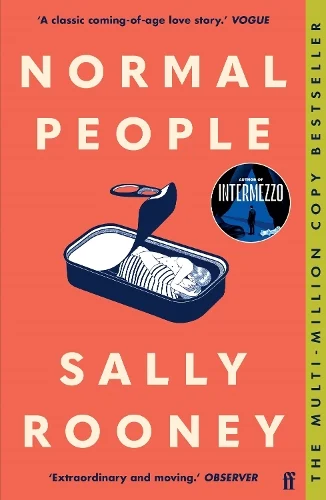
The obvious starting point, and for good reason. Connell and Marianne’s on-again-off-again is the spiritual blueprint for Chuck and Joey’s situationship. Think the same self-aware paralysis, same inability to say the thing that actually matters, just with the class anxiety swapped out for a generational one.
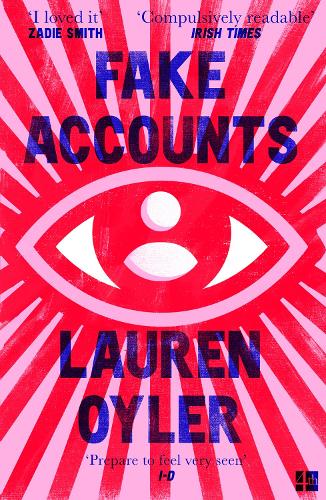
For the WhatsApp-anxiety, phone-as-third-character energy specifically, Oyler’s novel is similarly obsessed with the gap between how people present themselves online and who they actually are underneath it.
Our August pick
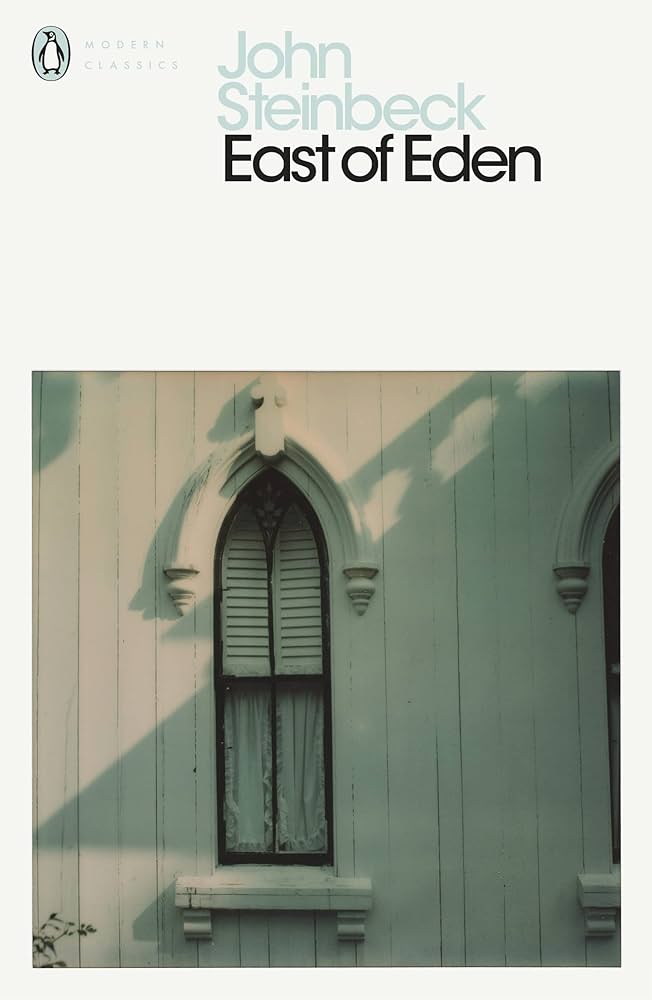
Next month, we’re going back to the classics: our August pick is John Steinbeck’s East of Eden, the sprawling, Cain-and-Abel-inflected saga of the Trask and Hamilton families in California’s Salinas Valley.
We’re getting ahead of the curve on this one as Netflix drops its seven-episode limited series adaptation this autumn, with Florence Pugh leading as the magnetic, morally slippery Cathy Ames, alongside Christopher Abbott and Mike Faist as the warring Trask brothers.
Zoe Kazan, granddaughter of the director behind the 1955 James Dean film, is writing and executive producing, so expect this one to dominate your feed well before premiere night. Read it now, and you’ll be the one explaining the ending to everyone else in October.