The Real Reason We Romanticise The Mediterranean Diet
Dolce far niente: a phrase popularised in movies and culture, specifically when applied in the movie “Eat, Pray, Love”. There is so much to note in that concept that we, busy cosmopolitan bodies, have clung to and romanticised the concept of simply doing nothing.
The Mediterranean diet, the simplicity, the appreciation of beauty, slow afternoons and long congregations at the table, exacerbated by lengthy life expectations and a better quality of it, is something that I’ve found people dwell on constantly. It is an art that we know we may never be able to perfect, a way of life that we envy. I think about it constantly, but why?
There is a world that is less about optimisation and efficiency, more about long tables and a lack of plans, a bit of a wrinkle and a bit of a linen, less stress, less burnout, more admiration, more pleasure.
Mallory, Junior Food & Drink Editor

“The Mediterranean Diet”
For those of us who are in cities — living hour to hour and paycheck to paycheck, experiencing burnout with pressure from all directions — the Mediterranean diet actually looks like something. It crowds vision boards; it projects itself onto our eyelids as we drift off to sleep. It is not just food, but the life that comes with the food.
The Mediterranean afternoon
I think the appeal of holidays in Greece and the south of Italy is intensified by an excitement for not needing to do, to be, mostly to perform. That is not laziness — not at all — but existence. To breathe, to walk, to eat and to enjoy is enough to constitute a life well lived. The afternoons in the Med inspire us, they are a representation — perhaps a reminder — that work is not everything, that graft is not necessarily our purpose, that loving and indulging and basking in the sun is also what it is all about.
“Dolce far niente”, the sweetness of doing nothing. Rest is not a reward; but a crucial facet of being. We have submitted to our beehives, especially in environments such as London or New York, cities that feast on our sleep, reward exhaustion and overextension. They are atmospheres that capitalise on burnout and strain. When we imagine the Mediterranean, it is not just imaginings of vegetable diets, olive oils and leathery skin by the sea, it is a picture of peace, of a life that revolves less around work, more around living.
Life at the table
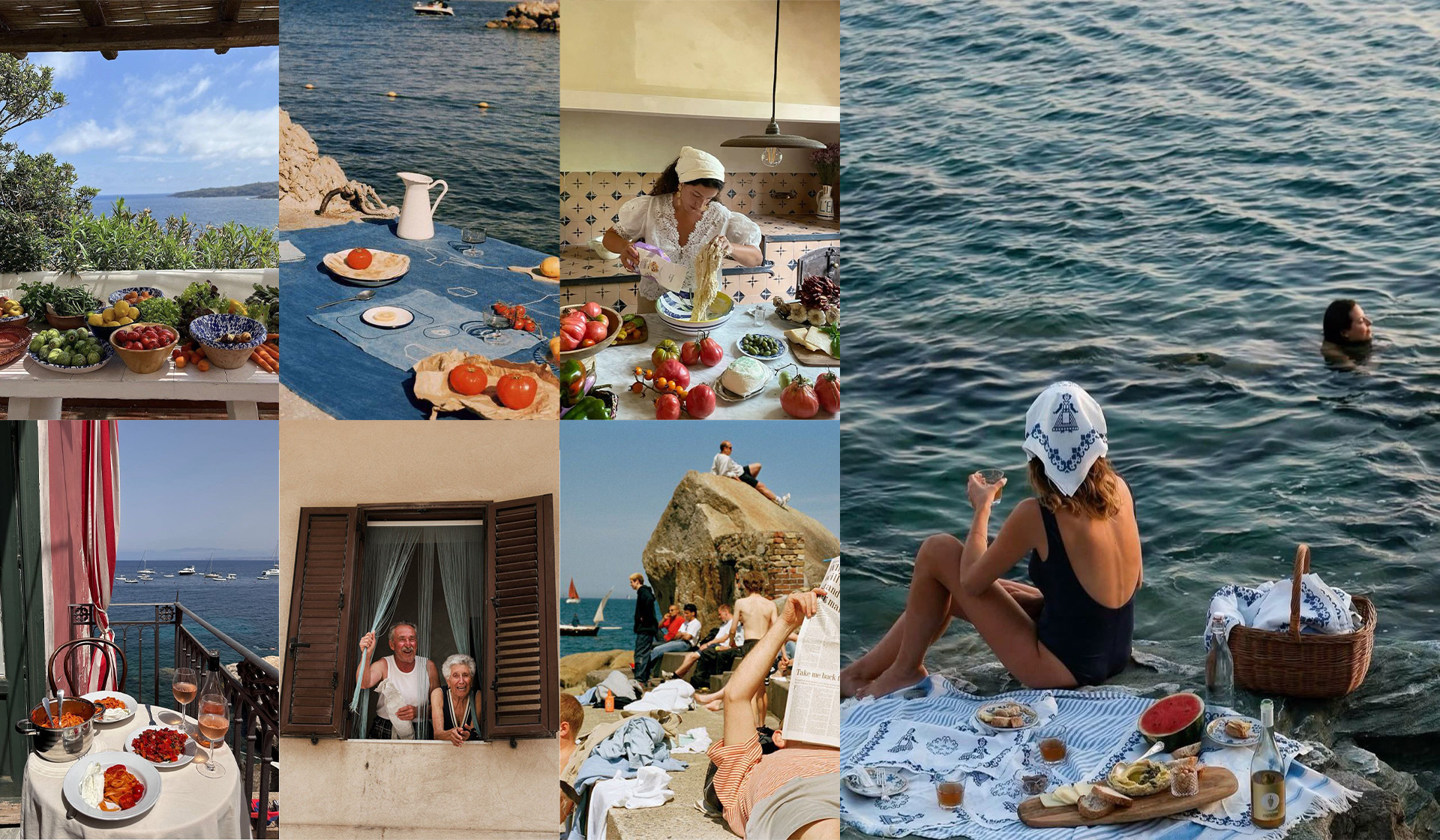
Of course, there is lots to love about the food. The Mediterranean diet is glorified and for good reason. Produce is central alongside fish and poultry as opposed to red meat. Ingredients are minimally processed, usually not at all. Plant-based is common, and wine is consumed consistently and moderately. Fruit for pudding instead of sugar, olive oil and sea salt atop it all.
If it were possible to chew fresh air, I think it might taste just like this. But having eaten well is corroborated by how and where one eats.
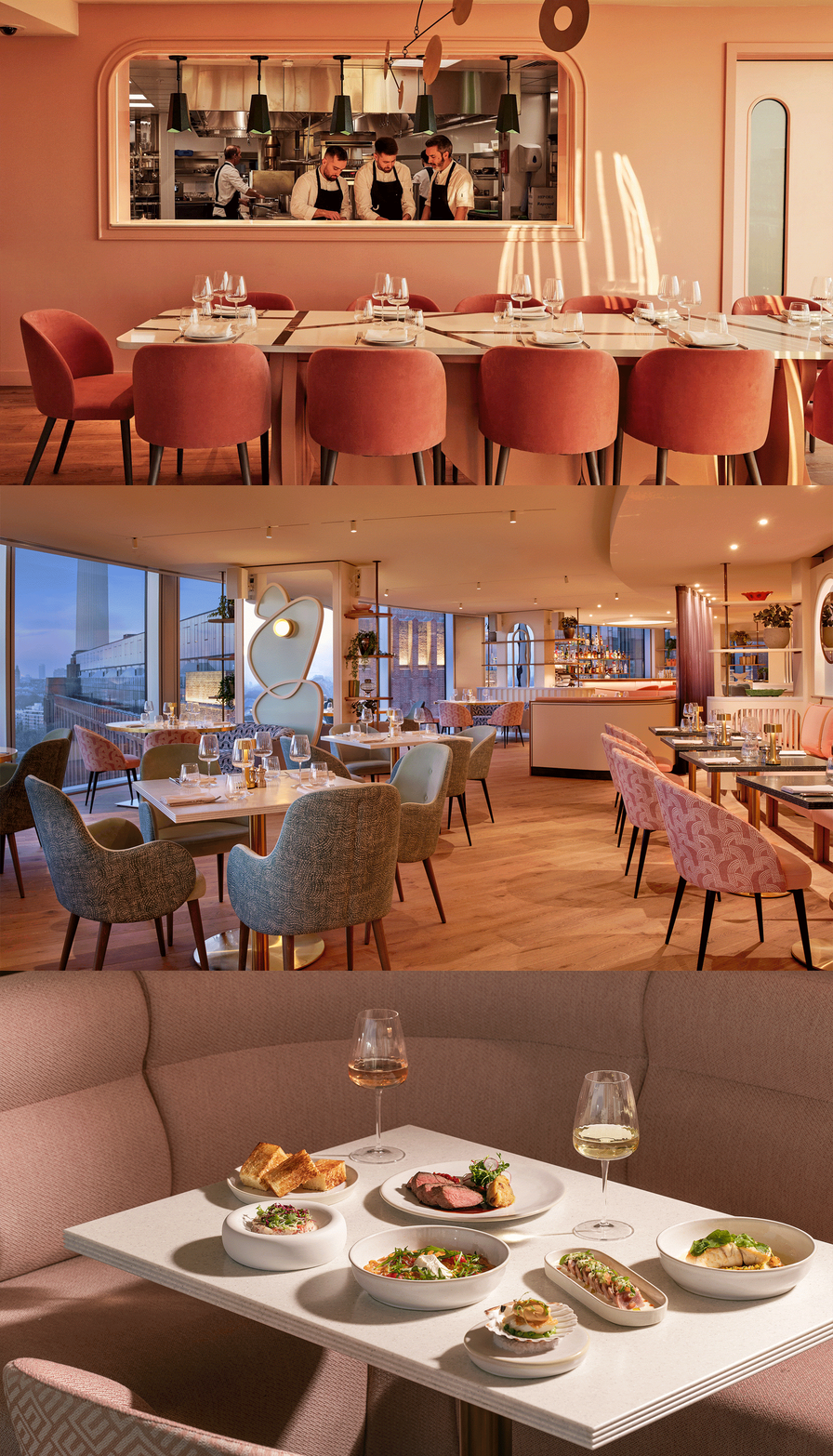
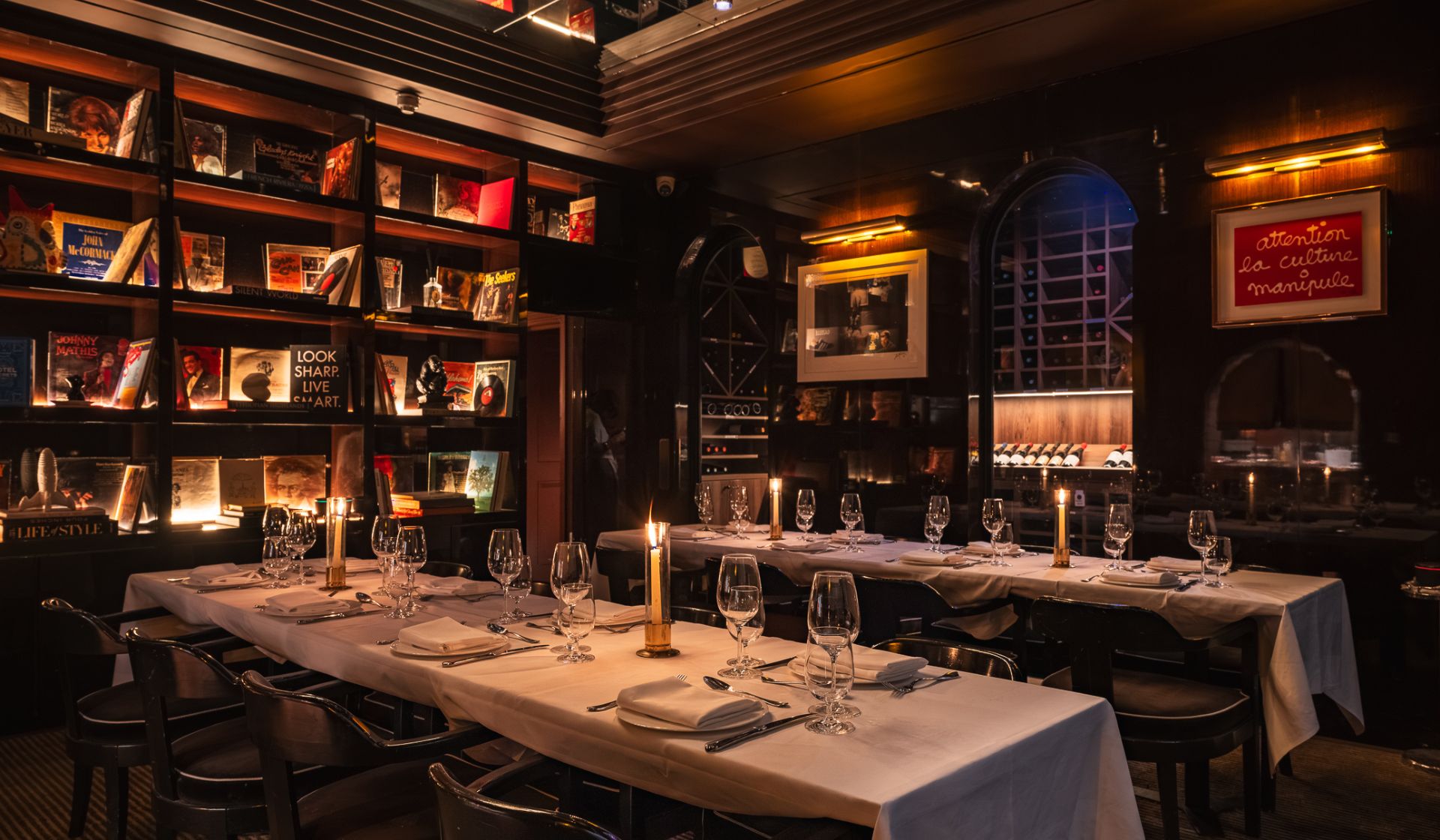
The table is a key part of the Mediterranean diet. The ritual of ingredients and sourcing, then gathering to take part in making, then, finally, sitting among a long table — perhaps outdoors — to eat together, to eat thoughtfully and to eat for a while. Eating is not simply sustenance; it is community building, it is bonding, it is being slow and enjoying. It is not a pre-prepared mixed bean salad in between meetings; it is real food, real people, taking up real time, and that time still being deemed essential.
Appreciating beauty
It all circles back to the lost art of slowing down; an art where stopping in your tracks to admire the birds in the trees is not considered inefficient. One where walking slower to catch a whiff of the roses is a priority, not an exercise in futility. To admire what is around you is to live life to its fullest; it is not to waste time. To savour is to lead a successful career in life.
Longer life together
What does this all lead to? Ah, yes, a longer life. That’s what really impacts a lot of people: how long the Greeks, Italians and Mediterranean waders live. The envy of generations and generations of families alive amongst each other — great great grandparents with great great grandchildren.
The strong social ties, the multi-generational households and the clean diets with slow habits — they are non-negotiables that have ultimately led to a population of fulfilled, long living people. That longer life together: it is a structure of daily life, rather than a chore. To eat, rest, walk and live together is a given. It is not something to tick off of a running to-do list.
The end-all
Most of us will not move to a Mediterranean village and start over, regardless of it being our dream. It is the blueprint that we crave. A real lunch outside rather than a salad over a laptop in an office. Phoneless dinners and early nights. Living for the sake of living, not for the sake of burning daylight.
It is not simply the Mediterranean diet that we yearn for, nor is it entirely about the beaches and salty hair. The Mediterranean diet is a symbol of how to live life well and how to live life long. There is a way — the promise of a life — in which we are happy, fed, watered, and cared for. There is a world that is less about optimisation and efficiency, more about long tables and a lack of plans, a bit of a wrinkle and a bit of a linen, less stress, less burnout, more admiration, more pleasure. That is “The Mediterranean diet”.