“I’m A Food Journalist, Orrery by Pierre Minotti Is Where I Predict London’s Next Michelin Will Land”
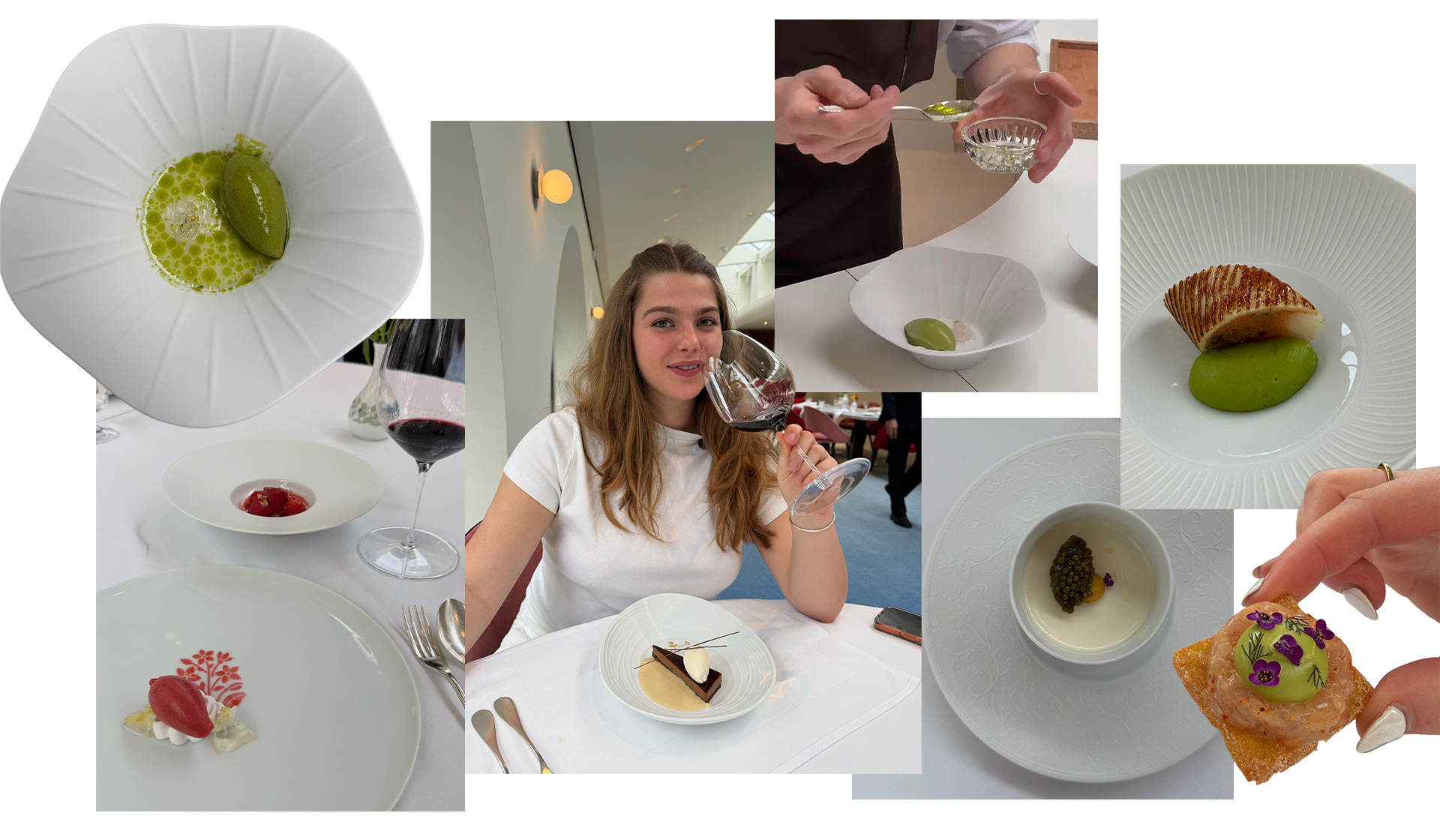
There are plenty of restaurants in London that are quietly shooting for Michelin stars. They fly under the radar, relying on word of mouth to get them into the big leagues, but not following the super polished fine dining experience, which has historically been associated with Michelin. For many, that works. But at Pierre Minotti’s first solo venture, Orrery, it seems to be vying for a Michelin star the old-fashioned way.
In Partnership With Evolv Collection
Orrery feels like a return in a way that reminds you why fine dining became what it is in the first place.
Mallory, Junior Food & Drink Editor

What sets it apart
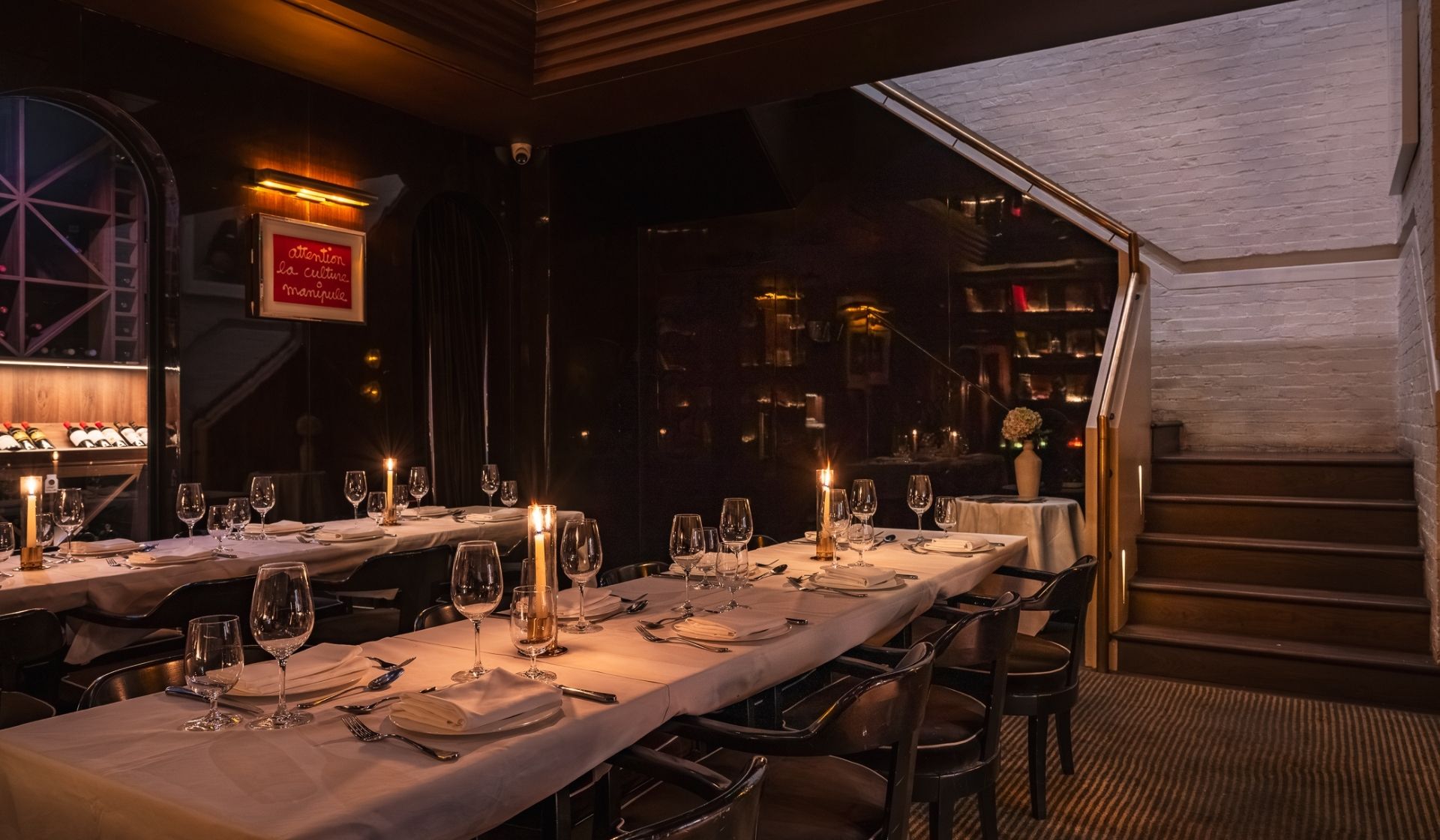
Orrery stands out for one reason: it brings fine dining back to its roots, with a level of polish and indulgence that is transportive, with a red carpeted and dimly lit champagne reception room, followed by a blue carpeted, white table-clothed, round windowed dining room with mirrors bouncing light into every corner, creating an infinite space and topped with an intimate, table lined roof terrace — like where Bond might go on his day off.
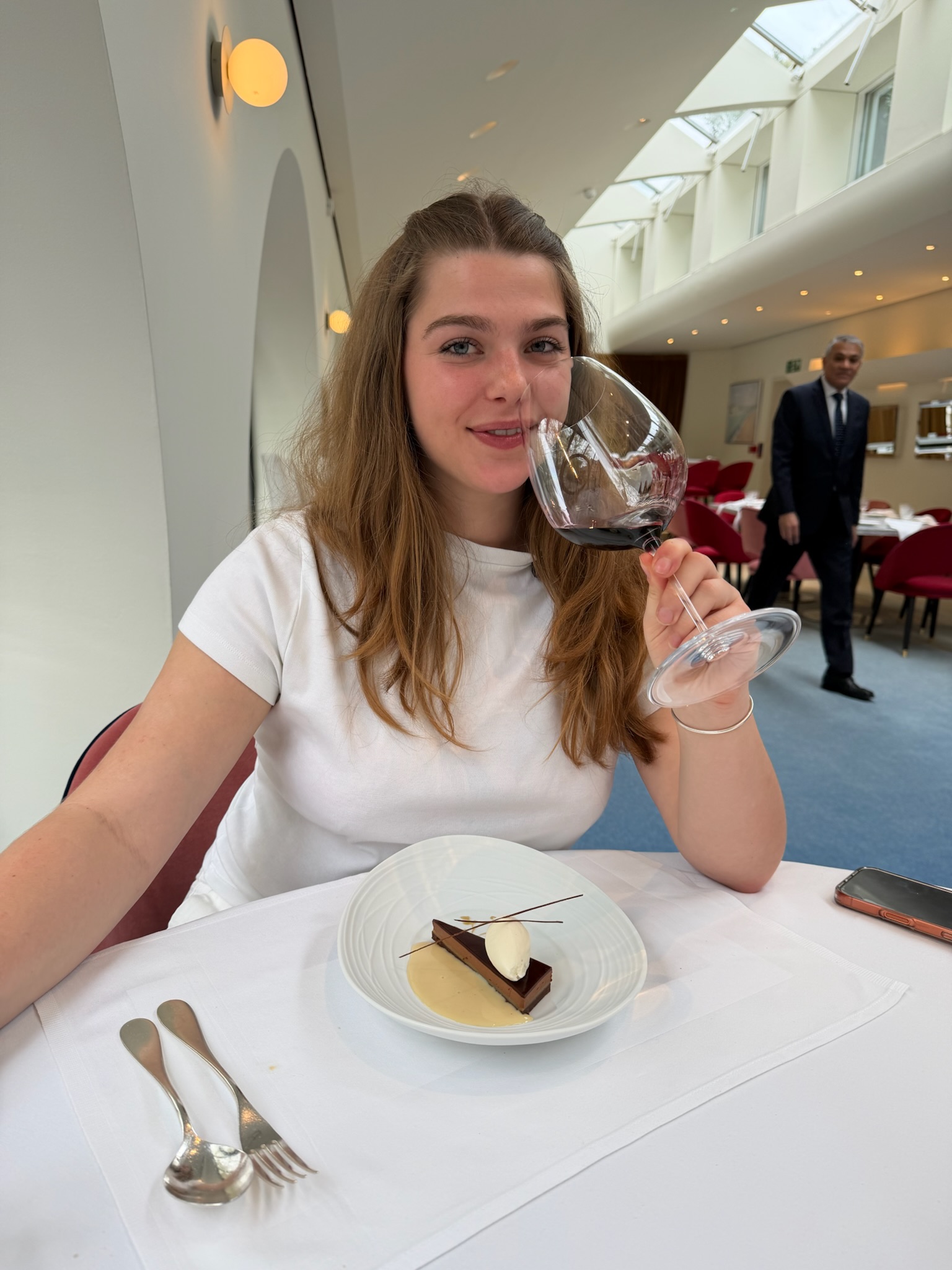
Pierre Minotti’s background showcases the principles of fine dining: discipline and excellence. His experience has led to this very moment, a seven-course tasting menu which puts on display classic French technique, artistry and peak service at peak performance. That said, it doesn’t have that uncomfortable edge that fine dining can sometimes lean into. Whilst it feels classic, like a timeless experience which has been slightly lost in the city’s quest to be young and different, this experience brings together history and artistry while encouraging fun and whimsy. The road only leads to one place, or maybe two: according to the team, the Notting Hill antique market was the first destination. Second destination? Michelin awards.
What we ordered
The menu moves between classical French technique and British produce, but it never feels like it’s trying too hard to prove a point.
For me, it began lightly, but the menu will shift with the seasons. In order to get a full grip, you should go yourself.
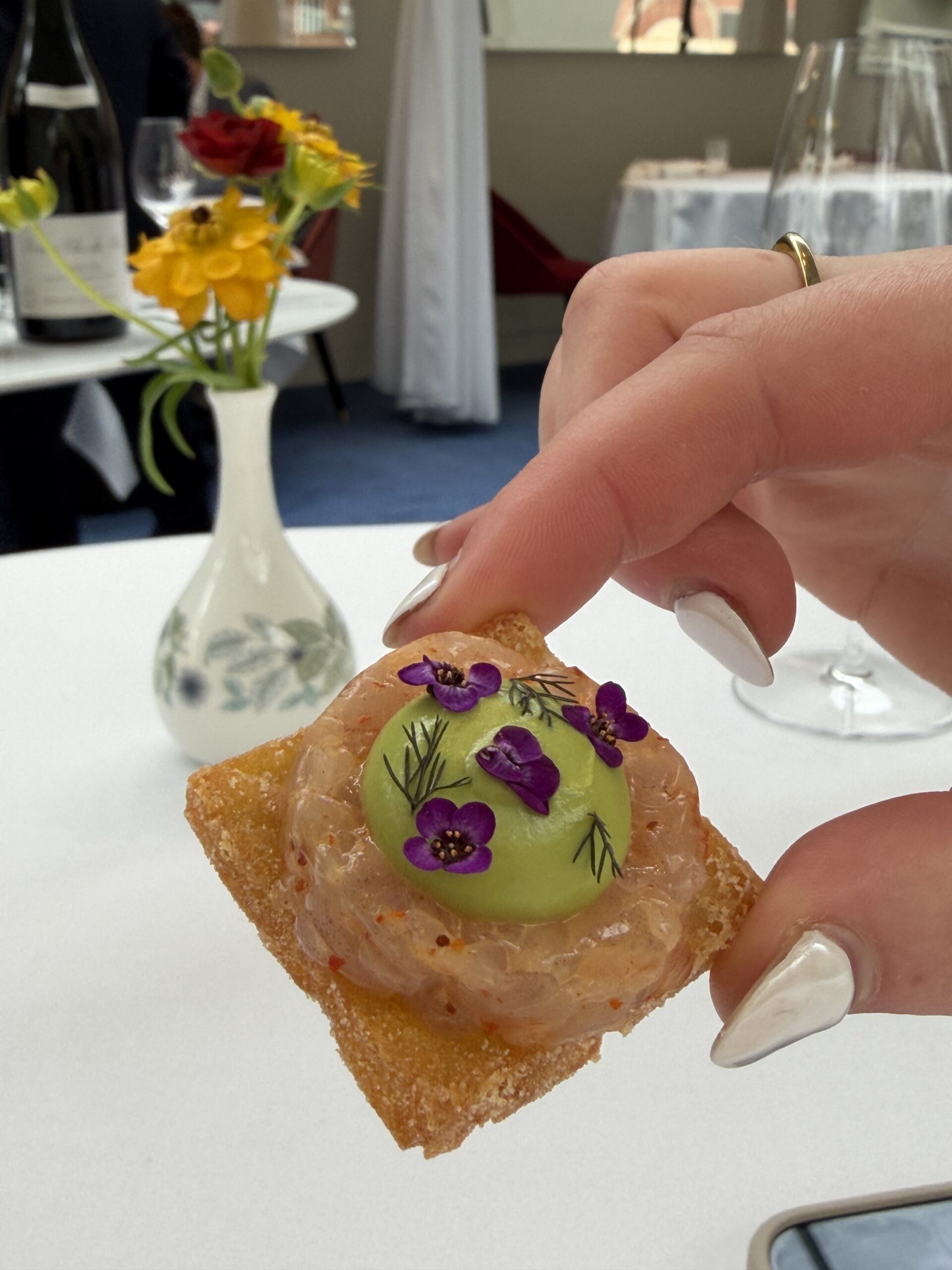
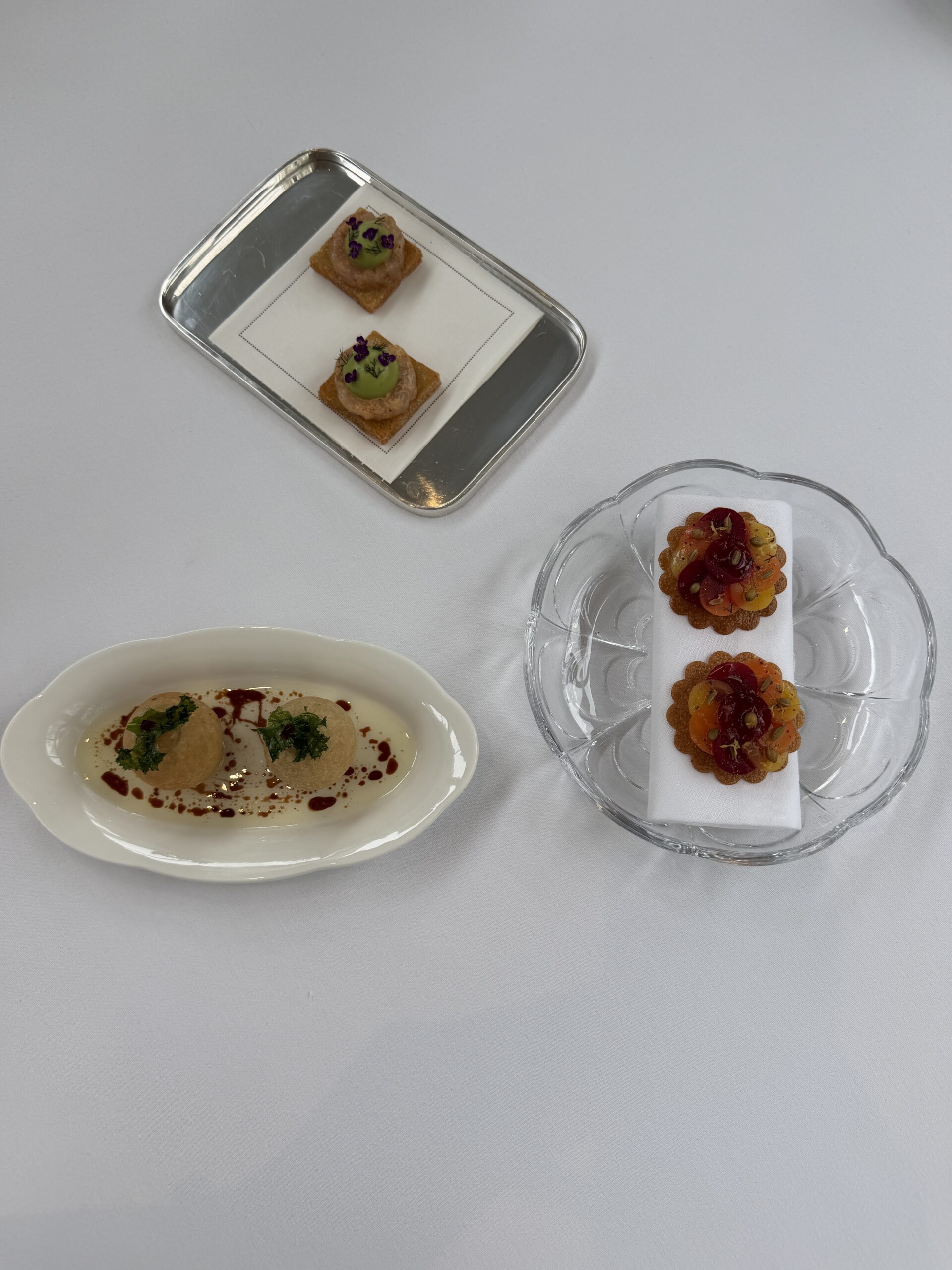
One of the lightest, brightest bites on the menu — before plunging into caviar oscietra with Devon smoked eel, cured sea bass and potato.
It starts with spring crudités and onion soubise, finished with a spoon of Thai basil pesto — one of the lightest, brightest bites on the menu — before plunging into caviar oscietra with Devon smoked eel, cured sea bass and potato.
Then the bouillabaisse, the most surprising. Served cold, which shouldn’t work, but did work. Cornish mackerel, saffron, sea urchin, sharp, slightly saline, and completely different to anything else on the menu.
One of those dishes that reminds you how good simple fish can be when it’s handled with sensitivity, and also with a bit of flair.
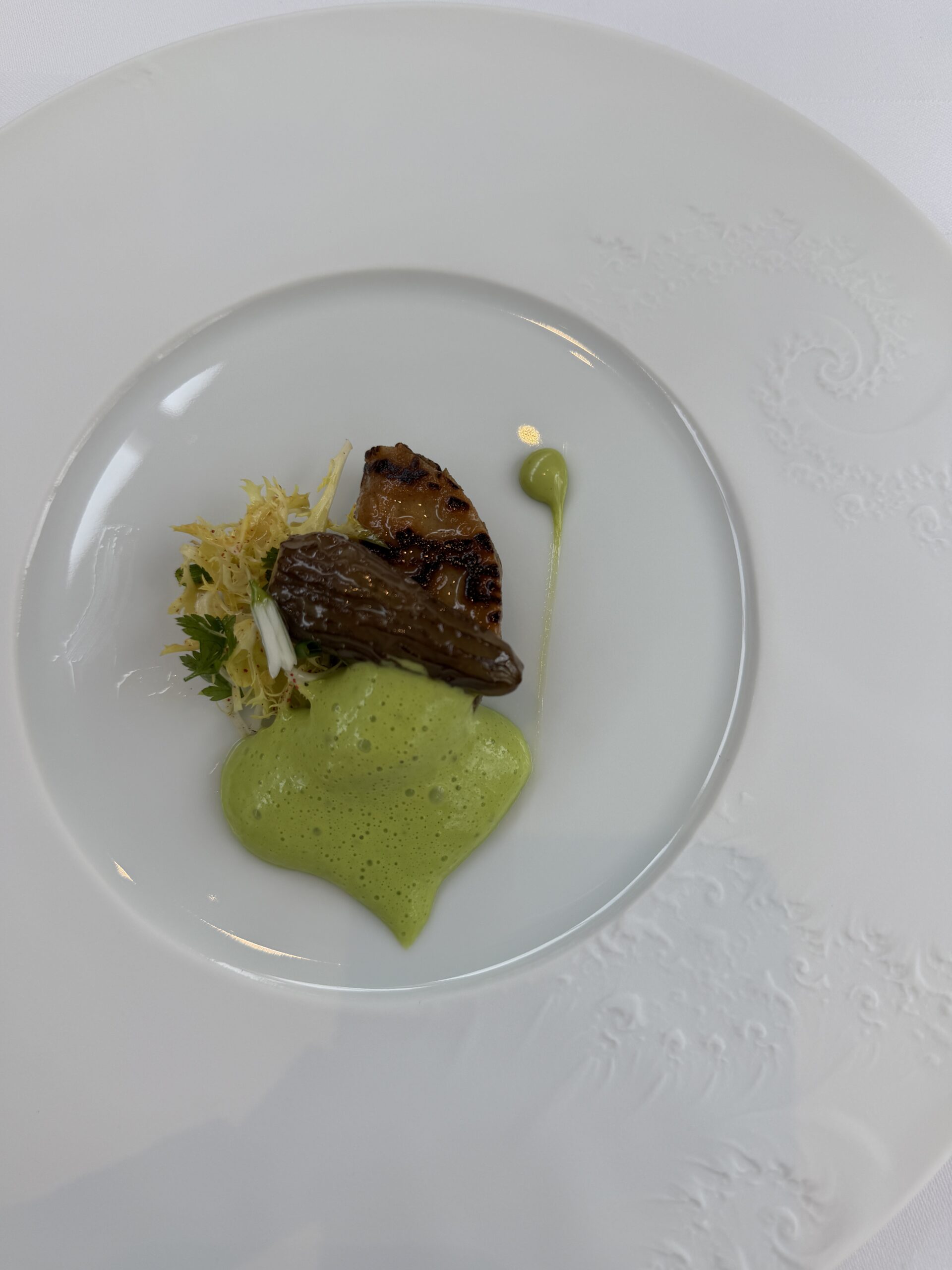
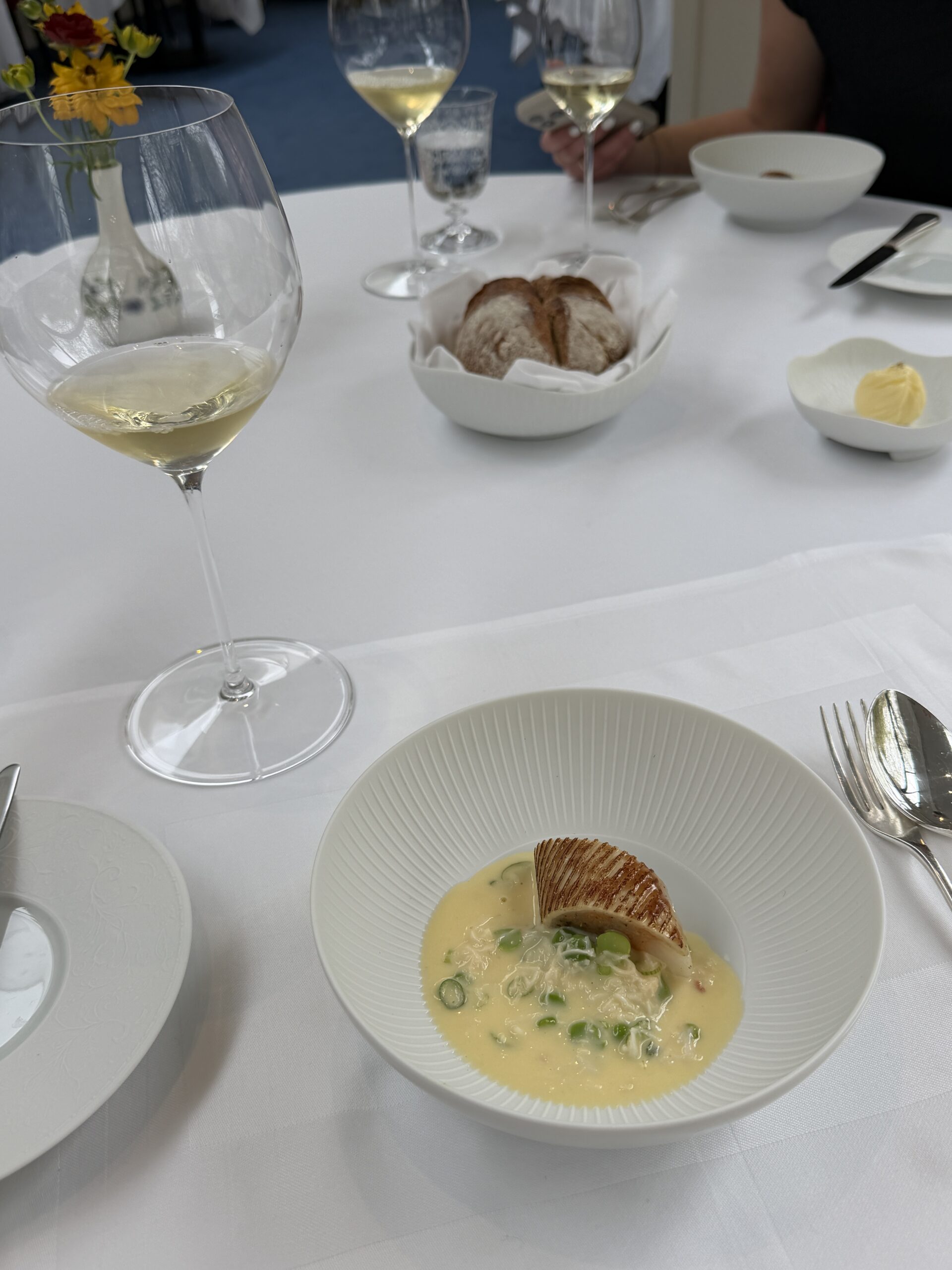
Galette Bretonne was the first warm dish, glorious and spring-forward — morel, wild garlic, buckwheat — delicate, but grounded. Then a John Dory from Plymouth, paired with brown crab and pea, which is a dish that reminds you how good simple fish can be when it’s handled with sensitivity, and also with a bit of flair.
Following the consumption of this giant in sheep’s clothing, you are led back to your table, processing the shot of 55% liqueur you just took.
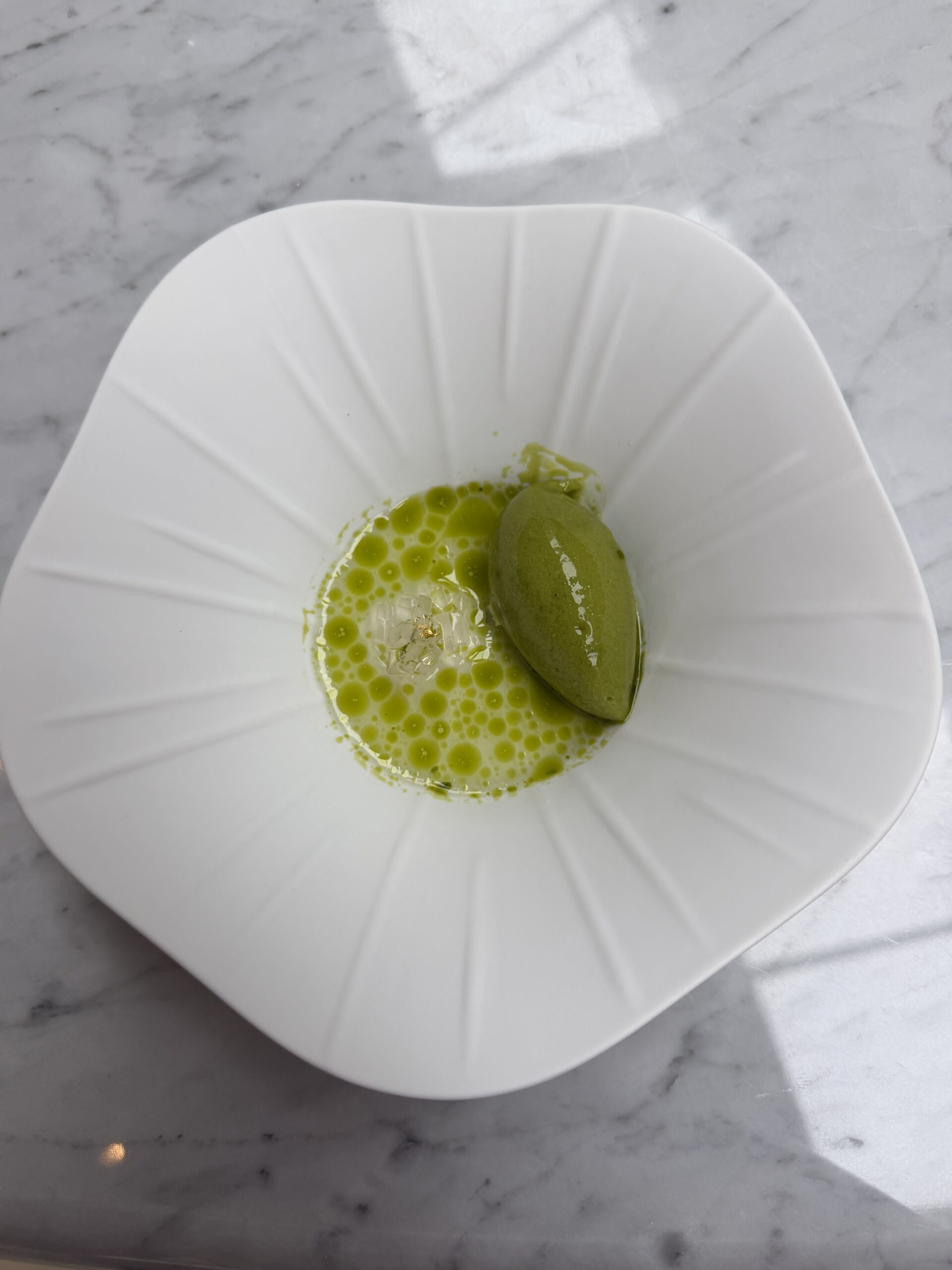
We were then guided to the circular bar at the end of the long gallery room, where you’re met with an iced glass of chartreuse, one of only 200 bottles in the world, and a digestif course of sorbet. Drowning the sorbet is, if you could believe, a bit more chartreuse. Following the consumption of this giant in sheep’s clothing, you are led back to your table, processing the shot of 55% liqueur you just took.
But the dish everyone talks about is the quail. The quail is sourced from a single farm near the Pyrenees, raised for 15 weeks (which is nearly three times the norm), and you can taste that difference immediately. It’s rich, precise, and probably the finest moment on the menu in terms of dining. Lined with fois grais and soaking in vin jaune, this is one of the most outstanding, one of the most opulent bites of poultry I have ever tried.
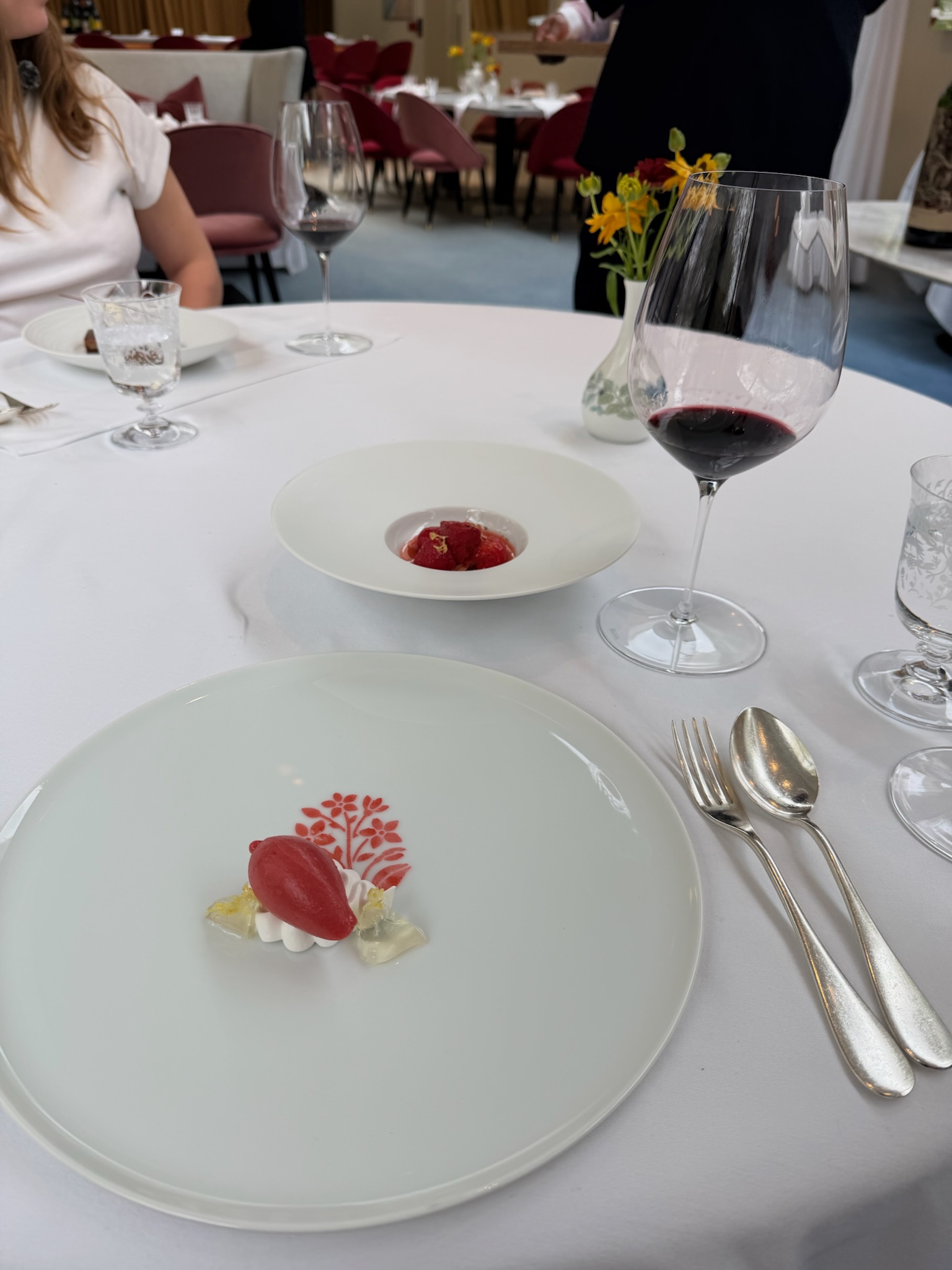
But it softens again. The strawberry dessert is split across two plates: elderflower, meringue, cheesecake, and Chantilly. It is the perfect bite to soothe the experience of the last two hours.
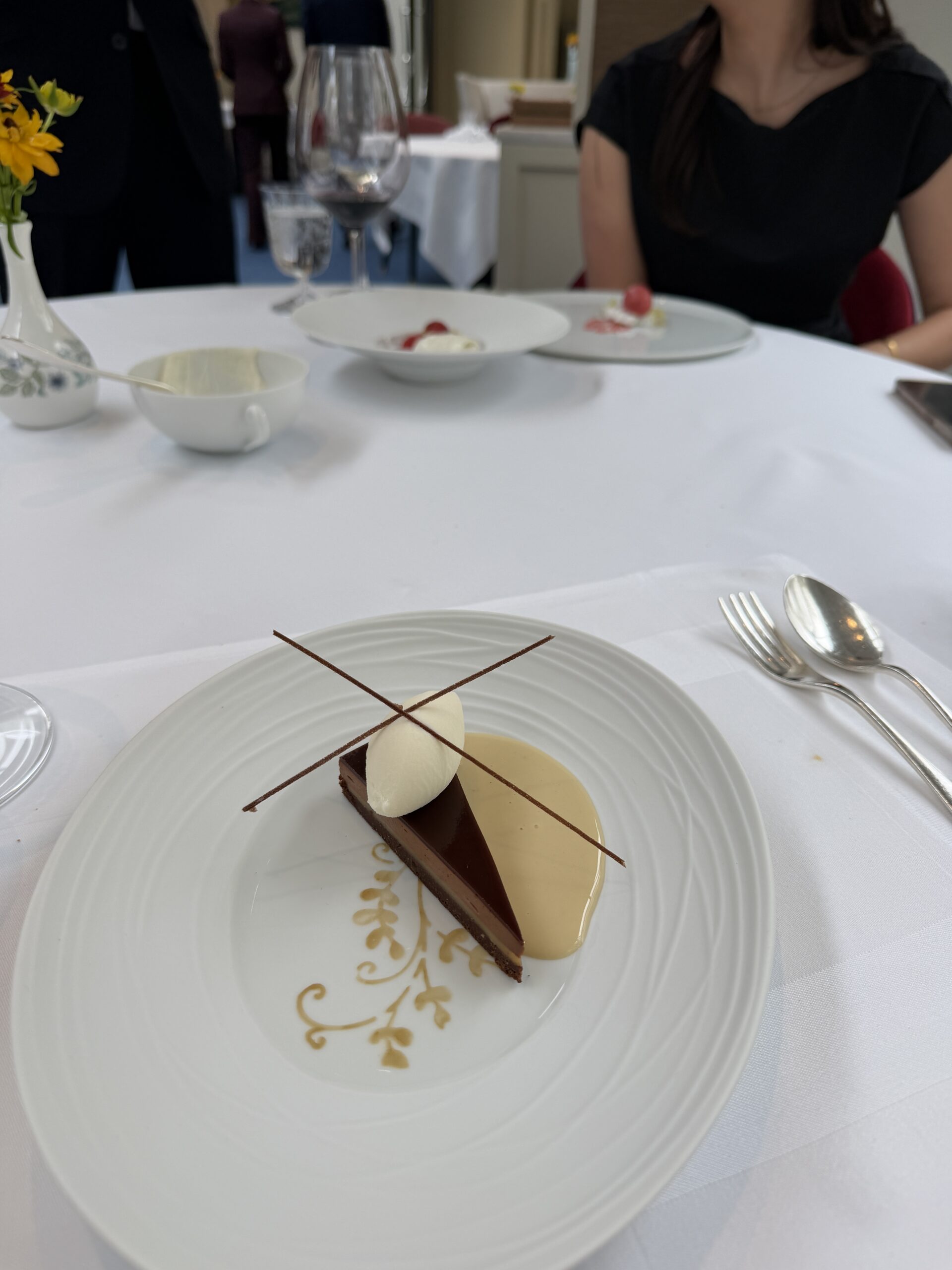
Or perhaps you like richer things: chocolate. A final course built around Nicolas Berger, with almond, coffee and red verjus — a deeper, more structured pudding to wrap a quite velvety bow around it all.
It is soft, and it is decadent. It is fun, and it is momentous. It is refined, although it is complicated. It is what you would want from a lesson in fine dining.
And after all that, it has not lost its footing. The wine is perfectly paired and not too much, the sauces are delicate and thoughtful in all of their abundance, and the menu is balanced and lacking repetition. It is soft, and it is decadent. It is fun, and it is momentous. It is refined, although it is complicated. It is what you would want from a lesson in fine dining.
Verdict
It’s confident in its identity. It’s not chasing trends or trying to reinvent the wheel.
There’s a sense of playfulness running through the whole thing. Little moments that break the formality — the move to the bar, the way dishes are explained, the pacing of the meal. It never feels overly serious, even though the level of cooking absolutely is.
Orrery feels like a return in a way that reminds you why fine dining became what it is in the first place. The precision and sense of occasion are there, but softened with just enough personality to stop it from feeling untouchable.
It’s confident in its identity. It’s not chasing trends or trying to reinvent the wheel. Instead, it leans into what it can do well: exceptional produce, classical technique, and the highest-quality of service. If I were undercover, reporting back to one famed tire company, the message would be clear. Yes, yes, yes.
Where: 55 Marylebone High St, London, W1U 5RB
Website: www.orrery-restaurant.co.uk