In Conversation With Monica Galetti, One Of The UK’s Most Exciting Chefs
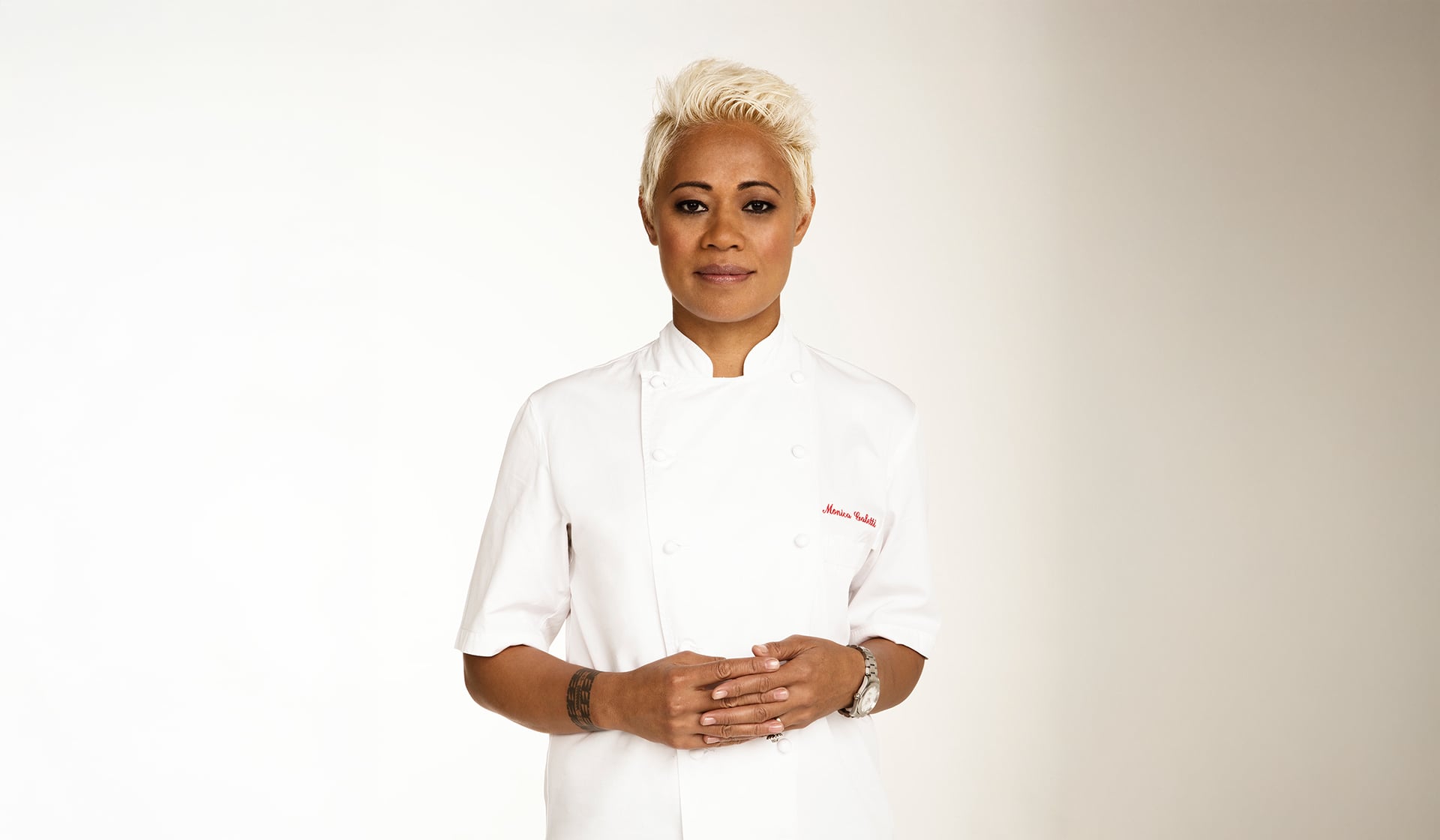
Easily one of the most recognisable chefs in the UK, Monica Galetti wears many hats, some of them being: restaurateur, TV personality, author, MasterChef judge and Marmite enthusiast. Born in Samoa, Galetti studied hospitality in New Zealand, where she started cooking competitively, before moving to London to work in the hallowed kitchens of Le Gavroche. Eventually, she opened her own London restaurant, Mere, which she co-founded with her husband, David and served some of London’s best seabass for 7 years.
Her most recent endeavour has been to collaborate with itsu to create a range of restaurant-inspired noodles and broth that are making office lunches a lot more exciting. Ahead of the launch, we caught up with the chef to chat about all things food and travel.

What are your earliest memories of food?
I was born in Samoa in the Pacific Islands. So for me, it was always about really fresh ingredients. You could go and pick mangos or pineapples; we had chickens running around, and then an uncle would arrive with the catch of the day. Even when we moved to New Zealand, my dad grew as much as possible, you could pick peaches off the trees – these are things you just take for granted until you grow up, move away and realise how great it was.
A dish from my childhood that I loved was my mum’s chop suey.
A dish from my childhood that I loved was my mum’s chop suey (Samoan cooking has a lot of Asian influence). You cook down a chicken, beef or lamb with lots of garlic and soy, and you take vermicelli which has been soaked, and you cut it up and stir it through. My dad used to make a great oka, which is a Samoan dish that’s basically like a ceviche with coconut milk.
Did you always know you wanted to be a chef?
I did a hospitality diploma that included studying everything from communications to hotel skills, and part of it was the first certificate in being a chef. I walked in, and I immediately knew that that’s what I wanted to do for the rest of my life. Samaon food is just so different from the European way of cooking – we didn’t really follow recipes, it was all delicious home cooking, but learning, for example, how to make bread rolls and chocolate decorations fascinated me. I was really a child of the world and was curious about different cuisines. I also have a huge love of travel, so I’ve been very fortunate to be able to do both things in my career.
I walked in and I immediately knew that that’s what I wanted to do for the rest of my life.
What’s the biggest difference between cooking on camera and in a restaurant?
I have always loved what I do. There’s nothing like being in a team and cooking together. But cooking on television is completely different. What I do like about it is that sometimes I’ll meet someone and they say to me, “Oh, I saw you make this dish and it made me want to try it and give it a go and it was amazing.” I used to do a mushroom pasta with some Marmite butter – you know, with Marmite, you either love it or hate it. But I know people who usually don’t eat Marmite who love the dish.
You owned your own restaurant, Mere, in London for seven years. What’s been your biggest learning experience from that?
The best part of running a restaurant is the team. They were like my kids, and I’m still in touch with them now and keeping an eye on them. But also, getting to know our regular customers is great – I’m still in touch with quite a few of them. It’s about the relationships you make. Hospitality is about making people happy, and that, for me, was the most satisfying part.
The best part of running a restaurant is the team.
I’m helping a family in Samoa open a restaurant at the moment, so I’m going back there soon to help train the team and create the menus. I’ve always wanted to give back to my people – I’ve worked abroad for so long, so it’s been an amazing opportunity to do that.
What do you think it takes for a restaurant to stand out in the F&B industry in London today, and do you have any advice for chefs starting out?
We’re so fortunate to have such a huge variety of cuisines here. London is such a melting pot of food; we’re very lucky. People these days are so food savvy – you need to know where your restaurant is positioned so you understand your clientele, whether it’s in a business district or a neighbourhood restaurant, it has to reflect what’s around you. If you’re starting out as a chef, my best advice would be to find a place that you really look up to and learn as much as you can from the chefs that you work with and try to stick to it. I think a lot of chefs can jump from one job to another, but the longer you can stay in a place and learn as much as possible, the better.
Your favourite London restaurant right now…
We love seafood as a family, so we go to J Sheekey
a lot. It’s a classic; it’s been around for years. Sabor is definitely still on top of the list. My favourite dish is the suckling pig – in Samoan culture, we love our pork.
Sabor is definitely still on top of the list.
What would you recommend doing for a first-timer’s visit to Samoa?
It’s so beautiful, where do I even start? I would say Savai’i, which is quaint- when you drive through the villages, they’ve all got the houses in different colours, and the beaches are beautiful. You can go and pick limi (they’re like tiny seagrapes), and to do that, you need to ask permission to get a canoe, and they row you across to a place where you can pick them. There’s also the Fiafia night, which is when you go and watch the traditional dancing – that’s one you have to do. It’s a long flight, but I promise it’s worth the trip. On a Sunday, you should do a To’ona’i, it’s a traditional feast where everything is roasted in the ground.
You can find out more about Monica Galetti’s collab with itsu here.