Warming Winter Recipes From London’s Top Chefs

As temperatures drop and frosty mornings greet us, there’s nothing quite like a warm, hearty meal to chase away the chill. From winter salads to slow-cooked meats, here are some warming recipes from some of London’s top chefs, that are sure to become staples in your kitchen.
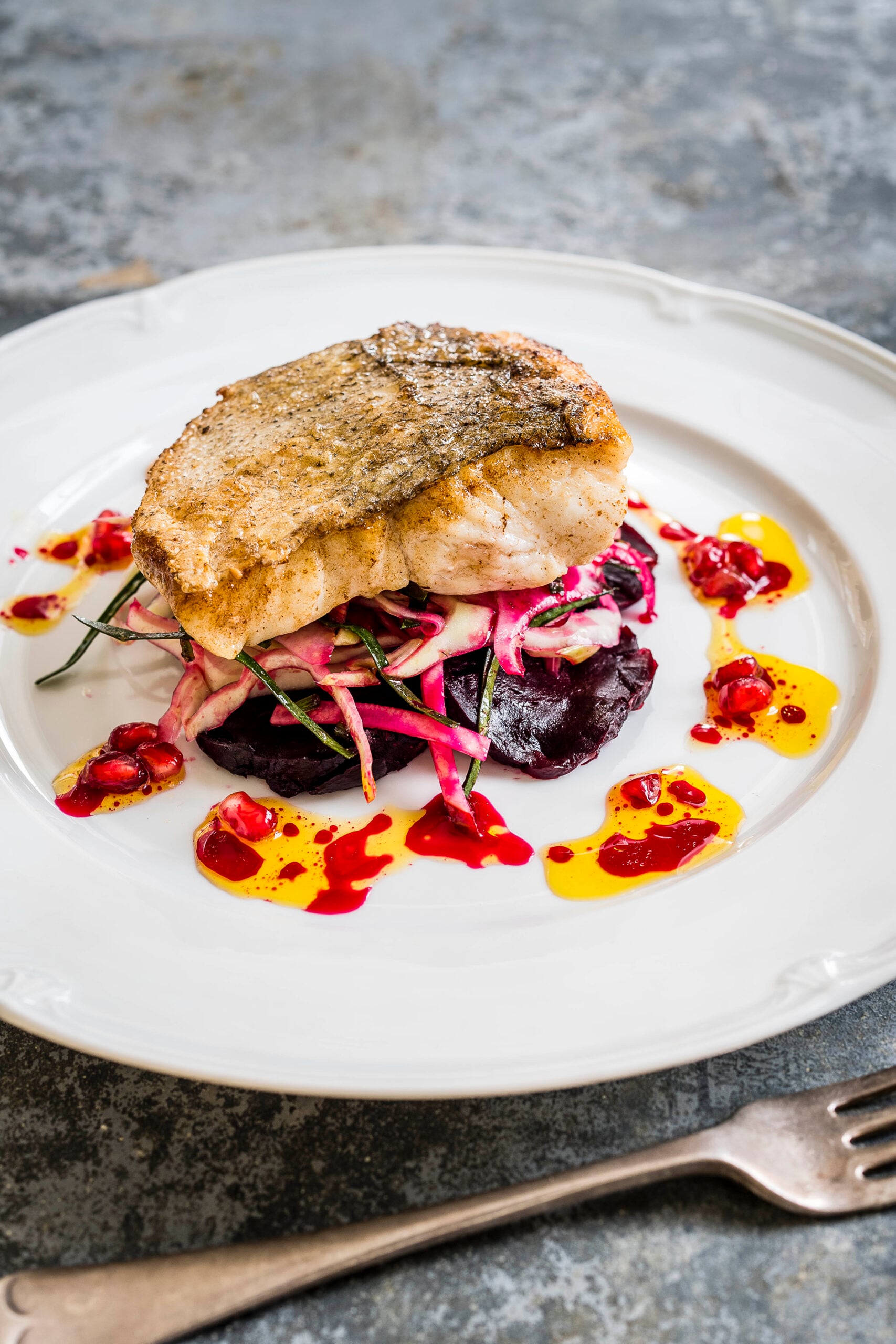
Hake with Winter Salad
From Jack Stein
Ingredients:
- 6 medium-sized beetroots, peeled
- A pinch of caster sugar
- 1 strip of lime zest
- 1 strip of lemon zest
- 2 garlic cloves
- 2.5cm piece of cinnamon stick
- 100g red cabbage, finely shredded
- 100g white cabbage, finely shredded
- 50g kale or cavolo nero, finely shredded
- A small bunch of chives, chopped
- A small handful of fennel fronds
- 1 tablespoon sea purslane leaves (optional)
- A small bunch of sea beet leaves, finely shredded (optional)
- 4 (100g) pieces of hake fillet
- 25g butter
- 50ml dry white wine
- 100ml fish stock
- Sea salt flakes
For the dressing: - 3 tablespoons beetroot juice (from the cooked beetroots)
- 2 tablespoons cider vinegar
- 3 tablespoons rapeseed oil
- ½ pomegranate, seeds only
- Salt
Method:
1. Place 2 of the beetroots in a small pan with the sugar, a good pinch of salt, the lime and lemon zest, and the cloves and cinnamon. Cover with cold water, bring to the boil, lower the heat and leave to simmer very gently for 1 hour or until tender when pierced through to the centre with a fine skewer.
2. Remove the cooked beetroots and set them aside to cool.
3. Meanwhile, roughly chop the 4 remaining beetroots and blend in a food processor to a smooth purée. Tip the purée into a sieve set over a bowl and press out all the liquid with the back of a spoon or a spatula. This should yield about 75ml of liquid. Set this aside for the dressing.
4. Cut 1 of the beetroots into thin slices, then cut these into fine matchsticks. Mix the shredded cabbages, chives, fennel fronds, beetroot matchsticks and the sea purslane and sea beet (if using) together in a large bowl. Set this aside.
5. Season the hake on both sides with salt and set aside for 10 minutes.
6. Meanwhile, for the dressing, whisk the beetroot juice with the vinegar, oil and some salt to taste. Set aside.
7. To cook the hake, first melt the butter in a non-stick frying pan large enough to hold the fish comfortably side by side. Pat the hake dry with kitchen paper, add to the pan, skin side down, and cook over a medium-high heat until pale golden brown (1-2 minutes). Turn the pieces over, add the white wine and fish stock to the pan, cover and cook for another 2-3 minutes, until cooked through. Keep warm.
8. To finish the dressing, whisk 2 tablespoons of the cooking liquid from the fish pan into the beetroot dressing and season to taste with salt. Add 4 tablespoons of the dressing to the cabbage salad and mix until well combined. Stir the pomegranate seeds into the remaining dressing.
9. To serve, thinly slice the remaining cooked beetroot and overlap the slices to form a disc in the centre of each serving plate. Place a 10-12cm cooking ring in the centre of a beetroot disc and fill with the salad mixture. Carefully lift the ring off and repeat for each of the remaining plates. Place a piece of fish on top of the salad and spoon the dressing and pomegranate seeds around to finish.
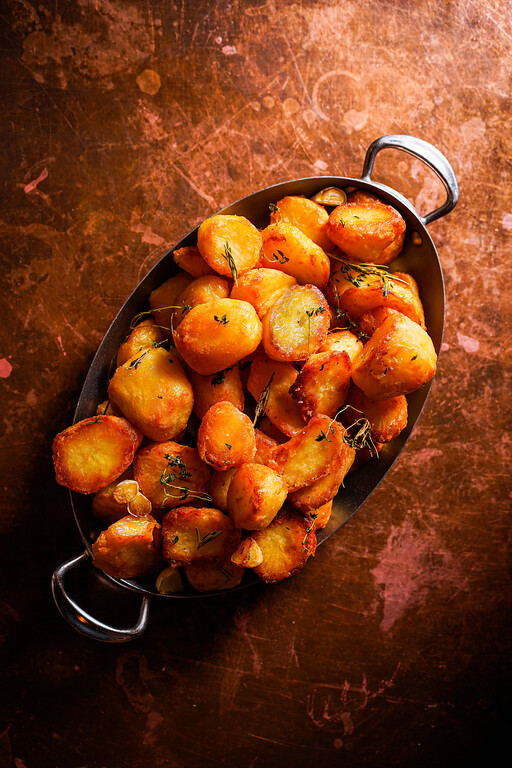
Duck Fat Roast Potatoes
From Hawksmoor
Ingredients:
- Serves 4
- 750g–1kg floury
- potatoes,
- such as Maris Piper or
- King Edwards
- 5 tbsp duck or goose
- fat or
- beef dripping
- 2–3 cloves of garlic,
- flattened
- A couple of sprigs of
- thyme
- Maldon sea salt
Method:
1. Peel the potatoes and halve, quarter or cut them into eighths (medium-sized potatoes into 4, large ones into 8). The key is to
make sure the pieces are evenly sized so you don’t under- or overcook them.
2. Place in a saucepan, cover with cold water and add a few generous pinches of salt. Bring to the boil and simmer for 15 minutes
or so, inserting a knife to check they’re cooked through. Preheat the oven to 220°C/425°F/Gas 7.
3. Drain the potatoes and let them dry in a large roasting tin. Once white ‘blister’ marks appear on the surface of the potatoes,
fluff up the edges by shaking the roasting tin. This rough and tumble method is known as ‘chuffing’ and helps the potatoes develop an extra crisp surface.
4. Heat the duck or goose fat on the hob until nearly smoking. Hold your nerve – the hotter the fat, the crisper the results. Pour
the hot fat over your potatoes and roll them around so they are all coated.
5. Place the roasting tin on the upper-middle shelf of the oven. Roast for 50 minutes or so, turning the potatoes from time to time
to colour them evenly. Add the garlic and thyme about 15 minutes before the end.
6. What you’re really looking for is a golden brown potato with dark crunchy bits at the edges. The trick is to leave them to the point at which you can resist them no longer, and have to take them out of the oven to eat.
7. Once the potatoes are done, remove the thyme and garlic, sprinkle the salt over them and serve very hot.
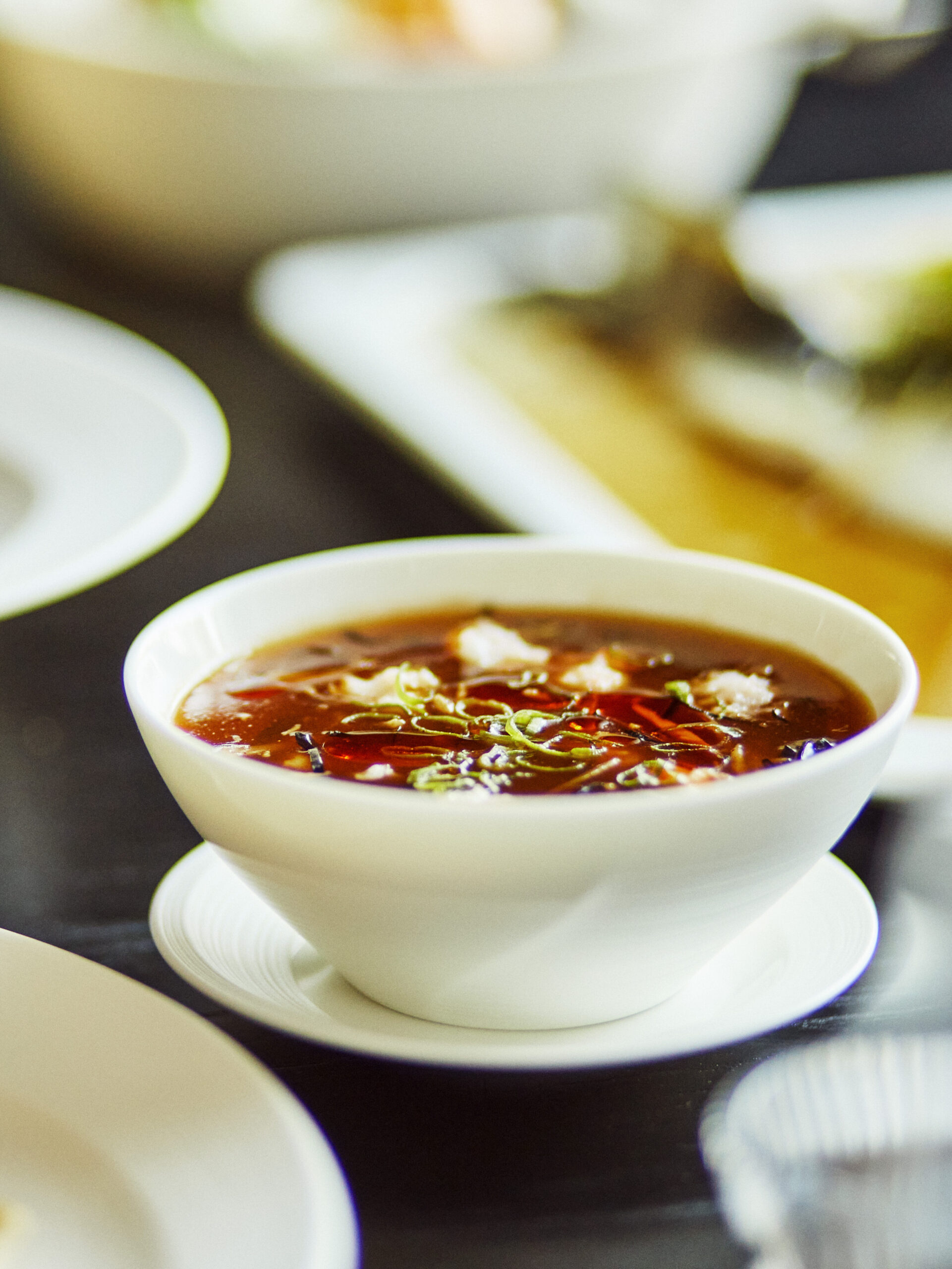
Winter Hot & Sour Soup
From Chef Eng Soon Yoo at Park Hyatt London River Thames
Ingredients:
For the chicken broth:
- 400g chicken carcass/bones
- 30g sliced fresh ginger
- 10g white whole peppercorns
- 2lt water
Any leftover chicken broth can be frozen into small bags and kept for future use
For the soup:
- 600ml chicken broth
- 3ml Chinese cooking wine
- 4ml Tabasco
- 30g winter bamboo shoots
- 30g dried cloud ear fungus
- 30g Szechuan vegetables
- 4 medium-sized prawns
- 1 whole spring onion
- Salt
- Sugar
Method:
1. In a large pot, sauté your chicken carcass/bones with the whole white peppercorns (to release all
the aromas from the peppercorns and enhance the chicken flavour for our broth.
2. Next, add the ginger and water. Bring to a boil and simmer for at least 1 hour over a medium
heat
3. Once the broth is ready, remove from the heat and strain into a new pot.
For the soup:
1. Soak the dry fungus in cold water until they have absorbed the water and grown in size. Once it
is soft, cut into a thin julienne.
2. Cut the Szechuan vegetables and winter bamboo shoots into thin julienne cuts
3. For the prawns, slice open from head to tail and cut into thin julienne
4. Wash and dry the spring onion and slice thinly
5. In a small pot, blanch and strain the prawns and julienned vegetables
6. Add all the ingredients together, except the chopped spring onion, and bring to a boil. Adjust the
taste with some salt and sugar
7. To finish, serve your soup and top it with some drops of chilli oil and chopped spring onion
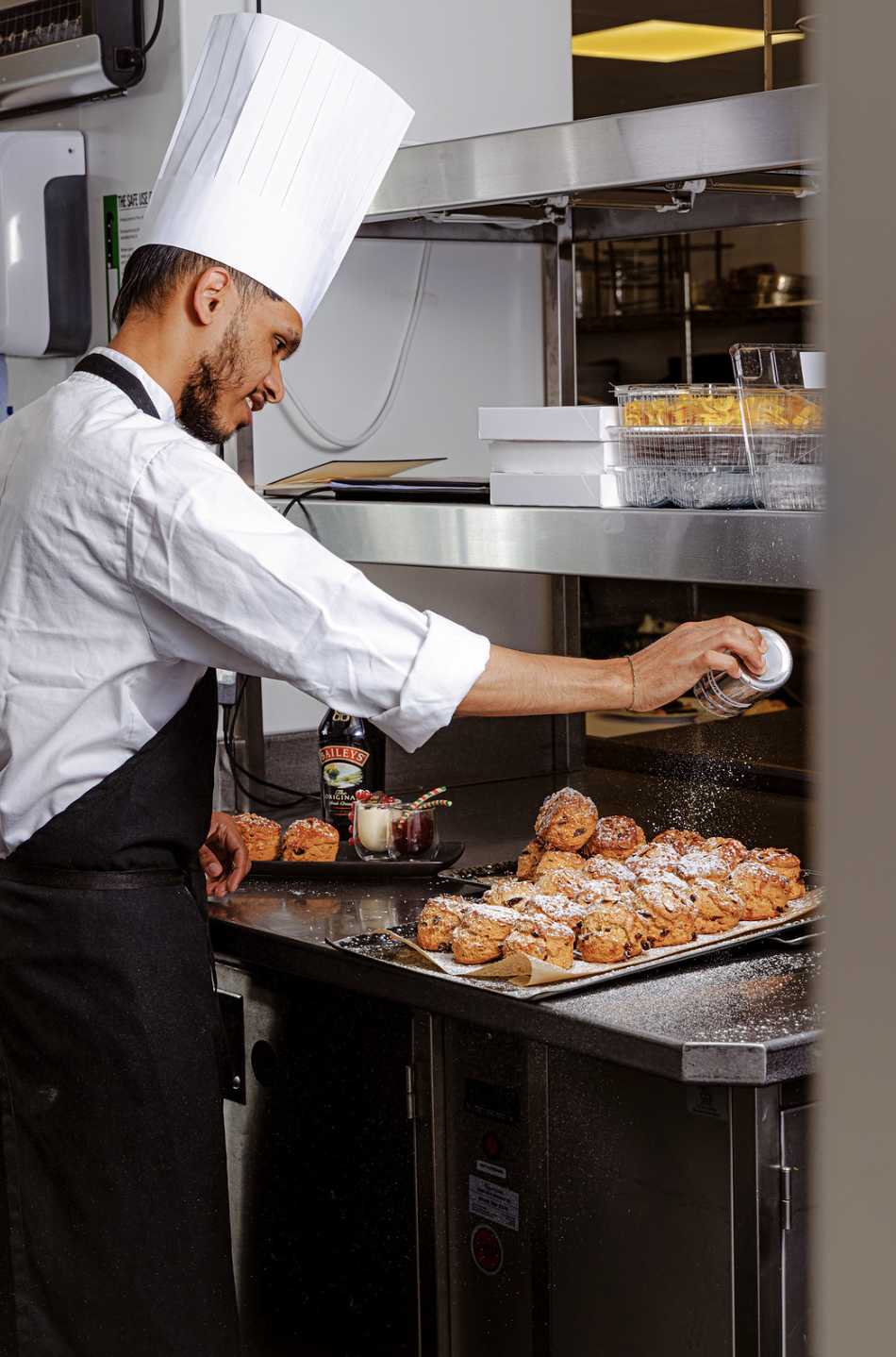
Cranberry and Lemon Scones
From Richmond On The Hill
Ingredients:
- 380 kg flour
- 83 g sugar
- 83 g soft butter
- 25 g baking powder
- 1 egg
- 125 ml milk
- 200 g dried cranberries
- 15 g lemon zest (about 1 lemon)
- (Plus egg yolk + milk for glazing)
Method:
- Dry Base First — Mix flour, sugar, baking powder, and lemon zest.
- Butter Time — Add the soft butter and paddle a few minutes until sandy.
- Pour + Paddle — Add eggs and milk. Mix gently (don’t overdo it!).
- Cranberry Drop-In — Fold in cranberries at the end.
- Shape & Shine — Roll out, cut into your favourite scone shape, and brush with yolk-milk glaze.
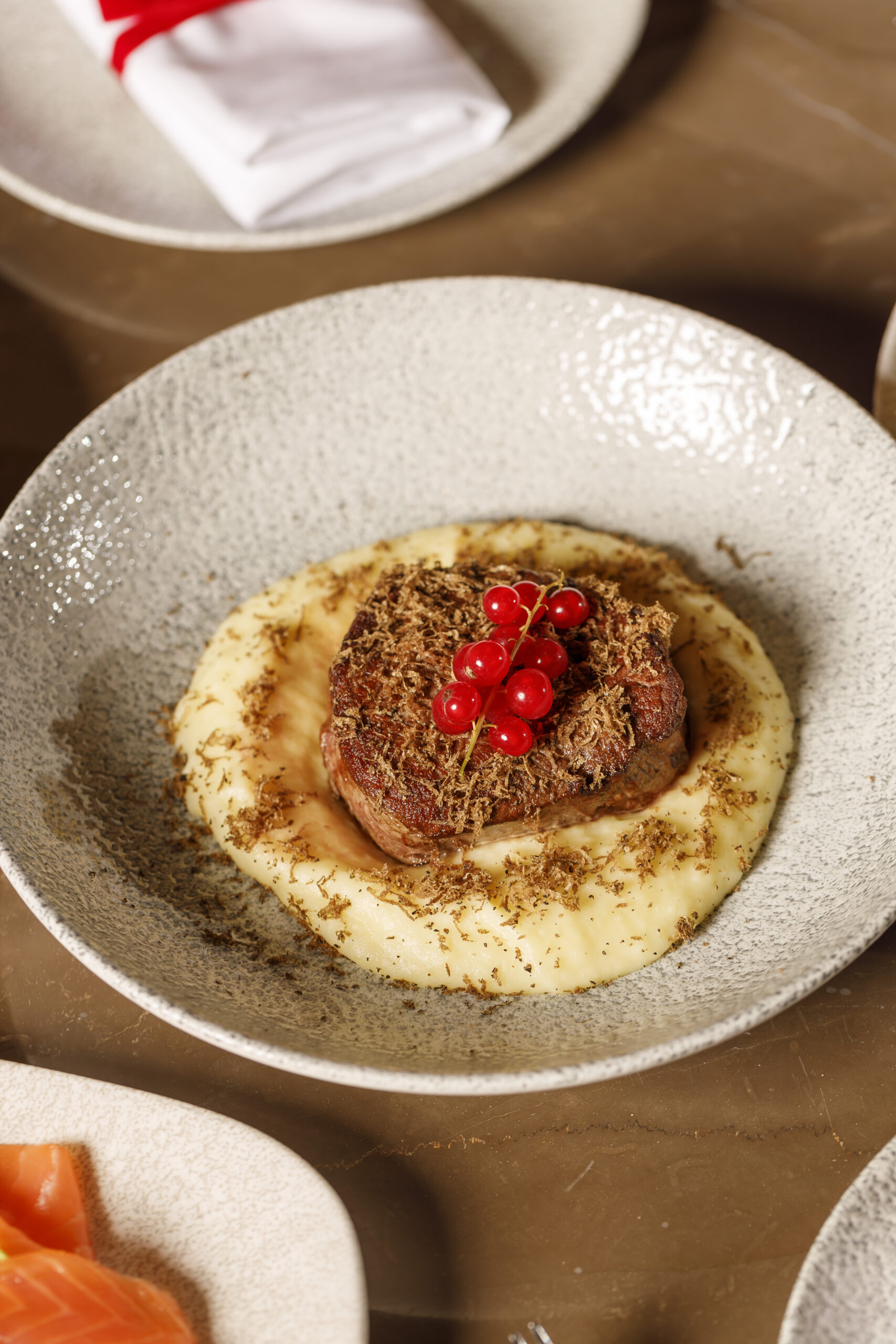
Scottish Beef Fillet
Ingredients:
- 2 Scottish beef fillets (200g each)
- Salt, to taste
- Black pepper, to taste
- 1 tbsp olive oil
- 1 tbsp butter
- 1 sprig thyme
- 1 clove garlic, crushed
For the Creamed Potato: - 500 g potatoes, peeled and cut into even chunks
- 50 g milk
- 40 g butter
- 2 g truffle paste
- 10 g truffle oil
- 2 g salt
For Garnish: - Fresh redcurrants
- Fresh black truffle (optional, for shaving over the top)
Method:
Prepare the creamed potato:
1. Place the peeled and chopped potatoes in a pot of salted water. Bring to a boil and simmer until the potatoes are tender (approximately 15–20 minutes).
2. Drain the potatoes thoroughly and pass them through a potato ricer or mash until smooth.
3. In a saucepan, gently heat the milk and butter until melted and combined.
4. Gradually mix the milk and butter mixture into the mashed potatoes until smooth and creamy.
5. Stir in the truffle paste, truffle oil, and salt. Adjust seasoning as needed. Keep warm until serving.
Cook the beef fillet:
1. Season the beef fillets generously with salt and pepper on both sides.
2. Heat a heavy-based skillet or frying pan over medium-high heat. Add olive oil and sear the beef fillets for 2–3 minutes on each side, achieving a nice crust.
3. Lower the heat slightly, add the butter, thyme, and garlic to the pan. Baste the fillets with the melted butter and aromatics for an additional 2–3 minutes, depending on the desired doneness (medium-rare is recommended).
4. Remove the fillets from the pan and let them rest for 5 minutes.
Assemble the dish:
1. Spoon the creamed potato onto each plate, creating a smooth base.
2. Place the seared beef fillet on top of the creamed potato.
3. Garnish with a cluster of fresh red currants and shave black truffle over the dish.
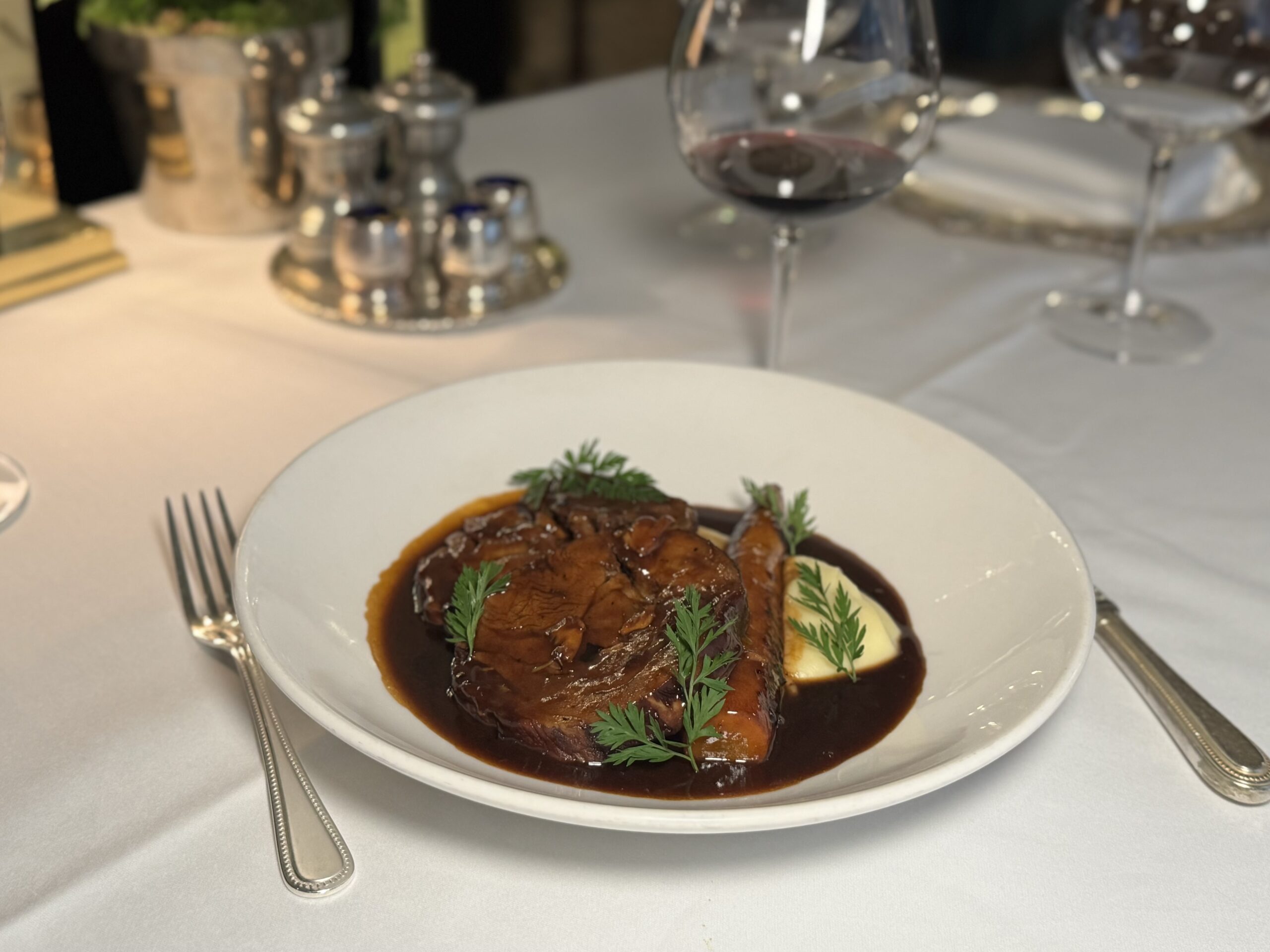
Slow-cooked lamb shoulder
From The Rubens at the Palace, Executive Head Chef, Ben Kelliher
Ingredients:
- 2 rolled and boned lamb shoulders
- 1 bunch carrots
- 4 onions
- 1 bulb garlic
- 2 leeks
- 1 head celery
- 2 bottles of red wine
- 4lt stock
- 2tbsp tomato paste
Method:
1. Chop your vegetables leaving the carrots whole
2. Season and sear your lamb shoulder then remove from the pan
3. Add your chopped vegetables to the pan and roast
4. Add tomato paste
5. Add your wine and deglaze the pan
6. Add your stock, lamb, and whole carrots back to the pot and cover with a cartouche
7. Turn the heat down to a simmer. Leave to cook for 3 hours
8. Once the lamb is soft, remove from the pot along with the carrots
9. Reduce the liquid until thick and glossy
10. Serve with a creamy mashed potato
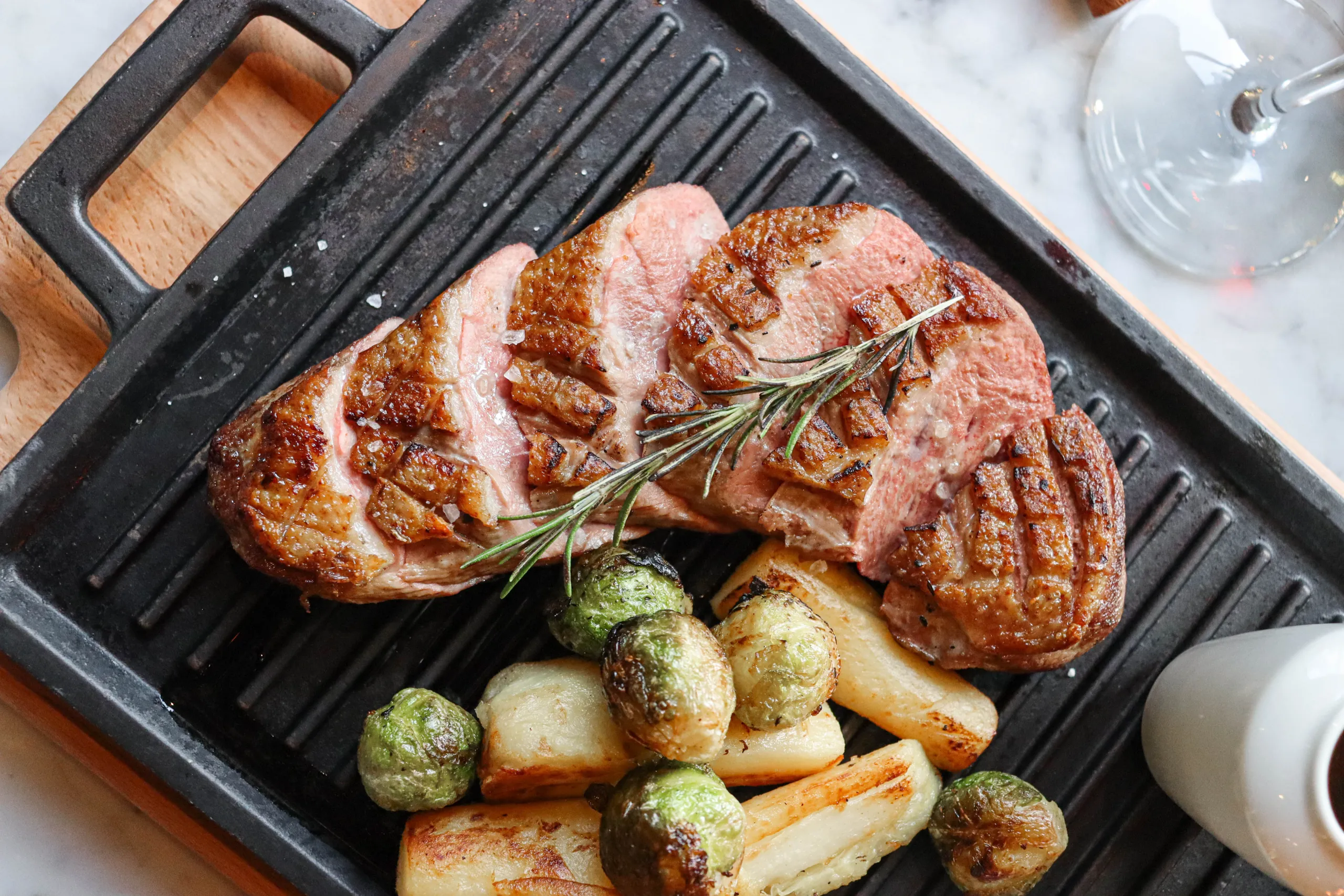
Grilled Duck Breast
From Chef Franco
Ingredients:
- 1 duck breast 250-280g
- 100g parsnips
- 100g brussels sprouts
- 20g cranberry sauce (to add to jus)
- Olive oil
- Salt & pepper
- Rosemary for seasoning and decoration
Method:
For the parsnips:
1. Preheat the oven to 180c
2. Peel the parsnips and cut in half
3. Drizzle over olive oil, salt, pepper, and fresh rosemary
4. Roast in the oven for 20 minutes
For the brussels sprouts:
1. Clean and wash the brussels sprouts
2. Cook in boiling salted water for 3 minutes
For the duck:
1. Preheat the oven to 200c
2. Score the skin of the duck in a criss-cross and season with salt and pepper
3. Grill skin side down for 3-4 minutes on the grill
4. Place the duck skin side up on the oven tray for 4 minutes to cook further
5. Once cooked through, allow the duck to rest and warm through the vegetables in the oven
6. Cut the duck breast into 4 pieces, and serve with vegetables and cranberry sauce, then garnish with fresh rosemary and tuck in.
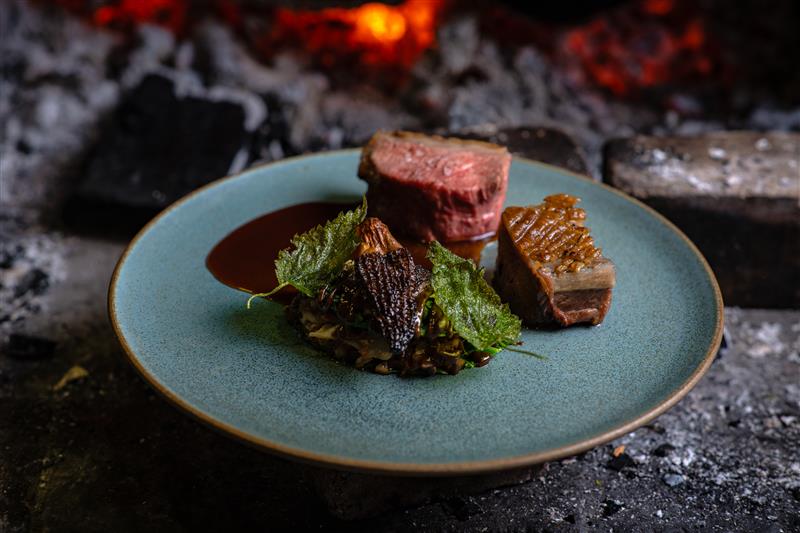
Grilled Lamb Saddle
From Niklas Ekstedt
Ingredients:
- 700 g Lamb saddle on the bone
- 1 savoy cabbage
- 1 apple
- 30g fennel seeds
- Black garlic mayonnaise
- 2 egg yolk
- 10g black garlic
- 1tbsp mustard
- 1tsp vinegar
- Salt
- 200ml sunflower oil
- 10 leaf nettles
Method:
1. Start to fire the grill, ensuring you give it enough time to build up heat before you begin cooking. Once the grill has embers, place the lamb saddle skin side down on the grill, covering with a lid if you have one.
2. Check the lamb after 5 minutes, turning over and cooking for another 5 minutes. Continue to grill, turning the meat until the inside temperature is 48 degrees.
3, Once the lamb has reached this temperature, remove from the grill and leave to rest in a warm spot (trying not to lose too much heat) so that the core temperature reaches 56 degrees.
4. Allow to rest for 15-20 minutes so that the lamb stays juicy and tasty.
5. While the lamb is resting, prepare the black garlic mayonnaise. In a medium size bowl, add garlic cloves, egg yolk, salt, mustard, vinegar and whisk together (the garlic is soft so it will blend).
6. Add oil very slowly while whisking, starting off slow with just a drop at a time until the mixture starts to thicken. Then, you can add the oil in a slow stream. If the mayonnaise becomes too thick simply thin with a little bit of water. Set aside.
7. For the deep-fried nettles, warm up the oil in a deep saucepan until it reaches 145-150 degrees. Once at this temperature, dip the nettles in the oil before placing in the fire for a few seconds – swiftly removing once they get glossy. Place them gently on a paper towel so they do not break.
8. Prepare the savoy cabbage by removing the outer leaf and placing a small plate on top to flatten, cutting around the
plate to create a circle shape. Blanch the leaf in boiling water for a few seconds, before placing in ice water to cool.
9. Thinly slice the rest of the cabbage, and cook it in a pan with oil until soft. Once soft, mix in the diced apple and
fennel seeds and remove from the heat.
10. To serve, place the cabbage leaf on a plate and fill half of the circle with the fried cabbage and apple, folding over
the other half of the leaf to create a filled half-moon. Top with the black garlic mayonnaise and the fried nettles
before placing the lamb beside.
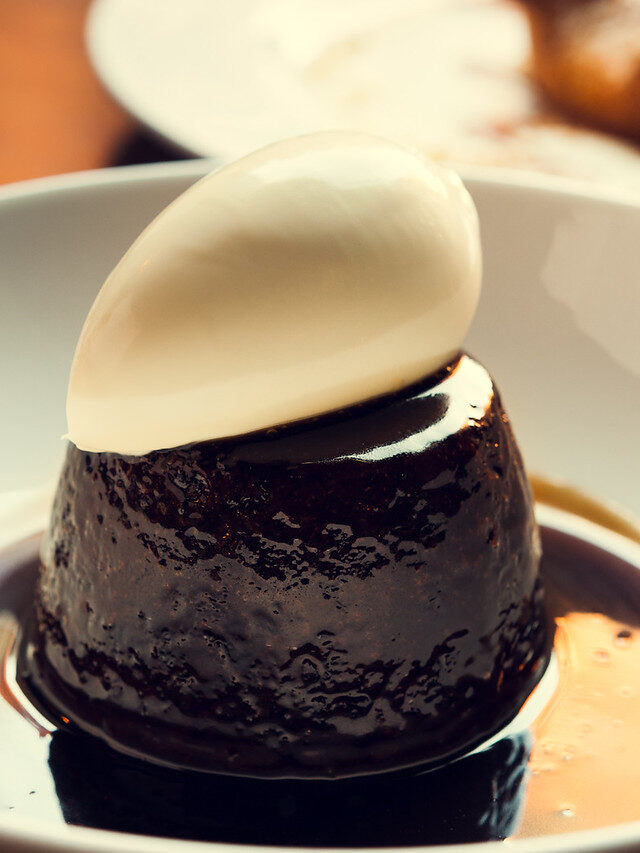
Sticky Toffee Pudding
From Hawksmoor
Ingredients:
- 125g chopped dates
- 3g bicarbonate of soda
- 190ml boiling water
- 55g unsalted butter
- 65g light muscovado sugar
- 65g dark muscovado sugar
- 1 egg
- 30ml Somerset Cider Brandy
- 225g self-raising flour
- 4g baking powder
- A pinch of Maldon sea salt
- Clotted cream, to serve
For the toffee sauce - 95g dark muscovado sugar
- 30g light muscovado sugar
- 125g unsalted butter
- 125ml double cream
- a pinch of Maldon sea salt
- 30ml Somerset Cider Brandy
Method:
1. To make these you will need four 85 x 50mm aluminium pudding basins.
2. Preheat your oven to 170°C/325°F/gas 3
3. Put the chopped dates, bicarbonate of soda and water into a saucepan and boil for 7–8 minutes, stirring frequently, until very dark. Take off the heat and set aside.
4. In a stand mixer fitted with the paddle attachment, or with a hand-held electric whisk, cream together the butter and both muscovado sugars.
5. Mix in the egg, followed by the brandy, flour, baking powder and a pinch of salt. Finally, add the date mixture.
6. Thoroughly grease your pudding tins and pour the mix evenly into them. Cook in the oven for around 25 minutes, until risen and cooked through.
7. Remove from the oven and cool in the tins before turning out.
8. Meanwhile, make the toffee sauce. In a saucepan, gently heat together all the sauce ingredients apart from the brandy. Once the butter and sugar have melted, turn up the heat and simmer gently for 5 minutes. Turn off the heat, add the brandy and leave to cool a little before serving.
9. Serve the puddings with the warm toffee sauce and a generous dollop of clotted cream
Panettone Bread Pudding
From the Chef Patron of Theo Randall at the InterContinental
Ingredients:
- 500g Panettone, cut in to 2cm slices
- 3 whole eggs
- 250ml milk
- 175ml double cream
- 1 vanilla pod, split
- 75g castor sugar
- 25g butter for greasing the dish
Method:
1. Lightly toast the panettone so it has a little colour. You can do this in a toaster or under the grill.
2. When you have all the panettone toasted, layer it over lapping each slice in a earthenware dish that has been greased with butter.
3. In a large bowl whisk the eggs, castor sugar together so the sugar has dissolved, add the vanilla seeds, milk and cream. Whisk well so all ingredients are combined.
4. Pour over the toasted panettone and place the dish in an oven tray that has hot water in it (Baine Marie) cook for 25 minutes at 160c, so the creamy custard is just set. Leave to cool down and serve with a glass of vin Santo and some good ice cream.

Pumpkin, aubergine and pepper stew
From José Pizarro’s cookbook, Spanish Home Kitchen
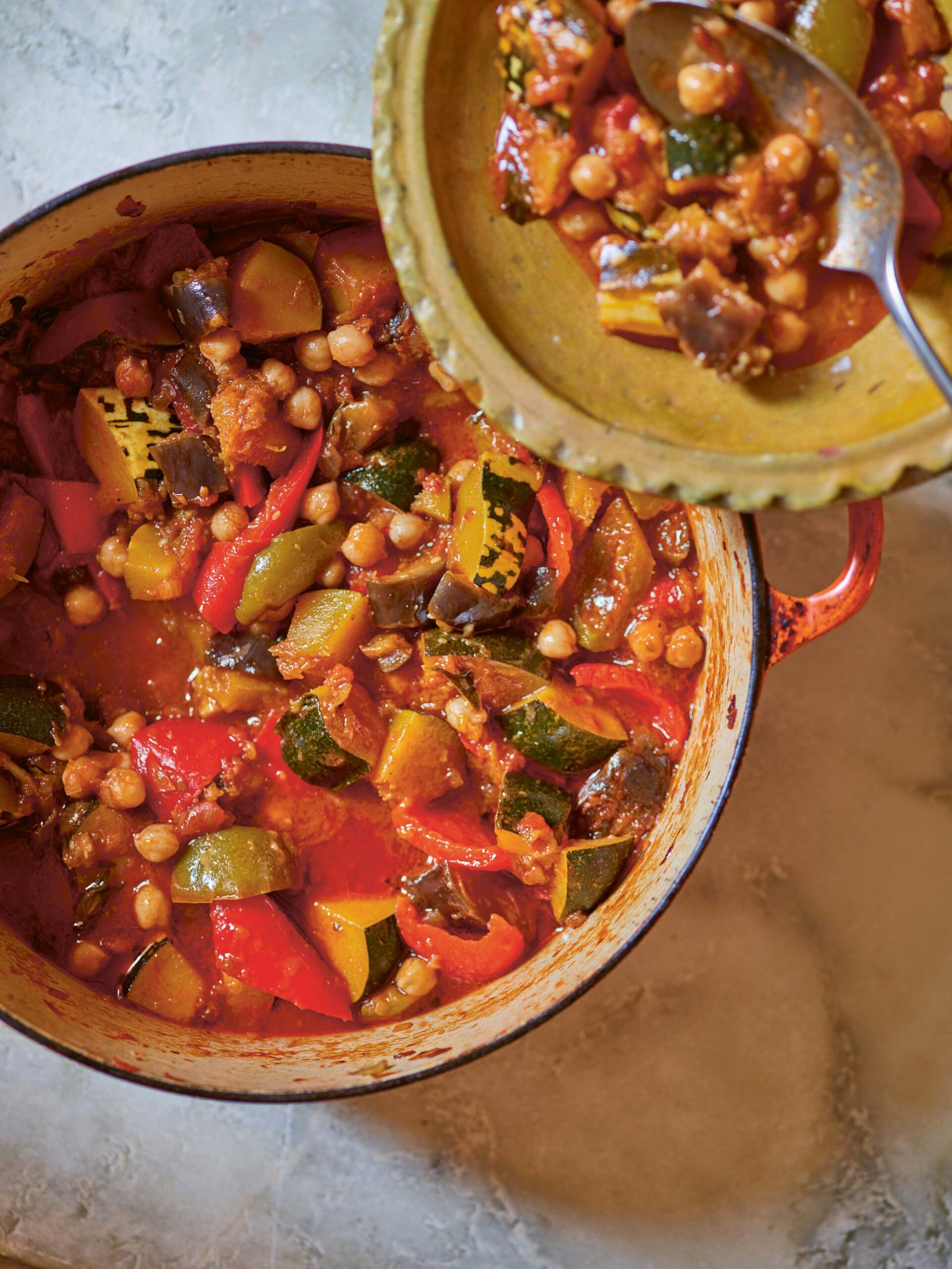
Ingredients:
4 tablespoons olive oil
1 large onion, finely chopped
2 garlic cloves, grated
1 large aubergine (eggplant), chopped
½ teaspoon dried chilli (hot pepper) flakes
½ teaspoon bittersweet pimentón de la Vera
3 marjoram or oregano sprigs
1 green (bell) pepper, chopped
2 red (bell) peppers, chopped
800 g (1 lb 12 oz) peeled and chopped pumpkin or squash
400 g (14 oz) tin chopped tomatoes
400 ml (13 fl oz/generous 1½ cups) vegetable stock
1 bay leaf
400 g (14 oz) tin chickpeas (garbanzos), drained and rinsed
2 teaspoons sherry vinegar
Extra Virgin olive oil, for drizzling
Large handful of flat-leaf parsley, stalks and leaves chopped
Sea salt and freshly ground black pepper
Method:
- Heat the oil in a large casserole dish (Dutch oven) or sauté pan over a low heat. Add the onion, garlic and aubergine (eggplant) and gently fry for 15 minutes. Add the chilli (hot pepper) flakes, pimentón and marjoram or oregano and fry for a minute more, then add the peppers and pumpkin.
- Increase the heat a little and cook for another 10 minutes. Add the tomatoes, stock, bay leaf and parsley stalks.
- Season well and reduce the heat to low. Simmer for 40 minutes until the veggies are very tender and have formed a lovely thick stew.
- Add the chickpeas (garbanzos) and vinegar and bubble for 10 minutes or so, then serve with a drizzle of Extra Virgin olive oil and a scattering of chopped parsley leaves.