Is TikTok Killing The Music Industry One 15-Second Loop At A Time?
Scroll through your TikTok For You page, and there’s a good chance you’ll land on the same fifteen seconds of a song, looping endlessly. That snippet might belong to a track that’s about to hit number one, or it might be the only fifteen seconds of that song anyone ever properly hears. Welcome to the strange, contradictory relationship between TikTok and the music business, a platform that’s simultaneously credited with saving careers and blamed for ruining the art form entirely.
Streams linked to viral TikTok moments routinely spike overnight, sometimes turning years-old album cuts into chart hits decades after release.
Amelia, Culture & Lifestyle Writer/Creator

A new era for music
When defending TikTok as a positive force in the music industry, the most logical place to start is with the numbers. Streams linked to viral TikTok moments routinely spike overnight, sometimes turning years-old album cuts into chart hits decades after release. Think Fleetwood Mac, Sade and Bruce Springsteen all reaching new audiences after records like Silver Spring and Kiss Of Life became punchy soundtracks to viral trends. For an industry that spent the 2010s panicking about declining revenue, a platform that can resurrect a forgotten deep cut and turn it into a global smash is, on paper, a gift.
For an industry that spent the 2010s panicking about declining revenue, a platform that can resurrect a forgotten deep cut and turn it into a global smash is, on paper, a gift.
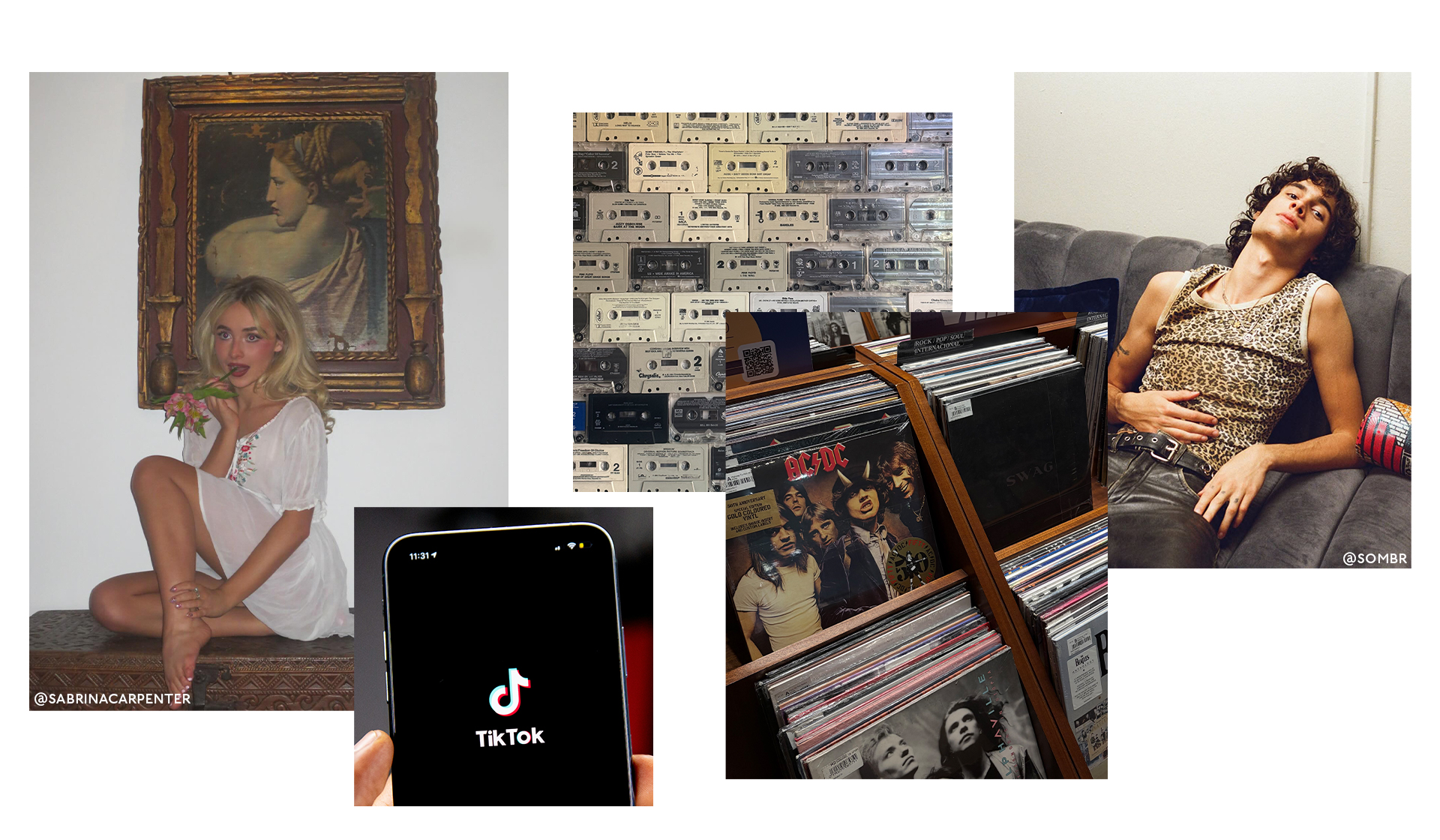
There’s also a strong case that TikTok is the best music discovery tool we’ve ever had. Take Sombr as a prime example. His hushed bedroom ballad Caroline went viral in 2022, catching the label’s attention almost overnight after years of near-silence. Three years later, Back to Friends and Undressed both blew up within weeks of each other, landing him in the Billboard Hot 100 at numbers seven and sixteen and a Grammy nomination for Best New Artist.
I’ll admit, despite vehemently trying to gatekeep some of my favourite songs out of fear they’ll go viral, I’ve also discovered plenty of artists this way myself. And it’s not just new artists being catapulted into the limelight, but TikTok has also given me a newfound appreciation for already-established names like Sabrina Carpenter, whose Espresso-powered 2024 took over the app for months.
Beyond birthing new artists, TikTok breathes life into existing ones. Zara Larsson’s 2016 single Lush Life had already had its moment, until a clip of a fan nailing its choreography on her Midnight Sun Tour went viral late last year, sending the decade-old track back into the Billboard Hot 100 and towards two billion Spotify streams. And would Charli XCX’s Brat Summer have had the same cultural reach without its Apple dance accelerating it far beyond what an album campaign alone could achieve? The power of this platform, and the possibilities it opens up for an artist’s career, shouldn’t be underestimated.
I’ll admit, despite vehemently trying to gatekeep some of my favourite songs out of fear they’ll go viral, I’ve also discovered plenty of artists this way myself.
The ‘TikTokable’ moment
But here’s where the hot take gets hotter. TikTok hasn’t just changed how music is discovered, but rather, it’s started to change what music is made in the first place, and this is where, as a creative, I feel the need to draw the line.
The most obvious casualty is attention span. TikTok has trained an entire generation of listeners to expect a hook within the first three seconds, or they’re gone. It feels as if songs are being written with the sole end goal of having that viral moment. Songs are reportedly being engineered around a single “TikTokable” moment. Think a catchy ad-lib, a quotable lyric, a beat drop perfectly timed for a transition, with the rest of the track treated almost as filler. The verse-chorus-bridge structure that shaped decades of pop songwriting is being quietly replaced by something closer to a 15-second loop with extra padding around it.
TikTok has trained an entire generation of listeners to expect a hook within the first three seconds, or they’re gone. It feels as if songs are being written with the sole end goal of having that viral moment.
That leads directly to the second problem: songs now have a noticeably shorter shelf life. A track can dominate the platform for two or three weeks, generate millions of streams, and then vanish almost entirely from cultural conversation once the trend moves on. Compare that to the way songs used to slowly climb charts over months, building a lasting connection with listeners.
So, is it killing the industry?
Maybe killing isn’t too strong after all. Yes, the streaming numbers look healthy, and yes, more artists than ever are getting a shot at an audience, but it is my belief that these numbers count for less when the trade-off is so high. When the brief for a hit song becomes “give us fifteen seconds that works as a transition,” something vital gets lost. It feels as if songwriting is being hollowed out from the inside, optimised for an algorithm’s attention span rather than a listener’s emotional journey.
It feels as if songwriting is being hollowed out from the inside, optimised for an algorithm’s attention span rather than a listener’s emotional journey.
The uncomfortable truth is that TikTok hasn’t just changed how music reaches people, but rather, it’s changed what counts as success, and in doing so, it’s nudging an entire generation of artists away from craft and toward content. A platform built for fifteen-second clips was never going to produce the next Bohemian Rhapsody, and the longer the industry chases its algorithm, the less likely it is to even try.